
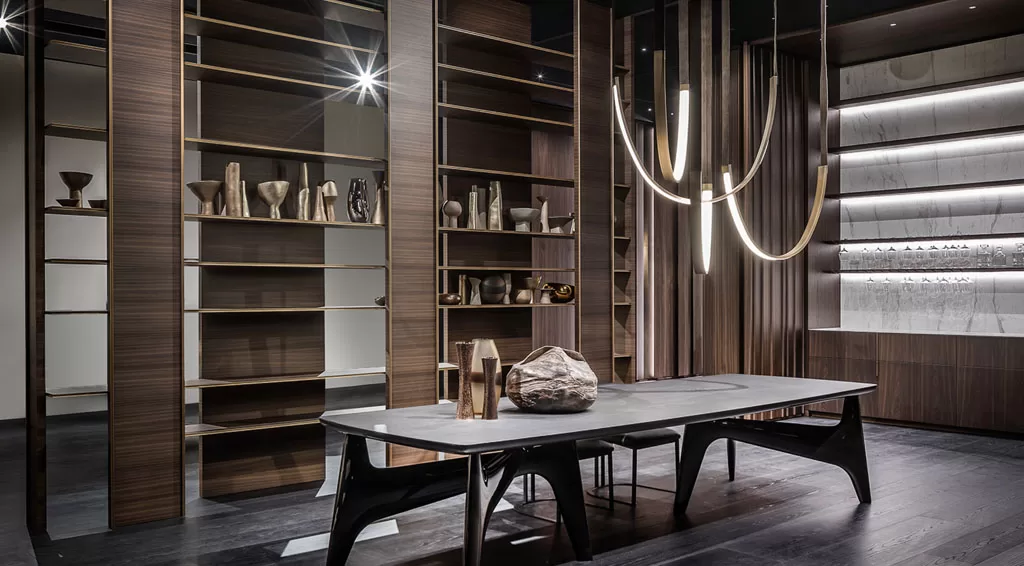

Emmemobili Furniture
Emmemobili creates expressive Italian furniture shaped by five generations of cabinetmaking expertise and a deep understanding of wood. Based in Cantù, a historic center of Italian furniture production, the company combines traditional craftsmanship with contemporary design, advanced wood-bending techniques and sophisticated materials.
At Scott + Cooner, the Emmemobili collection includes sculptural dining tables, chairs, cabinets, bookcases, beds, lighting and architectural wall systems. Each piece reflects the company’s commitment to material beauty, precise construction and furniture with a distinctive visual presence.
Five Generations of Italian Woodworking
Emmemobili developed from the tradition of the Tagliabue family company, founded in Cantù in 1879. Across five generations, the family has accumulated extensive knowledge of furniture making, cabinetry, veneer selection and the physical possibilities of wood.
This history is not treated as a reason to repeat familiar forms. Instead, Emmemobili uses traditional craft knowledge as the foundation for experimentation. Wood is carved, bent, layered and veneered to create contemporary furniture whose construction may be technically complex even when its finished silhouette appears calm and effortless.
The company remains based in Cantù, near Como, where generations of craftspeople and manufacturers have shaped the international reputation of Italian furniture. This connection to place supports a design philosophy grounded in skill, patience and close attention to detail.
A Passion for Wood and Material
Wood is the starting point for Emmemobili, but it is rarely treated in isolation. Different species, grains and tonal variations are carefully selected to give each object warmth and visual depth.
Emmemobili has developed particular expertise in curved wood and shaped plywood. These techniques allow the company to create flowing bases, seamless volumes and broad sculptural surfaces that would be difficult to produce through conventional cabinetmaking alone.
Wood is frequently combined with marble, brass, bronze, metal, leather, fabric and high-gloss finishes. The contrast between these materials can emphasize the warmth of a veneer, the reflective quality of a metal surface or the dramatic veining of stone.
Every material is considered in relation to the overall composition. The objective is not decoration for its own sake, but a balanced piece in which construction, texture, color and proportion contribute to a unified expression.
The UFO Table by Ferruccio Laviani
Designed by Ferruccio Laviani, the UFO table is one of Emmemobili’s most recognizable designs. Its rounded top appears to float above a flared central base, giving the table a sculptural and aerodynamic presence.
The structure demonstrates Emmemobili’s command of shaped and curved plywood. Depending on the version, the tabletop, underside and conical base can be veneered in wood, lacquered or combined with marble and metal finishes.
Numerous interpretations expand the UFO family. Wood versions emphasize the continuity of grain across the broad surface, while lacquered finishes give the form a more graphic character. Marble tops introduce natural pattern and visual weight. Special versions incorporate polished brass or cast bronze for an especially rich material expression.
The variety of finishes allows UFO to adapt to residential dining rooms, executive meeting spaces and hospitality interiors while retaining its unmistakable silhouette.
UFO TT Coffee Tables
The UFO TT coffee table translates the visual language of the dining table into a lower, more compact format. Its shell-like underside meets a finely flared central support through a carefully resolved connection that remains largely hidden from view.
Over more than two decades of production, UFO TT has become an Emmemobili classic. Its timeless form can be interpreted in numerous materials and finishes, allowing it to complement both restrained and highly expressive interiors.
Individual tables can be used beside a sofa or arranged in groups to create a layered composition. Different sizes and material combinations provide further opportunities to tailor the design to a particular seating area.
Evolution: Cabinetmaking Past and Present
Evolution, designed by Ferruccio Laviani, expresses the transformation of wooden furniture across time. One part of the cabinet features elaborate hand-carved ornament associated with historic high-end cabinetmaking, while the other transitions toward the clean geometry of modern design.
The deliberate contrast turns the storage unit into a visual narrative. Traditional carving and contemporary minimalism do not simply appear beside each other; they become stages within the same evolving object.
Evolution demonstrates Emmemobili’s ability to preserve demanding craft techniques while using them in unexpected ways. The cabinet provides functional storage, but its conceptual strength and detailed surface make it equally compelling as a collectible design statement.
Cabinets, Sideboards and Storage Furniture
Storage furniture is an important part of the Emmemobili collection. Cabinets, sideboards, chests of drawers and bookcases combine practical organization with exceptional woodworking and carefully developed surfaces.
Some pieces are defined by quiet volumes and expansive veneers, allowing the grain of the wood to become the principal decorative element. Others incorporate carving, relief, geometric patterns or contrasting materials to create a more sculptural presence.
The Doris cabinet family uses simple, generous forms to support a wide range of interior applications. Other storage collections explore complex doors, unexpected textures and architectural compositions that can become central elements within living rooms, dining rooms and offices.
Interior configurations, dimensions and finishes vary by model, giving designers the ability to select furniture according to both functional requirements and the visual character of the room.
Dining Tables, Chairs and Stools
Emmemobili offers an extensive range of dining and occasional tables beyond the UFO collection. Designs including Antinomia T, Aria, Assolo, Closer, Dogon T, Kintai, Menhir and Tuileries explore different relationships among top, base and material.
Wood may be curved into a continuous support, shaped into an architectural volume or paired with metal and stone. Round, oval and rectangular formats accommodate settings ranging from intimate dining rooms to expansive meeting spaces.
Chairs and stools complement the table collection with upholstered and wooden forms. The Kyo stool, designed by Giuliano and Gabriele Cappelletti, combines an enveloping padded seat with slender metal supports and a distinctive horseshoe-shaped base. Its restrained silhouette demonstrates how comfort and visual refinement can coexist within a compact design.
Architectural Wall Systems and Boiserie
Emmemobili’s woodworking expertise extends from individual furniture pieces to complete architectural surfaces. Its boiserie and wall-paneling systems can add texture, rhythm and visual continuity to residential and professional interiors.
The Stripes system is assembled from individual triangular solid-wood profiles applied by hand. Light moves across the alternating lines and intersections, giving the wall a changing appearance throughout the day.
Stripline uses closely spaced vertical profiles to emphasize variations in the natural color of wood. Its construction can also accommodate curved walls, allowing the material treatment to continue around architectural transitions.
KL reinterprets traditional paneling through components that can be positioned and rotated to create less predictable compositions. Arlequin incorporates triangles of different sizes and thicknesses, with selected elements available in wood or metal. Other systems, including Linear, Rideau, Uon and Dorian, provide additional approaches to proportion, relief and repetition.
These wall systems can be customized to suit project dimensions and architectural conditions, making them valuable tools for designers developing highly coordinated interiors.
Kitchens, Bars and Wine Rooms
Emmemobili also applies its cabinetry and architectural knowledge to kitchens, private bars and wine-storage environments. These systems allow functional spaces to become part of a unified interior concept.
The K-ONE system, designed by Adele Martelli, can be configured as an entire kitchen or used to create specialized areas concealed behind wall paneling. A private bar can remain hidden when not in use, then open to reveal carefully finished storage and work surfaces.
Dimensions, finishes and internal organization can be adapted to individual requirements. This tailored approach allows Emmemobili to respond to unusual architecture, extensive storage needs and sophisticated material palettes.
Beds and Bedroom Furniture
The collection continues into the bedroom with beds, bedside tables, chests of drawers and wardrobe systems. Wood veneers establish warmth and continuity, while upholstered elements introduce softness and comfort.
Emmemobili bedroom furniture can be coordinated through related finishes without creating a rigid matching suite. A sculptural bed may serve as the focal point, supported by simpler bedside tables and storage pieces that allow the material to remain visually consistent.
Custom architectural systems can further integrate wardrobes, wall paneling and doors, creating a bedroom whose furniture and surrounding surfaces feel intentionally connected.
Lighting and Decorative Objects
Emmemobili’s lighting collection extends its approach to material and form into chandeliers, wall lights, floor lamps and table lamps. Designs such as Forest Glass, Wind Chime, Myring and Helios introduce glass, metal and expressive structure to the interior.
Decorative objects and special collections provide smaller-scale opportunities to experience the company’s craftsmanship. These pieces may emphasize carving, color, lacquer or unexpected combinations of material.
The Elena Salmistraro collection brings an especially imaginative voice to the catalog, demonstrating Emmemobili’s openness to expressive contemporary design alongside its established furniture and architectural systems.
Custom Italian Furniture for Complete Interiors
Emmemobili’s combination of furniture production and architectural woodworking makes the company well suited to highly customized residential, hospitality and executive projects.
Designers can coordinate tables, storage, beds and lighting with wall paneling, kitchens, bars and other built-in elements. Veneers and complementary finishes can recur throughout the interior, creating continuity across rooms without requiring every piece to share the same form.
This capacity to work at both furniture and architectural scales allows Emmemobili to help define an entire environment. The result may be bold or intimate, but it remains grounded in refined materials and precise Italian craftsmanship.
Discover Emmemobili at Scott + Cooner
Explore Emmemobili at Scott + Cooner and discover contemporary Italian furniture, sculptural wood tables, storage pieces, beds, lighting and architectural wall systems shaped by five generations of craftsmanship.
Our experienced team can help homeowners, architects and interior designers compare Emmemobili collections, review veneers and specialty finishes, and identify opportunities for customized furniture or architectural solutions. Contact Scott + Cooner or visit one of our showrooms to learn more about Emmemobili furniture for residential and professional interiors.