
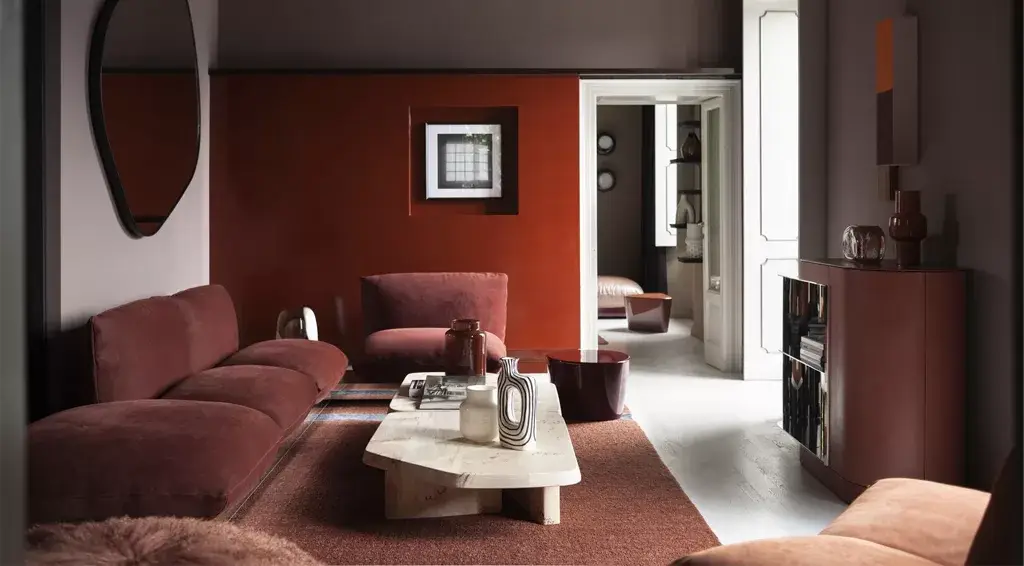

Baxter Luxury Italian Furniture, Handcrafted Leather Sofas & Contemporary Design
Baxter creates luxury Italian furniture with an unmistakable material sensibility, transforming exceptional leather, stone, wood, metal, textiles, and other natural materials into richly expressive contemporary interiors. Founded in Italy in 1990 by Luigi and Paolo Bestetti, Baxter emerged from the furniture-making culture of Brianza and the creative energy of Milan with a particular ambition: to explore leather as both an extraordinary natural material and a medium for contemporary design.
Today, Baxter offers far more than leather sofas. The collection encompasses sofas and armchairs, dining and lounge chairs, tables and occasional tables, beds, rugs, lighting, accessories, collectible pieces, and outdoor furniture. The result is a complete interior vocabulary that feels luxurious, tactile, sophisticated, and distinctly Italian.
What Is Baxter Known for in Luxury Italian Furniture?
Baxter is best known for its extraordinary approach to leather.
Rather than treating leather simply as an upholstery covering, Baxter explores its natural variations, tactile qualities, color, aging, flexibility, and ability to be transformed through specialized artisanal techniques.
The material can be folded, stitched, pleated, printed, polished, softened, distressed, and tailored in unexpected ways.
This gives Baxter furniture a depth and individuality that distinguishes it from conventional luxury upholstery.
Baxter Was Founded in Italy in 1990 by Luigi and Paolo Bestetti
Baxter was founded in 1990 by Luigi and Paolo Bestetti within the Italian furniture-making region where the craftsmanship of Brianza meets the design culture of nearby Milan.
The founders came from generations of master saddle-makers.
That heritage gave leather an important role from the beginning.
Baxter took the knowledge associated with saddlery, tanning, stitching, and working natural hides and placed it within a contemporary furniture context.
Baxter Combines Brianza Furniture Craftsmanship with Milanese Design Culture
Baxter’s geographic origins are important to understanding the brand.
Brianza has long been associated with sophisticated furniture manufacturing and highly specialized artisans.
Milan is one of the world’s most influential centers for architecture, fashion, furniture, and industrial design.
Baxter exists between these two traditions.
The collection combines deep manufacturing knowledge with an appetite for experimentation, fashion, art, architecture, and contemporary culture.
How Does Baxter Transform Leather into Contemporary Furniture?
Baxter begins with carefully selected full-grain hides and preserves the qualities that make natural leather distinctive.
Instead of attempting to make every surface perfectly uniform, the process respects variation.
Natural markings, subtle differences in color, texture, and signs of the material’s history can become part of its beauty.
Master tanners and craftspeople then use specialized techniques to transform the leather while maintaining its tactile character.
The result can feel soft, aged, polished, velvety, structured, wrinkled, tailored, or deliberately raw depending upon the design.
Baxter Leather Celebrates the Natural Character of the Hide
Natural leather is never completely identical from one piece to another.
For Baxter, this individuality is an advantage rather than a defect.
Variation gives the finished furniture character.
The surface can develop additional depth through use, creating a relationship between the material and the people living with it.
This makes Baxter leather furniture particularly compelling for interiors intended to become richer over time rather than remain visually untouched.
Baxter Uses Aniline Dyeing to Preserve the Depth of Natural Leather
Color is fundamental to Baxter’s identity.
Rather than simply coating the surface, specialized tanning and dyeing processes allow color to interact with the natural characteristics of the hide.
This creates visual depth that can be difficult to achieve with more standardized upholstery materials.
Subtle variations remain visible.
The leather can therefore feel alive rather than mechanically uniform.
Baxter Leather Can Be Folded, Sewn, Pleated, Printed, and Polished
Baxter continually investigates what leather can become.
Traditional techniques coexist with experimental treatments.
A hide may behave like a tailored textile, a structural shell, a soft velvet-like surface, or a deliberately aged material.
Edges may be carefully finished or intentionally left more expressive.
Stitching can disappear into the design or become an important visual detail.
This versatility allows leather to support dramatically different furniture typologies.
Baxter Approaches Leather Furniture Like Italian Haute Couture
The comparison between Baxter furniture and fashion is particularly appropriate.
Both depend on material selection, cutting, tailoring, handwork, proportion, color, and finishing.
The final form may appear relaxed, but that apparent ease often requires considerable technical skill.
On Baxter sofas and armchairs, seams, folds, quilting, piping, and surface treatments contribute to the identity of the piece in much the same way tailoring defines a beautifully made garment.
Baxter Sofas Combine Italian Leather Craftsmanship with Exceptional Comfort
Sofas are central to the Baxter collection.
Some designs are soft, oversized, and intentionally relaxed.
Others are more architectural or sculptural.
What connects them is an emphasis on material and physical experience.
Leather is not simply stretched over a frame.
It is considered as part of the form.
Cushions, quilting, stitching, structure, and upholstery work together to create seating that feels visually luxurious and deeply comfortable.
Baxter Modular Sofas Create Flexible Contemporary Living Environments
Contemporary living rooms increasingly function as flexible environments rather than formal arrangements of sofa, chair, and coffee table.
Modular seating allows designers to respond to this change.
Large compositions can establish multiple orientations, create zones within open rooms, and support different ways of relaxing and entertaining.
Baxter’s material richness prevents these larger compositions from feeling anonymous.
Even at architectural scale, leather, stitching, and upholstery details preserve a strong sense of craftsmanship.
Budapest and Budapest Soft Express Baxter’s Relaxed Approach to Leather Seating
The Budapest family has become closely associated with Baxter’s interpretation of relaxed luxury.
Generous cushions and tactile leather create furniture intended to feel inviting rather than formal.
Budapest Soft pushes that idea toward an even softer expression.
The designs work particularly well in living rooms where comfort is essential but the furniture still needs the material richness expected from a sophisticated contemporary interior.
Chester Moon Turns Traditional Leather Upholstery into Contemporary Sculpture
Chester Moon demonstrates Baxter’s ability to reinterpret familiar upholstery traditions.
The deep buttoning associated with classic Chesterfield furniture becomes something more graphic and sculptural.
Rather than appearing historical, the technique is expanded across a contemporary form.
The result works as both functional seating and a strong visual statement.
Milano by Paola Navone Explores Oversized Comfort and Quilted Leather
The Milano collection by Paola Navone is designed around generous proportions and enveloping comfort.
Its leather is quilted with a mattress-like character, reinforcing the sense of softness and relaxation.
The resulting sofa and armchairs feel intentionally substantial.
Milano demonstrates how Baxter can take the traditional luxury associated with leather and make it informal, contemporary, and deeply inviting.
Sorrento by Paola Navone Creates a Soft Leather Refuge
Sorrento combines a strong exterior structure with exceptionally soft cushions.
The contrast gives the furniture its character.
The sofa feels visually composed while the seating experience is relaxed.
Subtle stitching and leather detailing reinforce the craftsmanship without making the design feel overly formal.
Housse Demonstrates How Baxter Can Treat Leather Like Fabric
Housse by Paola Navone explores the possibility of making leather behave with the softness and informality normally associated with textile upholstery.
Its relaxed cushions and stitched leather surfaces give the sofa a welcoming character.
The design is a good example of Baxter’s larger philosophy: the company continually challenges assumptions about how leather should look and behave.
Tactile by Vincenzo De Cotiis Turns Upholstered Furniture into Sculpture
Tactile explores leather through a more sculptural language.
The sofa and armchair are composed as separate volumes that interact rather than appearing as one conventional upholstered shell.
Quilting emphasizes the surface and gives each piece a strong physical presence.
The result occupies an intriguing territory between furniture and collectible design.
Baxter Collaborates with Leading Italian and International Designers
Baxter’s identity has developed through collaborations with designers who bring very different perspectives to material, comfort, and form.
The collection includes work by figures such as Paola Navone, Roberto Lazzeroni, Draga & Aurel, Pietro Russo, Federico Peri, Christophe Delcourt, Studiopepe, and Vincenzo De Cotiis.
This diversity prevents Baxter from becoming stylistically predictable.
The designers may approach the material differently, but the brand’s emphasis on exceptional craftsmanship and tactile experience provides continuity.
Paola Navone Brings Informality and Global Inspiration to Baxter
Paola Navone’s work for Baxter often combines generous comfort with an unconventional approach to leather.
Her furniture can feel relaxed, oversized, familiar, and surprising at the same time.
Quilting, stitching, softened forms, and unexpected proportions transform leather from a traditionally formal upholstery material into something more expressive and informal.
Roberto Lazzeroni Brings Refined Italian Elegance to Baxter Furniture
Roberto Lazzeroni’s work contributes another dimension to Baxter.
His furniture often balances elegant proportion with rich materials and carefully controlled detail.
The designs can feel sophisticated without becoming rigid.
This makes them especially effective in interiors where designers want a sense of Italian luxury that remains contemporary and comfortable.
Draga & Aurel Bring Art, Color, and Experimental Materials to Baxter
Draga & Aurel approach furniture with a sensibility informed by art, vintage design, color, and material experimentation.
Their work complements Baxter’s willingness to move beyond conventional ideas of luxury.
Surfaces, forms, and materials can become expressive elements in their own right.
This gives the collection a more eclectic and collectible dimension.
Baxter Armchairs Range from Deeply Comfortable to Sculptural
An armchair can serve many different roles.
It may complete a sofa arrangement, create a reading corner, introduce a contrasting material, or function almost as a piece of sculpture.
Baxter’s armchair collection embraces this variety.
Some designs invite the sitter into soft, enveloping upholstery.
Others emphasize structure, shape, or an unusual treatment of leather.
This breadth gives interior designers considerable freedom.
Baxter Dining Chairs Bring Leather Craftsmanship to the Dining Room
Dining chairs require a different balance of comfort, scale, and repetition than lounge seating.
Baxter brings its material expertise to chairs that can surround a dining table without becoming visually overwhelming.
Leather adds tactile richness, while wood and metal structures can introduce contrast.
Repeated around a table, the chairs create rhythm and reinforce the material identity of the room.
Baxter Tables Combine Marble, Stone, Wood, Metal, and Sculptural Form
Baxter’s material research extends well beyond leather.
Tables and occasional tables introduce marble, stone, wood, and metal into the collection.
These materials can be highly expressive.
A richly figured stone top may become the visual center of a room.
A sculptural metal base can provide contrast.
Wood introduces warmth and natural variation.
The table becomes an opportunity to explore material at an architectural scale.
Baxter Marble Furniture Celebrates the Individuality of Natural Stone
Like leather, natural stone carries evidence of its formation.
Veining, color, crystalline structure, and subtle imperfections make each slab unique.
Baxter embraces this individuality.
Rather than treating marble as a neutral surface, the stone can become a central feature of the furniture.
This approach works particularly well with the brand’s leather upholstery because both materials offer natural variation and tactile depth.
Baxter Coffee Tables Add Material Layers to Contemporary Living Rooms
Occasional tables provide opportunities to introduce contrasting materials without overwhelming the seating composition.
Stone can sit beside leather.
Metal can provide visual precision against soft upholstery.
Wood can connect furniture to architectural millwork or flooring.
Baxter’s coffee and side tables allow designers to build these material relationships throughout a living room.
Baxter Beds Bring Leather and Italian Craftsmanship into the Bedroom
The bedroom offers another context for Baxter’s material language.
Upholstered beds can introduce leather in a softer, more architectural way.
Headboards establish a strong visual plane while the surrounding textiles, rugs, lighting, and occasional furniture add additional layers.
The result can feel luxurious without depending on excessive decoration.
Baxter Bedroom Furniture Creates a Complete Material Environment
A Baxter bedroom does not need to rely on the bed alone.
Side tables, benches, lighting, rugs, and accessories can extend the material story through the room.
Leather can be balanced with stone, metal, wood, and textile.
This layered approach allows the bedroom to feel connected to the rest of the interior while maintaining a calmer atmosphere.
Baxter Lighting Adds Sculptural Illumination to the Interior
Lighting allows Baxter to extend its design language beyond furniture.
Lamps can introduce metal, glass, stone, and other materials while shaping the atmosphere of a room.
Some fixtures function as understated complements to furniture.
Others have a stronger sculptural identity.
Together they help create the complete environments that have become central to Baxter’s vision.
Baxter Rugs Add Texture Beneath Leather Furniture
Rugs play an important role in balancing the visual weight of upholstered furniture.
They define seating zones, soften hard architectural surfaces, and introduce additional texture.
Baxter rugs can help connect the colors of leather, stone, wood, and metal within a broader palette.
In open-plan interiors, they also help establish boundaries without physical walls.
Baxter Accessories Complete the Interior at a More Intimate Scale
Accessories provide another level of material detail.
Mirrors, decorative objects, trays, cushions, and other pieces can reinforce the character of a room without requiring major changes to the furniture plan.
Baxter approaches these objects with the same interest in unusual materials and finishes found throughout the larger collection.
Baxter Collectible Explores the Boundary Between Furniture and Art
Baxter’s collectible pieces emphasize the increasingly fluid relationship between functional furniture and artistic object.
These works can have a stronger sculptural presence, unusual material combinations, or more experimental production techniques.
For collectors and design-conscious clients, they offer opportunities to introduce pieces that function while also carrying the visual presence of art.
Baxter Outdoor Furniture Extends Italian Luxury into Open-Air Living
Baxter’s outdoor collection brings the brand’s tactile approach to terraces, gardens, courtyards, and pool environments.
Outdoor sofas, lounge seating, chairs, tables, and accessories allow exterior spaces to receive the same design attention as interiors.
Performance requirements change outdoors, but Baxter maintains its focus on comfort, material, and atmosphere.
Baxter Open-Air Furniture Blurs the Boundary Between Interior and Exterior
Contemporary architecture increasingly connects living rooms directly with terraces and gardens.
Large glass openings make exterior furniture visible from inside.
This means outdoor pieces need to participate in the overall design language of the home.
Baxter’s open-air collections help create that continuity.
Forms remain sophisticated enough to relate naturally to interior furniture while materials are selected for exterior conditions.
Himba by Roberto Lazzeroni Moves Naturally Between Indoor and Outdoor Environments
Himba demonstrates Baxter’s increasingly fluid relationship between interior and exterior furniture.
Its solid wood structure and sculptural character connect strongly with natural surroundings.
Depending on upholstery and configuration, the collection can inhabit both indoor and outdoor environments.
This versatility makes it particularly appropriate for contemporary homes organized around terraces, gardens, courtyards, and large openings to the landscape.
Baxter Outdoor Sofas Create Sophisticated Exterior Living Rooms
Outdoor sofas help transform a terrace into a true living environment.
Generous seating establishes a place for conversation and relaxation.
Tables provide functional surfaces.
Rugs, lighting, and accessories can add further layers.
Baxter approaches these compositions with the same emphasis on comfort and atmosphere found indoors.
Baxter Furniture Is Designed as Part of a Complete Interior Vision
Baxter has evolved from a furniture company with exceptional leather expertise into a broader interior design universe.
Sofas, chairs, tables, beds, lighting, rugs, accessories, and collectible pieces can be combined to create richly layered spaces.
The objective is not necessarily to make everything match.
Instead, different materials and forms establish relationships across the interior.
Casa sul Lago Expresses Baxter’s Vision of Contemporary Living
Baxter’s Casa sul Lago on Lake Como provides a residential setting for experiencing the brand’s evolving collections.
Rather than presenting furniture as isolated showroom objects, the villa demonstrates how pieces interact with architecture, art, color, landscape, and one another.
This contextual approach reflects Baxter’s larger ambition to create complete atmospheres rather than individual products.
Baxter Cinema Connects Furniture, Design, and Milanese Culture
Baxter’s restoration and use of the historic President cinema in Milan demonstrates another aspect of the brand’s approach.
Furniture is presented within a cultural and architectural environment rather than a conventional retail setting.
The project reflects Baxter’s interest in hospitality, experience, and the relationship between design and place.
Baxter Furniture Creates Interiors with Depth Rather Than Uniformity
Some luxury interiors rely on perfect coordination.
Baxter offers a more layered approach.
Leather can show natural variation.
Stone introduces irregular veining.
Metals may have complex finishes.
Wood adds grain and warmth.
The resulting room can feel collected rather than manufactured.
This depth is particularly effective in residences where clients want sophistication without sterility.
Baxter Leather Develops Character as It Ages
Natural materials often become more interesting through use.
Leather can soften.
Color can gain depth.
Subtle patina can emerge.
These changes are part of the experience of living with high-quality natural materials.
Baxter’s approach to leather makes this evolution an important part of the furniture’s identity rather than something that must always be prevented.
Baxter Furniture Works Beautifully with Contemporary Architecture
Contemporary architecture often relies on strong surfaces such as stone, concrete, plaster, wood, metal, and glass.
Baxter furniture introduces softness and tactile richness into these environments.
Leather absorbs and reflects light differently from hard surfaces.
Generous upholstery adds physical comfort.
Natural variations prevent minimal architecture from feeling overly controlled.
Baxter Can Add Warmth to Minimal Interiors
Minimalism does not need to feel cold.
A single richly textured leather sofa can transform a restrained room.
Stone tables introduce geological pattern.
Wood adds warmth.
Rugs soften acoustics and provide tactile comfort.
Baxter’s material vocabulary makes it particularly effective for adding sensory depth to clean architectural interiors.
Baxter Furniture Complements Art and Collectible Design
The material character of Baxter works naturally in interiors with important art.
Furniture can have presence without becoming merely decorative.
Leather, marble, metal, and sculptural forms establish their own visual identities while still allowing paintings, photography, sculpture, and collectible objects to remain significant.
This makes Baxter particularly useful for layered, highly personal interiors.
Baxter Is Well Suited to Luxury Residential Interiors
Baxter can be used throughout a residence.
A living room may begin with a generous leather sofa.
Dining spaces can introduce chairs and sculptural tables.
Bedrooms can incorporate upholstered beds.
Lighting, rugs, and accessories provide continuity between rooms.
Outdoor collections can extend the same atmosphere onto terraces and into gardens.
Baxter Furniture Is Equally Compelling in Hospitality and Contract Interiors
Hotels, restaurants, executive spaces, lounges, and other contract environments often need furniture that creates an immediate sense of character.
Baxter’s rich materials can help establish that identity.
Leather provides tactile luxury.
Sculptural forms create memorable focal points.
Tables and lighting add further material layers.
The result can feel distinctive without depending on conventional hospitality styling.
Baxter Bespoke Supports Highly Individual Interior Projects
Luxury interiors frequently require solutions beyond standard specifications.
Scale, upholstery, color, material combinations, and project conditions can all influence furniture selection.
Baxter’s culture of tailoring and material expertise makes the brand especially relevant to designers working on highly individual residential and hospitality environments.
The concept of bespoke is closely connected to the company’s broader belief in uniqueness.
Baxter Gives Interior Designers an Extensive Palette of Leather Colors and Textures
Leather selection can dramatically change the character of the same piece of furniture.
A dark, distressed hide may feel dramatic and architectural.
A pale leather can emphasize softness and form.
Warm browns bring natural richness.
Unexpected colors can turn a sofa or chair into a focal point.
Different surface treatments add another level of variation.
This makes Baxter particularly useful for interior designers developing highly specific palettes.
Baxter Materials Extend Far Beyond Leather
Leather may be Baxter’s signature material, but the collection is increasingly defined by combinations.
Marble, stone, precious woods, metals, outdoor textiles, glass, and other surfaces create contrast.
The interaction between materials gives rooms depth.
A stone table beside a leather sofa feels different from a wood table in the same position.
These choices allow designers to tune the atmosphere of the interior.
Baxter Uses Material Contrast to Create Visual Tension
Some of the most compelling furniture combines materials with opposing characteristics.
Soft leather meets hard stone.
Warm wood meets cool metal.
Smooth surfaces sit beside heavily textured ones.
These contrasts make each material more noticeable.
Baxter frequently uses this principle to give relatively simple forms a richer sensory presence.
Baxter Furniture Rewards Close Observation
From across the room, a Baxter sofa may be defined by its overall silhouette.
At closer range, another level of detail appears.
Stitching becomes visible.
Leather reveals variations.
Edges, folds, quilting, and junctions demonstrate how the piece was constructed.
This layered experience is an important distinction between furniture designed primarily for an image and furniture intended to be experienced physically.
Baxter Combines Traditional Craftsmanship with Contemporary Experimentation
Tradition at Baxter does not mean reproducing historic furniture.
It means preserving knowledge about materials and making.
That knowledge then becomes a foundation for experimentation.
Leather can be treated in unconventional ways precisely because craftspeople understand it deeply.
The same principle applies to stone, wood, and metal.
Innovation becomes stronger when it is supported by material expertise.
Baxter Furniture Can Function as a Strong Interior Focal Point
Some rooms benefit from furniture that disappears quietly into the architecture.
Others need a focal point.
Baxter can provide both, but many of its most memorable designs are capable of defining a room immediately.
A sculptural sofa, richly veined table, distinctive armchair, or expressive light can establish the character around which the rest of the interior develops.
Baxter Sofas Can Anchor Large Open-Plan Living Rooms
Large rooms require furniture with enough scale to establish intimacy.
A small sofa can become visually lost.
Generous Baxter seating can divide the volume into more human-scale zones.
Sectional or multiple-sofa arrangements create conversation areas while rugs and tables reinforce the boundaries.
The richness of the materials keeps these larger compositions visually engaging.
Baxter Furniture Can Bring Character to Sophisticated Urban Apartments
In an apartment, furniture often needs to provide much of the interior’s personality.
Architecture may be restrained, and space can be limited.
A carefully selected Baxter sofa or armchair can introduce material richness without requiring extensive architectural intervention.
Occasional tables, lighting, and accessories can build on that foundation while preserving openness.
Baxter Is a Strong Resource for Architects and Interior Designers
Baxter offers design professionals more than a recognizable aesthetic.
The collection provides a sophisticated material palette, multiple furniture categories, indoor and outdoor options, and pieces ranging from understated to highly sculptural.
This makes it possible to use Baxter selectively within a project or develop a broader interior concept around the collection.
Why Choose Baxter Furniture for a Luxury Contemporary Interior?
Baxter offers a distinctive combination of Italian craftsmanship, extraordinary leather, natural materials, contemporary design, comfort, and individuality.
The furniture feels luxurious without depending upon conventional symbols of luxury.
Its value is expressed through the material itself.
Leather is selected and worked with care.
Stone is appreciated for its natural variation.
Wood, metal, and textiles are chosen for their tactile and visual qualities.
For clients who want an interior to feel sophisticated, personal, and increasingly beautiful through use, Baxter offers a compelling alternative to furniture designed around temporary trends.
Where Can You Experience Baxter Furniture in San Francisco?
Scott + Cooner brings its expertise in luxury contemporary furniture and European design to San Francisco, providing Bay Area architects, interior designers, and design-conscious clients with a resource for discovering exceptional international brands such as Baxter.
The Scott + Cooner San Francisco showroom serves clients throughout San Francisco and the greater Bay Area who are designing sophisticated residences, apartments, hospitality spaces, and contract interiors.
For clients interested in Baxter, working with Scott + Cooner provides the opportunity to explore the collection with an experienced design team that understands luxury Italian furniture, leather upholstery, material selection, dimensions, configurations, finishes, and the detailed specification process required for exceptional interiors.
Scott + Cooner San Francisco Connects Bay Area Designers with Luxury Italian Furniture
San Francisco has a strong culture of architecture, interior design, art, technology, and highly individualized residential design.
Baxter fits naturally within this environment.
Its combination of Italian craftsmanship and contemporary material experimentation works especially well in the Bay Area’s diverse architectural landscape—from sophisticated urban residences and modern apartments to contemporary homes designed around views, natural materials, and indoor-outdoor living.
Scott + Cooner San Francisco provides a local connection between these projects and Baxter’s Italian design culture.
Baxter Furniture Is Well Suited to San Francisco and Bay Area Interiors
Bay Area interiors frequently balance architecture with natural materials, art, views, and a sense of relaxed sophistication.
Baxter’s furniture can complement this approach particularly well.
Soft leather can add warmth to modern architecture.
Stone and wood connect naturally with material-driven interiors.
Generous sofas create comfortable spaces for entertaining, while sculptural tables and armchairs add individuality.
Outdoor collections can support homes designed around terraces, courtyards, and connections to the landscape.
Interior Designers Can Source Baxter Furniture Through Scott + Cooner San Francisco
Interior designers specifying Baxter need to consider more than the name of the product.
Dimensions, configurations, leather selection, color, finish, stone, wood, metal, upholstery details, and project conditions all affect the final result.
Scott + Cooner’s experienced team can assist Bay Area designers and clients as they navigate these choices and develop Baxter specifications appropriate to the architecture and overall interior concept.
Scott + Cooner San Francisco Supports Residential and Contract Baxter Projects
Baxter can work across residential, hospitality, executive, and other sophisticated contract interiors.
Scott + Cooner San Francisco can support projects ranging from a single statement piece to more extensive furniture specifications.
This local design resource is particularly valuable for complex projects where multiple furniture categories, materials, finishes, and installation considerations need to be coordinated.
Discover Baxter Luxury Italian Furniture & Leather Sofas at Scott + Cooner
Scott + Cooner offers Baxter as part of our curated collection of exceptional Italian furniture and international contemporary design.
Since 1995, Scott + Cooner has worked with architects, interior designers, and design-conscious clients seeking extraordinary modern furniture, lighting, kitchens, closets, rugs, accessories, textiles, and architectural products for sophisticated residential and contract interiors.
Our experienced team can help you explore Baxter leather sofas, sectional seating, armchairs, dining chairs, tables, coffee tables, beds, rugs, lighting, accessories, collectible designs, outdoor furniture, leather colors, natural stone, wood, metal, and other materials.
Clients in Northern California can also work with Scott + Cooner San Francisco as a local resource for luxury contemporary furniture, Italian design, Baxter product selection, material specification, and sophisticated residential and contract projects throughout San Francisco and the greater Bay Area.
Whether you are furnishing a contemporary residence, specifying a luxury interior, selecting an extraordinary leather sofa, developing an indoor-outdoor environment, or searching for Baxter furniture in San Francisco, Scott + Cooner can help you discover pieces that bring together Italian craftsmanship, exceptional materials, comfort, individuality, and enduring contemporary design.