
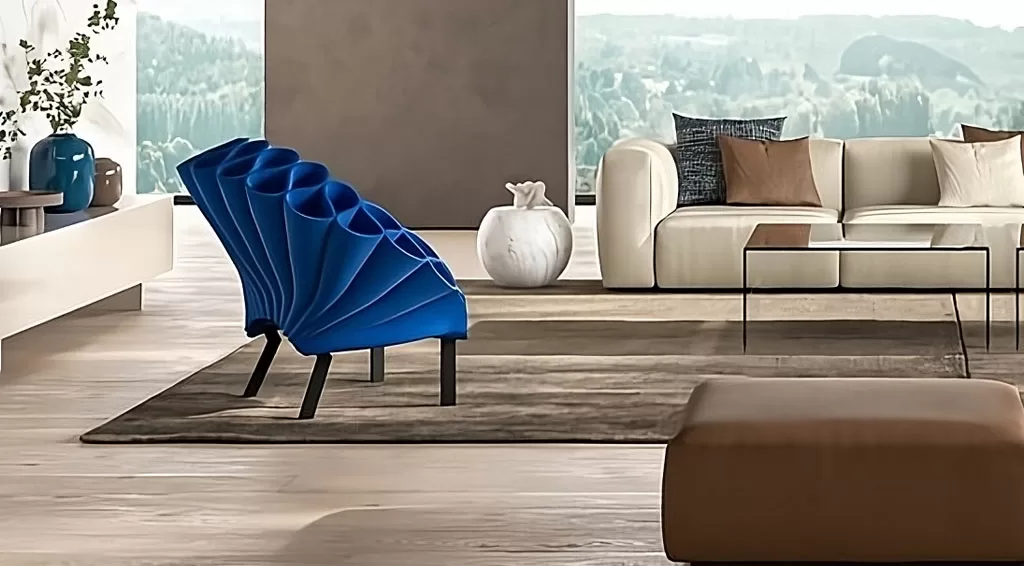

Cappellini Iconic Italian Furniture, Avant-Garde Design & Contemporary Classics
Cappellini occupies a singular position in contemporary Italian design. Founded in Carugo, Italy, in 1946, the company has evolved from a traditional Brianza furniture workshop into an internationally recognized laboratory for creativity, experimentation, craftsmanship, and some of the most influential furniture of the modern era.
Under the creative vision of Giulio Cappellini, the company became renowned not for promoting one fixed aesthetic, but for identifying exceptional ideas and giving designers the freedom to develop them. The result is an unusually diverse collection of sofas, armchairs, chairs, stools, tables, occasional tables, beds, cabinets, bookshelves, lighting, accessories, and outdoor furniture by celebrated designers and emerging talents from around the world.
What Is Cappellini Known for in Contemporary Italian Furniture?
Cappellini is known for avant-garde Italian furniture, experimental design, iconic contemporary classics, and an extraordinary ability to discover designers whose work would influence international design culture.
Rather than establishing one recognizable house style, Cappellini has created a collection around individuality.
Minimalism can coexist with exuberant color. Industrial experimentation can sit beside Italian craftsmanship. Sculptural furniture can appear beside extraordinarily restrained designs.
This creative freedom is one of the defining characteristics of Cappellini.
Cappellini Began as an Italian Furniture Workshop in 1946
Cappellini’s history began when Enrico Cappellini opened a small furniture workshop in Carugo, near Como and Milan, in 1946.
The company was rooted in Brianza, the region internationally recognized for its concentration of furniture-making knowledge and craftsmanship.
This manufacturing heritage provided the technical foundation upon which Cappellini’s later experimentation could develop.
Giulio Cappellini Transformed the Company into an International Design Laboratory
Giulio Cappellini joined his father’s company in 1977 with the intention of bringing innovation to the business and developing Cappellini internationally.
His approach would ultimately transform the brand.
Rather than simply commissioning furniture from already established names, Giulio Cappellini became known for identifying emerging creative talent and helping designers turn unconventional ideas into manufacturable products.
This willingness to take creative risks became one of Cappellini’s greatest strengths.
How Does Cappellini Discover and Develop New Design Talent?
Cappellini has long treated the discovery of designers as an essential part of its creative mission.
Giulio Cappellini has consistently looked beyond established reputations to identify designers with original ideas, distinct perspectives, and the potential to change how furniture is understood.
Some collaborations began when designers were still relatively unknown internationally.
Cappellini then contributed manufacturing knowledge, engineering, materials research, prototyping, and development expertise needed to transform experimental concepts into finished furniture.
Cappellini Creates a Dialogue Between Established Masters and Emerging Designers
One of the great strengths of the Cappellini collection is its generational diversity.
Historic works and contemporary experiments can exist within the same catalogue.
An iconic Shiro Kuramata design can sit alongside Jasper Morrison’s restrained furniture, Marc Newson’s sculptural forms, Tom Dixon’s expressive work, Marcel Wanders’ material experimentation, Nendo’s conceptual simplicity, or a new design from an emerging creative voice.
The collection becomes an evolving record of contemporary design thinking.
Cappellini’s Design Language Is Intentionally Diverse
Many furniture brands develop a tightly controlled visual identity.
Cappellini took a different path.
Its identity comes from the quality and originality of the ideas rather than from making every product look related.
Formal and informal, minimal and expressive, rational and poetic, colorful and monochromatic furniture can all belong to the Cappellini universe.
This makes the collection particularly useful for interiors intended to feel curated rather than coordinated.
Shiro Kuramata Helped Define Cappellini’s Experimental Spirit
The relationship between Giulio Cappellini and Japanese designer Shiro Kuramata became one of the defining collaborations in the company’s history.
Kuramata approached furniture with imagination and conceptual freedom, exploring transparency, material, illusion, geometry, and the boundary between functional object and art.
Cappellini’s production of his work helped introduce these extraordinary ideas to a broader international audience.
Progetti Compiuti Represents an Important Moment in Cappellini Design History
Cappellini’s collaboration with Shiro Kuramata led to the Progetti Compiuti collection in the 1980s.
These designs demonstrate Kuramata’s ability to transform ordinary furniture categories into poetic objects.
The collection remains an important expression of Cappellini’s willingness to support furniture that extends beyond conventional commercial expectations.
Jasper Morrison & Cappellini Began a Long Creative Partnership in the 1980s
Giulio Cappellini encountered Jasper Morrison’s Thinking Man’s Chair in London in 1987 and chose to bring the design into the Cappellini collection.
That decision began a creative relationship that has continued for decades.
Morrison’s work offers a fascinating counterpoint to some of Cappellini’s more expressive designs.
His furniture is frequently quiet, rational, useful, and intentionally free from unnecessary visual gestures.
Thinking Man’s Chair Became a Contemporary Cappellini Classic
The Thinking Man’s Chair captures the intellectual clarity of Jasper Morrison’s early work.
Its open metal structure makes the construction immediately understandable while giving the chair a distinctive graphic presence.
The design demonstrates how Cappellini can recognize significance in an idea without requiring conventional luxury or ornament.
Jasper Morrison Brings Quiet Intelligence to the Cappellini Collection
Morrison’s designs demonstrate that innovation does not need to announce itself loudly.
Proportion, usefulness, manufacturing intelligence, and familiarity can be as important as novelty.
Within Cappellini’s eclectic catalogue, this understated approach provides an essential balance.
Marc Newson Brought Futuristic Forms to Cappellini
Marc Newson’s collaboration with Cappellini introduced a very different design language.
Curves, advanced manufacturing, bold materials, and forms influenced by transportation and industrial design helped create furniture with a distinctly futuristic character.
The partnership demonstrated Cappellini’s willingness to engineer technically ambitious ideas.
Embryo Chair Became an Icon of Marc Newson’s Early Design
The Embryo Chair brought together an unconventional form and sophisticated production.
Its tubular structure and rounded upholstered elements created a piece that looked unlike conventional lounge seating.
The chair became an important early expression of Marc Newson’s design language and Cappellini’s experimental identity.
Wooden Chair Demonstrates Marc Newson’s Approach to Material & Form
Marc Newson’s Wooden Chair transforms wood into a continuous sculptural structure.
The design challenges conventional expectations of how a wooden chair should be constructed and perceived.
Its presence within the Cappellini collection illustrates the company’s interest in pushing familiar materials toward unfamiliar results.
Orgone Combines Sculpture, Furniture & Pop Design
Marc Newson’s Orgone designs use flowing organic forms that blur the boundary between furniture and sculpture.
Their unmistakable silhouettes demonstrate Cappellini’s openness to objects with a strong visual identity.
These pieces can function as furniture while also becoming focal points within architecture.
Tom Dixon’s S-Chair Became an International Design Icon
Cappellini began working with Tom Dixon on the S-Chair in the early 1990s.
Its sinuous form and unconventional construction helped establish it as one of the defining pieces of contemporary British design.
The S-Chair demonstrates how an experimental object can move from a designer’s individual practice into international production without losing its character.
The S-Chair Shows Cappellini’s Ability to Turn Experimentation into Lasting Design
Many radical designs are closely associated with the moment in which they were created.
The S-Chair has demonstrated greater longevity.
Its recognizable silhouette continues to feel expressive decades after its introduction.
This ability to identify designs capable of transcending their original moment is an important part of Cappellini’s legacy.
Alessandro Mendini’s Proust Armchair Brings Radical Decoration to Cappellini
The Proust armchair by Alessandro Mendini occupies a very different territory from minimalist modern furniture.
Its elaborate form and extraordinary surface treatment transform an armchair into an exuberant cultural object.
Cappellini began producing the design in the 1990s, adding one of the most recognizable works of radical Italian design to its collection.
Proust Demonstrates That Cappellini’s Definition of Modern Design Is Expansive
For Cappellini, contemporary design does not require a single visual language.
A highly decorative Mendini armchair and a restrained Jasper Morrison chair can both represent meaningful design.
What matters is the strength of the idea.
This openness gives Cappellini extraordinary cultural range.
Marcel Wanders’ Knotted Chair Explores Material Innovation & Craft
The Knotted Chair by Marcel Wanders entered the Cappellini collection in the 1990s and became a contemporary design classic.
The design explores an unexpected relationship between traditional craft references and advanced materials.
Its delicate appearance challenges expectations of structure and strength.
Nendo Brings Conceptual Precision to Cappellini
Cappellini began its collaboration with Nendo after Giulio Cappellini encountered the emerging Japanese studio at Milan’s SaloneSatellite.
The relationship developed into a long-running partnership.
Nendo’s work frequently begins with a simple observation or conceptual twist, producing objects that are restrained in appearance but memorable in idea.
Cappellini Has a History of Discovering Designers Before They Become Internationally Famous
Giulio Cappellini’s influence on contemporary design extends beyond the products bearing the company’s name.
By identifying and supporting emerging designers, Cappellini helped provide international visibility to creative voices who later became major figures.
This role as mentor, curator, manufacturer, and cultural catalyst distinguishes Cappellini from a conventional furniture producer.
Patricia Urquiola Brings Contemporary Comfort & Material Experimentation to Cappellini
Patricia Urquiola’s work for Cappellini combines comfort with experimentation.
Her designs investigate upholstery, construction, color, sustainability, and the changing ways people inhabit furniture.
The collaboration continues Cappellini’s tradition of working with designers who bring highly individual perspectives to familiar furniture categories.
Lud’o Lounge Reinterprets the Upholstered Armchair
Lud’o Lounge by Patricia Urquiola explores the idea of furniture as something almost wearable.
Its construction and upholstery allow the armchair to take on different expressions while emphasizing comfort and material flexibility.
The design reflects Cappellini’s continuing interest in products that rethink familiar typologies.
Joe Colombo Connects Cappellini with Italian Futurism & Space-Age Design
Joe Colombo’s work represents one of the most visionary chapters of twentieth-century Italian design.
His furniture explored modularity, new materials, changing lifestyles, and futuristic ways of inhabiting domestic space.
Cappellini’s production of his designs connects this experimental history with contemporary interiors.
Tube Chair Turns Modular Components into Radical Seating
Originally designed by Joe Colombo in 1969, the Tube Chair uses cylindrical upholstered elements to create a flexible seating system.
Its concept challenged the conventional idea of the armchair as a fixed object.
The design remains striking because its modular logic continues to feel relevant to contemporary living.
Ronan & Erwan Bouroullec’s Cloud Bookcase Turns Storage into Architecture
Cloud transforms the bookcase into a modular sculptural element.
Its repeated cells can create visually expressive storage and spatial compositions.
Rather than treating shelving simply as a background for objects, Cloud makes the storage system itself part of the architecture.
Cloud Demonstrates Cappellini’s Commitment to Manufacturing Innovation
Developing unconventional furniture often requires unconventional production.
Cloud’s evolution demonstrates Cappellini’s willingness to explore materials and manufacturing technologies in order to preserve the essential character of a designer’s idea.
This engineering capability is critical to the company’s creative freedom.
Cappellini Sofas Range from Restrained to Sculptural
The Cappellini sofa collection reflects the diversity of the brand itself.
Some designs emphasize clean architectural lines.
Others use generous upholstery, unconventional forms, expressive color, or modular construction.
Rather than prescribing one definition of the contemporary sofa, Cappellini offers multiple interpretations of how people can sit, relax, gather, and organize living spaces.
Cappellini Armchairs Can Function as Furniture or Collectible Design Statements
The armchair has long been an important category for Cappellini because it allows designers to explore form at an intimate scale.
Many Cappellini armchairs have unusually strong identities.
A single chair can therefore change the character of an entire room, functioning simultaneously as useful seating and a significant design object.
Cappellini Chairs Bring International Design to Dining & Workspaces
Cappellini dining and side chairs range from minimal wooden designs to highly experimental forms.
This breadth allows designers to select seating according to architecture rather than according to a single brand aesthetic.
Repeated around a table, even a restrained Cappellini chair can establish a strong rhythm within the interior.
Cappellini Tables Combine Function with Distinctive Design Ideas
Dining, conference, occasional, and service tables provide another field for experimentation.
Material, structure, geometry, color, and proportion can all become defining elements.
Some Cappellini tables are quiet architectural surfaces, while others have a distinctly sculptural presence.
Cappellini Coffee & Side Tables Add Layers of Color, Material & Form
Occasional tables provide an opportunity to introduce smaller moments of experimentation into a room.
A distinctive finish, unexpected geometry, or unusual material can create contrast beside upholstered seating.
Because these pieces occupy relatively little space, they are particularly useful for layering different design languages.
Cappellini Bookcases & Cabinets Turn Storage into Contemporary Design
Storage does not need to disappear into the background.
Cappellini has repeatedly explored how cabinets and bookshelves can become visually significant objects.
Modularity, color, geometry, material, and repetition allow storage to participate actively in the composition of the room.
Cappellini Beds Bring the Brand’s Creative Perspective into the Bedroom
The bedroom benefits from furniture that combines comfort with visual calm.
Cappellini beds translate the company’s approach to contemporary design into upholstered and architectural forms suited to more intimate spaces.
Materials and proportions allow the bed to become a strong but balanced element within the room.
Cappellini Lighting Extends the Collection Beyond Furniture
Lighting adds another dimension to the Cappellini universe.
Lamps can operate as functional illumination, sculptural objects, or both.
Their inclusion allows architects and interior designers to create additional relationships between furniture, objects, color, and light.
Cappellini Accessories Bring Experimental Design to Smaller Objects
Accessories provide a more concentrated expression of the brand’s creative diversity.
Vases, objects, and other complementary pieces can introduce color, humor, material experimentation, or sculptural form without requiring a major furniture commitment.
They also help make an interior feel collected rather than staged.
Cappellini Outdoor Extends Iconic Design into Open-Air Living
Cappellini’s outdoor collection brings the company’s experimental spirit to terraces, gardens, courtyards, pool areas, and hospitality environments.
Selected designs are interpreted in materials and finishes suited to exterior settings, allowing distinctive Cappellini forms to participate in contemporary indoor-outdoor architecture.
Cappellini Outdoor Furniture Creates a Different Alternative to Conventional Exterior Design
Outdoor furniture often gravitates toward a narrow visual vocabulary.
Cappellini offers another possibility.
Sculptural shapes, distinctive color, and iconic designs can turn a terrace or garden into a more expressive environment while still supporting everyday relaxation and entertaining.
Cappellini Furniture Works Across Residential & Contract Interiors
The collection is designed for both residential and professional environments.
Homes, hotels, restaurants, offices, stores, public spaces, and other contract settings can draw from Cappellini’s broad range of furniture.
This versatility is especially valuable for architects and designers who want distinctive pieces without sacrificing functional requirements.
Cappellini Has Decades of Experience with Contract Design
Cappellini’s contract work extends the company’s creative approach beyond individual furniture pieces.
Different finishes, configurations, materials, and product categories allow the collection to respond to hospitality, workplace, retail, residential, and public environments.
The result can be highly individual while retaining the quality associated with Italian design.
Cappellini Furniture Is Ideal for Interiors That Mix Different Design Languages
Many sophisticated contemporary interiors no longer follow one style.
Vintage furniture can sit beside contemporary pieces.
Minimal architecture can contain expressive art.
Neutral upholstery can be paired with a highly sculptural chair.
Cappellini’s deliberately diverse collection is particularly well suited to this layered approach.
Cappellini Creates Statement Furniture Without Requiring an Entire Room to Match
A single Cappellini piece can be enough to establish a point of view.
An iconic armchair, unusual bookshelf, sculptural table, or expressive chair can introduce tension and individuality into an otherwise restrained interior.
This makes Cappellini particularly valuable to designers who prefer rooms to feel collected over time.
Cappellini Furniture Has an Important Relationship with Art
Many Cappellini pieces occupy an intriguing territory between functional design and art object.
Strong concepts, sculptural forms, experimental materials, and distinctive cultural references give them a presence that works particularly well in interiors containing important contemporary art.
The furniture does not simply disappear into the architecture; selected pieces can participate in the visual conversation.
Cappellini Design Rewards Clients Who Value Individuality
Cappellini is not about creating an anonymous luxury interior.
Its strongest pieces have personality.
They may be playful, radical, poetic, restrained, futuristic, colorful, or conceptually provocative.
For clients who want their homes to express curiosity and confidence, this diversity offers exceptional possibilities.
Cappellini Combines Italian Manufacturing with an International Perspective
The company remains rooted in Italy while its creative network is international.
Designers from different countries and cultural traditions bring their own approaches to furniture.
Cappellini provides the development, manufacturing, and curatorial framework that allows these different voices to coexist.
This combination of Italian expertise and global creativity is fundamental to the brand.
Craftsmanship Remains Important Even in Cappellini’s Most Experimental Furniture
Experimental form does not eliminate the need for craftsmanship.
In fact, unusual designs frequently demand even greater manufacturing knowledge.
Upholstery, wood, metal, composites, plastics, finishes, and complex assembly methods may all be required to realize a designer’s concept accurately.
Cappellini’s Brianza heritage provides an important foundation for this work.
Material Research Is Central to Cappellini Innovation
Cappellini has repeatedly explored new ways of using materials and production technologies.
The objective is not innovation for its own sake.
Materials and processes are selected because they make a particular design idea possible.
This approach has allowed seemingly improbable concepts to become functional furniture.
Cappellini Balances Experimentation with Longevity
Radical design can easily become attached to a short-lived trend.
Cappellini’s strongest pieces demonstrate something different.
Thinking Man’s Chair, S-Chair, Knotted Chair, Proust, Tube Chair, Cloud, and other designs remain relevant because the underlying ideas are stronger than the period in which they were introduced.
Longevity turns experimentation into design legacy.
Why Is Cappellini Important to Contemporary Design History?
Cappellini’s importance comes not only from the furniture it manufactures but from the creative culture it has helped build.
The company has provided a platform for designers, supported experimental ideas, developed difficult products, and introduced new creative voices to international audiences.
Its catalogue therefore functions as a record of changing ideas about contemporary furniture across several decades.
Cappellini Furniture Is Collected by People Who Value Design Provenance
For collectors and design-conscious clients, knowing who designed a piece, when it was conceived, how it was developed, and who authentically produces it adds meaning.
Cappellini’s catalogue contains numerous designs with significant places in modern design culture.
These pieces can be lived with as furniture while also carrying a deeper history.
Cappellini Gives Architects & Interior Designers an Unusually Broad Creative Vocabulary
Because the collection does not impose one aesthetic, architects and interior designers can use Cappellini selectively.
A project may require an understated Jasper Morrison chair, an expressive Marc Newson piece, a radical Mendini armchair, or a sculptural Bouroullec bookcase.
Each can serve a different role while sharing a commitment to meaningful design.
Where Can You Experience Cappellini Furniture at Scott + Cooner?
Scott + Cooner represents Cappellini through all three of our showrooms: San Francisco, Dallas, and Austin.
Architects, interior designers, collectors, and design-conscious clients can work with our teams to explore Cappellini sofas, armchairs, chairs, stools, tables, occasional tables, beds, cabinets, bookshelves, lighting, accessories, and outdoor furniture.
Our showrooms also provide a local resource for navigating designers, dimensions, upholstery, materials, finishes, configurations, and technical specifications for residential and contract projects.
Where Can You Find Cappellini Furniture in San Francisco?
Scott + Cooner San Francisco represents Cappellini for clients, architects, and interior designers throughout San Francisco and the greater Bay Area.
Cappellini is particularly well suited to the Bay Area’s sophisticated relationship with architecture, art, technology, international culture, and experimental design.
Iconic pieces can introduce an important moment of design history, while contemporary furniture can bring individuality to modern residences, hospitality environments, creative workplaces, and art-focused interiors.
Scott + Cooner San Francisco Connects the Bay Area with Cappellini Italian Design
San Francisco interiors frequently combine different periods, cultures, materials, and creative disciplines.
That makes Cappellini a natural resource.
A restrained Jasper Morrison chair can complement minimalist architecture. A sculptural Marc Newson piece can become a focal point. A classic by Shiro Kuramata, Tom Dixon, Alessandro Mendini, or Marcel Wanders can add cultural depth to a collected interior.
Scott + Cooner San Francisco helps designers and clients explore these possibilities locally.
San Francisco Interior Designers Can Specify Cappellini Through Scott + Cooner
Cappellini’s diversity makes experienced specification particularly useful.
Scott + Cooner San Francisco can assist with product selection, dimensions, upholstery, finishes, technical information, and project coordination.
Whether the project requires one iconic statement piece or a broader residential or contract specification, our San Francisco team can help integrate Cappellini into the larger interior concept.
Where Can You Find Cappellini Furniture in Dallas?
Scott + Cooner Dallas represents Cappellini for architects, interior designers, collectors, and design-conscious clients throughout Dallas and North Texas.
Dallas has a strong culture of architecture, art collecting, sophisticated residential design, and international furniture.
Cappellini brings an especially creative perspective to this environment by offering pieces that range from quiet modern furniture to some of the most recognizable statement designs of the last several decades.
Scott + Cooner Dallas Brings Cappellini’s Avant-Garde Italian Furniture to North Texas
Large Dallas interiors can provide an exceptional setting for Cappellini’s more sculptural furniture.
An iconic armchair can become an object within a generous room.
A distinctive bookcase can interact with architecture and art.
Contemporary sofas and tables can establish comfortable living areas while more experimental pieces introduce personality.
Scott + Cooner Dallas provides a local connection to this broad Cappellini design vocabulary.
Cappellini Furniture Complements Dallas Art Collections & Contemporary Architecture
For interiors built around significant architecture and art, furniture must contribute without becoming visually predictable.
Cappellini provides many opportunities to create these relationships.
A radical design can establish tension against restrained architecture, while a quieter piece can support an expressive art collection.
The breadth of the collection gives interior designers control over how strongly each furniture selection participates in the room.
Dallas Interior Designers Can Specify Cappellini Through Scott + Cooner
Scott + Cooner Dallas can help design professionals navigate Cappellini’s extensive collection of iconic and contemporary furniture.
Our team can assist with furniture selection, finishes, upholstery, dimensions, technical specifications, and coordination for residential, hospitality, workplace, and other contract projects.
Where Can You Find Cappellini Furniture in Austin?
Scott + Cooner Austin represents Cappellini for architects, interior designers, collectors, and design-conscious clients throughout Austin and Central Texas.
Austin’s creative culture makes an especially interesting setting for Cappellini.
The brand’s combination of experimentation, international design, art, technology, craft, and unconventional thinking aligns naturally with interiors intended to express individuality rather than formula.
Scott + Cooner Austin Connects Central Texas with Cappellini Contemporary Design
Austin architecture frequently combines strong contemporary forms with natural materials, art, music, technology, landscape, and relaxed living.
Cappellini can add another creative layer.
A distinctive chair can introduce color or sculptural form. A contemporary sofa can provide comfort without becoming conventional. Experimental tables, storage, and accessories can give a room an individual point of view.
Scott + Cooner Austin provides local access to these possibilities.
Cappellini Works Particularly Well in Creative Austin Interiors
Cappellini furniture can be especially effective when a room is intended to feel personal rather than prescribed.
Austin’s contemporary residences often provide opportunities to combine architecture, vintage pieces, art, custom work, and international design.
Because Cappellini itself embraces different creative languages, individual pieces can be incorporated naturally into this kind of layered interior.
Austin Interior Designers Can Specify Cappellini Through Scott + Cooner
Scott + Cooner Austin can assist architects and interior designers with Cappellini furniture for residential and contract projects throughout Central Texas.
Our team can help with product selection, dimensions, upholstery, finishes, technical information, and project coordination while identifying pieces that best support the architecture and larger creative concept.
Scott + Cooner Represents Cappellini in San Francisco, Dallas & Austin
Scott + Cooner’s representation of Cappellini across San Francisco, Dallas, and Austin gives architects, interior designers, collectors, and design-conscious clients access to the brand through experienced local showroom teams.
In San Francisco, Cappellini’s international perspective and experimental design connect naturally with the Bay Area’s architecture, technology, art, and creative culture.
In Dallas, Cappellini offers distinctive furniture for sophisticated residences, important art collections, hospitality spaces, and design-focused projects throughout North Texas.
In Austin, the brand’s unconventional thinking and creative diversity complement a city known for architecture, technology, art, music, and individuality.
Across all three showrooms, Scott + Cooner can help clients explore both Cappellini icons and contemporary collections while developing specifications tailored to the individual project.
Discover Cappellini Iconic Italian Furniture & Avant-Garde Design at Scott + Cooner
Scott + Cooner represents Cappellini in San Francisco, Dallas, and Austin as part of our curated collection of exceptional contemporary furniture and international design.
Since 1995, Scott + Cooner has worked with architects, interior designers, and design-conscious clients seeking extraordinary modern furniture, lighting, kitchens, closets, rugs, accessories, textiles, and architectural products for sophisticated residential and contract interiors.
Our teams can help you explore Cappellini designs by Shiro Kuramata, Jasper Morrison, Marc Newson, Tom Dixon, Alessandro Mendini, Marcel Wanders, Nendo, Patricia Urquiola, Joe Colombo, the Bouroullec brothers, Giulio Cappellini, and other important international designers.
The collection encompasses contemporary sofas, sculptural armchairs, dining chairs, stools, tables, coffee and side tables, beds, cabinets, bookcases, lighting, accessories, outdoor furniture, and some of the most recognizable design icons of recent decades.
For Northern California projects, Scott + Cooner San Francisco provides a local Cappellini resource for San Francisco and the greater Bay Area.
For North Texas projects, Scott + Cooner Dallas provides a local Cappellini resource for Dallas and surrounding communities.
For Central Texas projects, Scott + Cooner Austin provides a local Cappellini resource for Austin and the surrounding region.
Whether you are searching for an iconic contemporary design, furnishing an architecturally significant residence, adding a collectible statement piece to an art-focused interior, or developing a sophisticated hospitality or contract project, Scott + Cooner can help you discover Cappellini furniture that brings together Italian craftsmanship, international creativity, experimentation, innovation, and enduring design.