
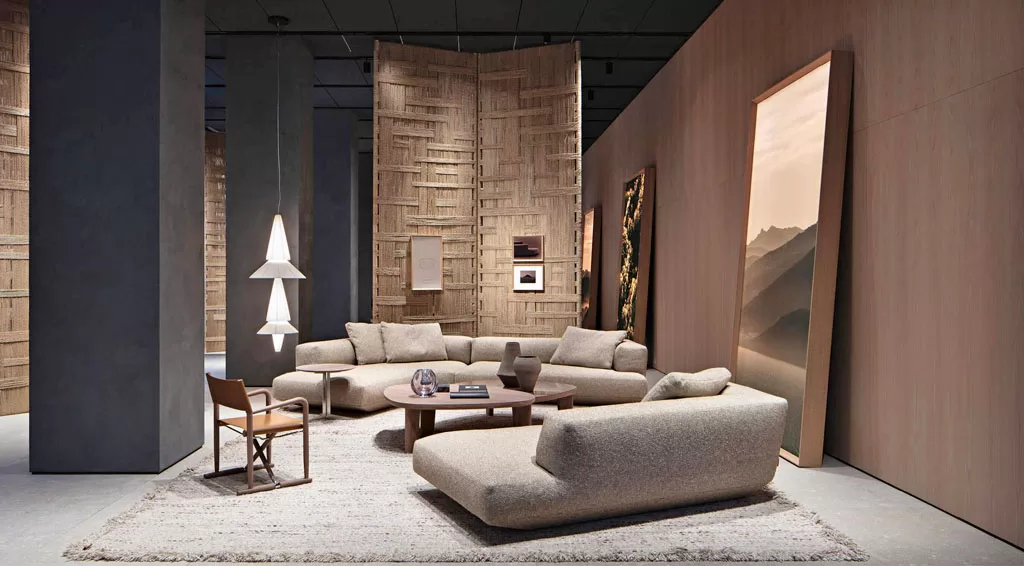
Flexform Luxury Italian Furniture, Iconic Sofas & Timeless Contemporary Design
Flexform creates luxury Italian furniture distinguished by exceptional comfort, understated elegance, refined materials, and an approach to contemporary design intended to transcend temporary trends. Founded in Brianza in 1959 and still rooted in the Italian furniture-making district of Meda, Flexform combines generations of manufacturing expertise with a sophisticated international design culture.
Best known for its extraordinary sofas and modular seating systems, Flexform offers a complete collection for contemporary living, including armchairs, dining chairs, tables, coffee and side tables, chaise longues, ottomans, beds, storage, accessories, and an extensive outdoor collection. Iconic designs such as Groundpiece sit alongside newer seating systems including Gregory, Perry, Camelot, Loungescape, and Quincy, creating a collection that balances continuity with evolution.
What Is Flexform Known for in Luxury Italian Furniture?
Flexform is particularly known for luxurious sofas and modular seating systems that combine exceptional comfort with restrained contemporary design.
Rather than relying on conspicuous decoration, Flexform creates furniture through proportion, materials, construction, tailoring, and detail.
The result is an aesthetic that feels sophisticated without demanding attention.
This understated quality is central to the Flexform identity and helps explain why its furniture works so naturally across many different styles of architecture.
Flexform Began in Brianza in 1959
The Flexform story began in 1959 in a small artisan workshop in Brianza, the region between Milan, Como, and Lecco that developed into one of the world’s most important furniture-making districts.
The company grew during an important period in postwar Italian design, when traditional cabinetmaking and upholstery skills increasingly intersected with industrial production, architectural thinking, and modern design.
Flexform became a joint-stock company in 1967, but the family’s original commitment to craftsmanship remained central to its identity.
Flexform Is Still a Family-Led Italian Furniture Company
Continuity is an important part of Flexform’s character.
Today the company is led by the third generation of its founding family.
This long-term perspective has allowed Flexform to develop gradually rather than continually reinvent itself in response to short-lived trends.
Collections evolve, materials develop, and lifestyles change, but the underlying principles of comfort, quality, discretion, and durability remain remarkably consistent.
Flexform Furniture Is Made in Meda, Italy
Flexform maintains a single production site in Meda, at the heart of the Brianza furniture district.
Design and manufacturing therefore remain closely connected.
This proximity gives the company access to the specialized skills and production knowledge that have made Brianza synonymous with exceptional Italian furniture.
For clients seeking authentic Made in Italy furniture, this connection between design, material, manufacturing, and place is significant.
How Does Flexform Create Its Signature Understated Elegance?
Flexform creates understated elegance by removing anything that does not contribute to comfort, proportion, material quality, or function.
A Flexform sofa rarely depends upon an extravagant gesture.
Instead, the eye begins to notice relationships: the height of a seat, the depth of a cushion, the slenderness of a metal base, the warmth of cowhide, the line of grosgrain piping, or the transition between a structural element and soft upholstery.
These details create sophistication without visual excess.
Flexform Believes Taste Should Outlast Fashion
Fashion changes because change is part of its purpose.
Furniture has a different responsibility.
A sofa, table, or armchair may remain in a home for decades.
Flexform therefore favors a design language based on proportion and material rather than novelty.
This gives the furniture a quiet permanence that works particularly well in interiors designed to evolve over time.
Antonio Citterio Has Played a Defining Role in Flexform Design
Flexform’s collaboration with architect and designer Antonio Citterio began in the 1970s and has become the longest-running creative partnership in the company’s history.
Citterio shares Flexform’s roots in Meda and the broader Brianza design culture.
Together, Flexform and Citterio have developed furniture that combines architectural precision with relaxed comfort.
Groundpiece, Soft Dream, Gregory, Camelot, Cestone, Feel Good, Guscio, and numerous other designs demonstrate the remarkable depth of this collaboration.
Flexform Has Collaborated with Important Generations of Italian Designers
Flexform’s design history extends beyond a single creative partnership.
During the 1960s, the company worked with important figures including Joe Colombo, Cini Boeri, and Rodolfo Bonetto.
These collaborations connected the emerging company to the broader transformation of modern Italian furniture.
That willingness to work with accomplished designers continues to enrich the collection while Flexform maintains a highly coherent overall identity.
Flexform Sofas Define the Brand’s Approach to Contemporary Comfort
The sofa sits at the heart of the Flexform collection.
Comfort is never treated as an addition to the design.
It is one of the design’s starting points.
Generous cushions, carefully considered depths, supportive structures, sophisticated padding, and tactile upholstery create furniture intended for the realities of everyday living.
The forms remain disciplined even when the seating experience is exceptionally relaxed.
Flexform Modular Sofas Adapt to the Architecture of the Room
Contemporary living spaces increasingly require furniture that can respond to architecture.
A sofa may need to define an open-plan living area, face multiple directions, frame a view, incorporate occasional surfaces, or create several conversation zones.
Flexform’s modular seating systems make these relationships possible.
Individual elements can be combined into configurations suited to the scale and circulation of the room.
The sofa becomes part of the interior architecture rather than simply an object placed within it.
Groundpiece Is One of Flexform’s Most Iconic Sofas
Designed by Antonio Citterio in 2001, Groundpiece fundamentally reconsidered the traditional sofa.
Its low profile and generous depth encouraged a more informal way of sitting.
Large, soft cushions emphasized relaxation rather than conventional formality.
Groundpiece responded to the changing reality that a sofa is no longer used only for conversation.
People read, work, watch television, relax, eat, and spend significant portions of everyday life there.
Groundpiece Changed the Relationship Between Sofa and Function
One of Groundpiece’s most important innovations was the ability to incorporate cowhide-clad storage and surface elements within the seating composition.
These components could replace portions of the conventional armrest or backrest.
The sofa therefore became more than upholstered seating.
It could also provide places for books, objects, work, and the everyday things that accumulate around the living room.
This integration helped establish Groundpiece as a new model for contemporary modular seating.
Groundpiece Combines Rigorous Structure with Exceptional Softness
The visual character of Groundpiece depends upon contrast.
Structured cowhide elements provide precision.
Large cushions create softness.
The low base gives the composition an architectural horizontal line, while loose upholstery prevents it from becoming severe.
This balance between discipline and relaxation has become one of the most recognizable qualities of Flexform furniture.
Groundpiece Extends Beyond the Living Room
The Groundpiece vocabulary has expanded beyond the original seating system.
Beds and occasional furniture carry the same understated material language into other parts of the home.
This demonstrates one of Flexform’s strengths: successful ideas can evolve into broader furniture families without becoming repetitive.
Gregory Combines Tailored Leather Details with a Sculptural Metal Base
Gregory, designed by Antonio Citterio, presents a more visibly structural interpretation of the Flexform sofa.
A distinctive metal base gives the seating architectural definition, while exposed elastic webbing finished with cowhide introduces warmth and craftsmanship.
Soft cushions and goose-down-filled backrests balance the precision of the structure.
The result sits elegantly between classic and contemporary design.
Gregory and Gregory XL Adapt to Different Scales of Living
Gregory is available in stand-alone and modular configurations, allowing the design to respond to different room sizes.
Gregory XL expands the scale for larger interiors and more generous seating.
This ability to maintain the same design character across different proportions is particularly useful for architects and interior designers working with large residential spaces.
Soft Dream Creates an Exceptionally Light Expression of Comfort
Soft Dream, designed by Antonio Citterio in 2010, appears visually lighter than many deeply upholstered sofas.
Elegant metal feet lift the composition above the floor.
A cowhide-covered metal base supports generously filled seat and back cushions.
The contrast between the slender supporting structure and the softness above creates a sophisticated sense of balance.
Soft Dream and Soft Dream Large Offer Different Seating Depths
Flexform recognizes that comfort is not identical for every person or every interior.
Soft Dream and Soft Dream Large offer different depths, allowing designers to select proportions according to the room and the desired seating experience.
This attention to dimensional choice is representative of Flexform’s broader approach to customization.
Perry Introduces a More Dynamic Approach to Modular Seating
The Perry seating system, designed by Antonio Citterio, uses irregularly shaped modules to move beyond conventional linear sofa arrangements.
The compositions can feel more fluid and informal.
Generous goose-down padding creates softness, while carefully tailored piping maintains visual definition.
Functional cowhide-clad storage and integrated wood surfaces can be incorporated within the system.
Camelot Combines Advanced Modularity with Exceptional Comfort
Camelot explores the relationship between rigorous structure and soft upholstery.
Metal supports and a cylindrical bar in wood or cowhide establish a precise framework.
Generously padded cushions create an inviting contrast.
The system includes elements in multiple widths and depths, giving designers considerable freedom to develop personalized compositions.
Camelot Demonstrates Flexform’s Approach to Tailoring
Tailoring is visible in the details of Camelot.
Piping can be specified tone-on-tone or in contrasting colors.
Upholstery is available in fabric or leather.
Structural metal finishes can be coordinated with different woods and cowhides.
These decisions allow one seating system to take on very different personalities depending upon the project.
Loungescape Reimagines the Sofa as a Landscape for Living
Loungescape continues Flexform’s exploration of how contemporary seating can support more fluid ways of living.
Rather than thinking of the sofa as a fixed object with one orientation, large modular systems can create a landscape within the room.
This approach is especially relevant to open-plan architecture, where furniture helps establish zones without building physical walls.
Quincy Brings Flexform’s Design Philosophy into the 2026 Collection
Quincy joins the Flexform collection as a new sofa and sectional system for 2026.
Its inclusion within both stand-alone and sectional seating reflects the company’s continued focus on flexibility.
New designs evolve the collection while preserving the values that have long defined Flexform: measured proportions, comfort, tailoring, material quality, and quiet sophistication.
Flexform Armchairs Combine Comfort with Architectural Precision
Armchairs allow Flexform to explore different relationships between structure and upholstery.
Some designs emphasize enveloping comfort.
Others reveal wood, metal, leather, or woven elements more clearly.
Because armchairs often sit beside sofas rather than matching them exactly, they provide designers with an opportunity to introduce a complementary form or material into the living room.
Feel Good Brings Lightness to Upholstered Seating
Feel Good is characteristic of Flexform’s ability to create furniture that appears visually light while remaining highly comfortable.
A refined base and carefully shaped upholstery allow the chair to work in residential, dining, executive, and contract environments.
Its versatility demonstrates how Flexform designs can cross traditional furniture categories.
Guscio Creates a Refined Contemporary Armchair with Enveloping Comfort
Guscio balances a compact silhouette with a comfortable, embracing seat.
Its restrained form allows upholstery and finish selections to shape the personality of the chair.
In a living room, bedroom, study, or hospitality environment, Guscio can add comfort without overwhelming the surrounding architecture.
Flexform Dining Chairs Bring Upholstered Comfort to the Table
Dining furniture requires a different kind of comfort from lounge seating.
The chair needs to support extended meals and conversation while remaining appropriately scaled around the table.
Flexform dining chairs combine ergonomic consideration with refined materials and careful detailing.
Wood, metal, fabric, leather, and cowhide provide a wide range of possibilities.
Flexform Tables Balance Architectural Form with Rich Materials
Dining tables can serve as important visual anchors.
Flexform offers designs that range from restrained to more sculptural expressions.
Wood, marble, stone, glass, and metal allow the table to connect with surrounding architecture and furniture.
The forms remain disciplined enough to allow the beauty of the materials to remain visible.
Flexform Coffee and Side Tables Create Functional Layers Around Seating
Occasional tables are essential to the way a living room functions.
Flexform designs them to work in close relationship with sofas and armchairs.
Different heights, sizes, materials, and forms allow designers to layer surfaces throughout a seating composition.
Some tables integrate directly into modular systems, while others stand independently.
Cowhide Is an Important Material in the Flexform Design Vocabulary
Cowhide frequently appears as a structural or tailored detail rather than conventional soft upholstery.
It may wrap storage elements, cover a metal frame, finish webbing, or create a precise surface.
This gives the material an architectural character.
Its natural warmth also provides a useful contrast with metal structures and soft fabric cushions.
Flexform Uses Wood to Bring Warmth to Contemporary Furniture
Wood is an important counterpoint to upholstered surfaces and metal.
Canaletto walnut, ash, oak, and other finishes can appear in tables, cabinetry, seating structures, or integrated sofa components.
The natural grain introduces warmth and subtle variation.
This helps Flexform furniture feel sophisticated without becoming visually cold.
Flexform Metal Details Give Furniture Precision and Lightness
Metal bases and structural components allow large upholstered forms to appear lighter.
Burnished, chrome, black chrome, satin, titanium, anthracite, and other finishes provide opportunities to coordinate furniture with architecture and surrounding materials.
The details are often restrained, but their precision contributes significantly to the finished piece.
Flexform Upholstery Reflects a Culture of Italian Tailoring
Stitching, piping, removable covers, carefully resolved seams, and the transition between soft and structural materials reveal Flexform’s upholstery expertise.
These details are rarely decorative for decoration’s sake.
Instead, they define edges, clarify form, and demonstrate the skill involved in making the furniture.
Flexform Offers Extensive Fabric and Leather Choices
Upholstery can dramatically change the personality of a design.
A neutral woven textile may emphasize softness.
Leather can make the same piece feel more architectural.
Texture adds depth to monochromatic interiors.
Color can create a focal point.
Flexform’s broad material palette allows designers to adapt furniture to highly specific residential and contract concepts.
Flexform Furniture Is Designed Around Genuine Everyday Comfort
Luxury furniture needs to be lived with.
Flexform’s design philosophy recognizes this directly.
Sofas support reading, conversation, relaxation, work, and entertainment.
Dining chairs support long meals.
Beds provide both visual calm and physical comfort.
Outdoor furniture encourages people to spend more time outside.
The sophistication of the design never replaces usability.
Flexform Beds Bring Understated Italian Elegance to the Bedroom
Flexform’s bedroom collection translates the same values found in its living furniture into a quieter environment.
Upholstered headboards provide softness.
Carefully controlled proportions create visual calm.
Fabric and leather options allow the bed to coordinate with the larger interior palette.
Flexform Storage Furniture Brings Architectural Order to the Interior
Cabinets and bookshelves provide essential function while helping organize a room visually.
Flexform approaches storage with the same restraint found throughout the collection.
Materials and details provide sophistication without unnecessary ornament.
This makes the pieces particularly compatible with contemporary architecture.
Flexform Furniture Works Particularly Well in Open-Plan Interiors
Open-plan architecture depends heavily on furniture to create hierarchy.
A modular sofa can define a living area.
A large table establishes the dining zone.
Armchairs can redirect circulation or create a smaller conversation area.
Occasional tables and rugs reinforce these relationships.
Flexform’s disciplined forms allow these zones to feel connected without becoming overly coordinated.
Flexform Creates Luxury Through Restraint Rather Than Excess
Luxury at Flexform is communicated through the quality of the experience.
A cushion feels exceptionally comfortable.
Leather is beautifully finished.
A seam is carefully resolved.
A metal base is precisely detailed.
A modular configuration fits the architecture naturally.
These qualities may not be immediately dramatic, but they become increasingly apparent through use.
Flexform Furniture Complements Contemporary Architecture
Flexform’s restrained design language works particularly well with strong architectural materials.
Concrete, plaster, stone, glass, wood, and metal can provide the setting while upholstered furniture introduces softness.
Because Flexform rarely depends upon decorative motifs, the furniture can support architecture without competing with it.
Flexform Also Works Beautifully in Traditional and Transitional Interiors
Timeless design does not require a completely modern environment.
The measured proportions and natural materials of Flexform furniture can work effectively within older architecture and transitional interiors.
A contemporary sofa can bring clarity to a historic room while textiles, leather, and wood provide continuity with the existing material character.
Neutral Flexform Interiors Reveal the Importance of Texture
Flexform is particularly effective in quiet color palettes.
When strong color contrast is reduced, subtle differences become more noticeable.
Woven fabric, smooth leather, cowhide, wood grain, stone, and metal each interact with light differently.
These layers allow a neutral room to feel rich rather than monotonous.
Flexform Furniture Can Be Personalized Without Losing Its Identity
Customization is important, but too many options can sometimes dilute a design.
Flexform maintains a strong underlying framework.
Dimensions, modules, upholstery, piping, woods, leathers, and metal finishes can change while the essential proportions and construction remain recognizable.
This balance gives designers flexibility without sacrificing coherence.
Flexform Is an Exceptional Resource for Architects and Interior Designers
Architects and interior designers need furniture that can respond precisely to a project.
Flexform’s modular systems address floor plans.
Different depths and proportions address room scale.
Extensive materials respond to the interior palette.
Indoor and outdoor collections allow continuity across architecture.
This combination makes Flexform especially useful for sophisticated residential and hospitality projects.
Flexform Furniture Supports Large Luxury Residential Projects
Large homes often require furniture capable of occupying generous spaces without feeling visually heavy.
Flexform’s modular seating systems can create substantial compositions while maintaining a sense of order.
Multiple seating zones can be developed around views, fireplaces, art, or circulation.
The breadth of the collection also allows designers to extend a consistent level of quality across living, dining, bedroom, and outdoor spaces.
Flexform Furniture Is Equally Effective in Sophisticated Urban Interiors
Not every project requires enormous scale.
Many Flexform designs can work effectively in apartments and urban residences where proportion and visual lightness are particularly important.
Carefully selected stand-alone sofas, armchairs, dining chairs, and occasional tables can introduce exceptional comfort without overwhelming the architecture.
Flexform Outdoor Extends the Brand’s Philosophy into Open-Air Living
Flexform permanently introduced its outdoor collection in 2019, bringing the same emphasis on comfort, elegance, craftsmanship, and material quality into exterior spaces.
The collection includes modular and stand-alone sofas, armchairs, daybeds, dining chairs, tables, coffee and side tables, ottomans, and accessories.
These pieces allow gardens, terraces, patios, verandas, and pool areas to function as sophisticated extensions of the home.
Flexform Outdoor Furniture Is Designed for Real Exterior Environments
Outdoor furniture requires more than an indoor aesthetic translated into weather-resistant materials.
Frames, upholstery, finishes, and fabrics must respond to sun, moisture, temperature, and repeated use.
Flexform combines durable outdoor materials with the refined proportions and comfort associated with its interior collection.
The result preserves the brand’s identity while addressing the practical demands of open-air living.
Flexform Outdoor Sofas Create Comfortable Open-Air Living Rooms
Modular outdoor sofas allow exterior spaces to function like genuine living rooms.
Linear elements, corners, chaise longues, benches, stools, and other modules can be combined according to the architecture.
Large gardens can support expansive seating compositions, while smaller terraces can use more compact arrangements.
Camelot Outdoor Extends a Sophisticated Seating Language Beyond the Interior
Camelot Outdoor translates the design principles of its indoor counterpart for exterior use.
The collection allows designers to maintain visual continuity between living rooms and terraces while selecting materials appropriate for outdoor conditions.
This continuity is particularly effective in contemporary homes with large glass openings.
Flexform Outdoor Includes Seating for Gardens, Patios, Terraces, and Pool Areas
The outdoor collection is intentionally broad.
Sofas and armchairs establish lounge areas.
Daybeds support poolside relaxation.
Dining chairs and tables create outdoor dining rooms.
Coffee and side tables provide functional surfaces.
Accessories complete the environment.
This allows exterior spaces to receive the same level of design consideration as interiors.
Flexform Outdoor Dining Creates a Refined Setting for Entertaining
Outdoor dining has become an important part of contemporary residential design.
Flexform tables and chairs allow these areas to feel architecturally connected to the home.
Durable materials address exterior performance while sophisticated proportions preserve a sense of Italian refinement.
Flexform Is Particularly Relevant to Austin’s Indoor-Outdoor Lifestyle
Austin’s architecture and climate make outdoor living an important consideration for many residential projects.
Covered terraces, courtyards, pools, patios, and outdoor entertaining areas can function as major extensions of the home.
Flexform’s combination of sophisticated interior furniture and extensive outdoor collections makes it particularly well suited to projects where designers want a continuous language of comfort and understated luxury from inside to outside.
Longevity Is Central to Flexform’s Approach to Sustainability
Flexform identifies durability as a fundamental expression of sustainability.
Furniture designed to remain useful and desirable for many years reduces the need for frequent replacement.
Timeless aesthetics support that physical longevity.
A well-made sofa is more sustainable when its construction and design encourage owners to keep it rather than replace it as styles change.
Flexform Furniture Is Designed to Age Beyond Short-Lived Trends
Timelessness is not the absence of design.
It is the ability of a design to remain convincing after the moment in which it was introduced.
Groundpiece is a strong example.
Introduced in 2001, its low proportions, integrated functions, and relaxed comfort remain highly relevant decades later.
This longevity illustrates the strength of Flexform’s preference for evolution over fashion.
Flexform’s 2026 Collection Continues Its Culture of Quiet Evolution
The 2026 indoor collection introduces new pieces including Quincy, Everett, Justine, Avalon, Tara, Marquis, Louise, Clarence, Cove, Soreto, and Odette.
Rather than abandoning the established Flexform language, these designs continue its emphasis on generous dimensions, measured proportions, tailoring, tactile materials, and lasting comfort.
The collection evolves while remaining recognizably Flexform.
Flexform’s 2026 Outdoor Collection Expands the Possibilities for Open-Air Living
New outdoor introductions include Everett Outdoor, Margherì, Kim Outdoor, Tara Outdoor, Bouté, and Jiff Outdoor.
These additions strengthen an already broad outdoor collection and give designers more ways to develop lounge, poolside, and al fresco dining environments.
For climates where exterior living is a major part of residential design, this continued investment in outdoor furniture is particularly relevant.
Flexform Received a 2026 Compasso d’Oro Career Recognition
In 2026, Pietro and Antonio Franco Galimberti received the ADI Compasso d’Oro Lifetime Achievement Award.
The recognition reflects the significance of Flexform’s family history, its connection to Meda and Brianza, and its longstanding contribution to Made in Italy furniture.
It also reinforces the consistency that has characterized the company’s development across generations.
Why Choose Flexform for a Luxury Contemporary Interior?
Flexform offers a rare combination of comfort, craftsmanship, architectural discipline, material sophistication, and long-term relevance.
The furniture is distinctive without becoming visually dominant.
Its modularity supports complex floor plans.
Its extensive material options support highly individual interiors.
Its indoor and outdoor collections allow designers to develop continuity across an entire residence.
For clients seeking furniture that feels luxurious through quality rather than display, Flexform is an especially compelling choice.
Where Can You Experience Flexform Furniture in Austin?
Scott + Cooner represents Flexform through our Austin showroom, giving architects, interior designers, and design-conscious clients in Austin and Central Texas a local resource for exploring this exceptional Italian furniture collection.
Clients can work with the Scott + Cooner Austin team to explore Flexform sofas, modular sectionals, armchairs, dining chairs, tables, beds, storage, occasional furniture, outdoor collections, fabrics, leathers, cowhides, woods, stones, and metal finishes.
Because Flexform offers extensive modular and material choices, experienced specification can be especially valuable when developing a furniture plan for a sophisticated residential or contract interior.
Scott + Cooner Austin Is the Scott + Cooner Showroom for Flexform
Within the Scott + Cooner showroom network, Flexform is represented through Scott + Cooner Austin.
This distinction is important for clients searching specifically for Flexform furniture through Scott + Cooner.
Austin-area clients and design professionals can work directly with our Austin showroom team for Flexform product selection, configurations, materials, finishes, specifications, and project support.
Scott + Cooner Austin Connects Central Texas with Flexform Italian Furniture
Austin has become an important center for contemporary architecture, interior design, art, hospitality, and sophisticated residential development.
Flexform fits naturally within this environment.
Its quiet Italian elegance complements modern architecture, while its exceptional comfort supports the relaxed way many Austin homes are designed to be lived in.
Scott + Cooner Austin provides the local connection between Central Texas projects and Flexform’s furniture-making culture in Meda, Italy.
Flexform Furniture Is Well Suited to Contemporary Austin Homes
Many contemporary Austin residences combine open interiors, generous entertaining spaces, natural materials, large windows, and strong relationships to the surrounding landscape.
Flexform’s modular sofas can organize these larger rooms without making them feel rigid.
Wood, leather, cowhide, stone, and tactile textiles complement material-driven architecture.
Outdoor collections extend the same sophisticated vocabulary to terraces, pools, courtyards, and gardens.
Austin Interior Designers Can Specify Flexform Through Scott + Cooner
Specifying a Flexform sofa involves much more than selecting a model.
Overall dimensions, individual modules, seat depth, orientation, upholstery, piping, cowhide, wood, metal finishes, occasional tables, and relationships to surrounding furniture all influence the final composition.
Scott + Cooner Austin can help architects and interior designers navigate these decisions and develop Flexform specifications appropriate to the architecture and lifestyle of the project.
Scott + Cooner Austin Supports Residential and Contract Flexform Projects
Flexform can work across private residences, luxury multifamily interiors, hospitality environments, executive spaces, and other sophisticated projects.
Scott + Cooner Austin can support projects ranging from a single Flexform sofa or armchair to more extensive furniture specifications incorporating living, dining, bedroom, and outdoor collections.
This local project support is particularly valuable when modular seating, multiple finishes, and complex configurations need to be coordinated.
Flexform Outdoor Furniture Is Especially Relevant to Austin and Central Texas
The relationship between interior and exterior living is particularly important in Austin.
Pools, covered patios, outdoor kitchens, terraces, courtyards, and landscaped entertaining areas often form an integral part of the home.
Flexform Outdoor gives architects and designers a sophisticated way to furnish these environments while maintaining continuity with the interior.
Sofas, armchairs, daybeds, dining furniture, occasional tables, and accessories can create exterior rooms with the same attention to comfort and material quality found indoors.
Discover Flexform Luxury Italian Furniture & Iconic Sofas at Scott + Cooner Austin
Scott + Cooner represents Flexform through our Austin showroom as part of our curated collection of exceptional contemporary furniture and international design.
Since 1995, Scott + Cooner has worked with architects, interior designers, and design-conscious clients seeking extraordinary modern furniture, lighting, kitchens, closets, rugs, accessories, textiles, and architectural products for sophisticated residential and contract interiors.
Our Austin team can help you explore Flexform Groundpiece, Gregory, Soft Dream, Perry, Camelot, Loungescape, Quincy, and other Flexform sofas and modular seating systems, along with armchairs, dining chairs, tables, coffee tables, beds, storage, outdoor furniture, fabrics, leathers, cowhides, woods, stones, and metal finishes.
For clients and design professionals searching for Flexform furniture in Austin or Central Texas, Scott + Cooner Austin provides a dedicated local resource for product selection, modular planning, material specification, and project support.
Whether you are furnishing a contemporary Austin residence, developing a luxury interior, specifying an iconic Italian sofa, creating a large modular seating composition, or designing sophisticated indoor-outdoor spaces, Scott + Cooner Austin can help you discover Flexform furniture that brings together Made in Italy craftsmanship, exceptional comfort, understated elegance, personalization, and enduring contemporary design.