
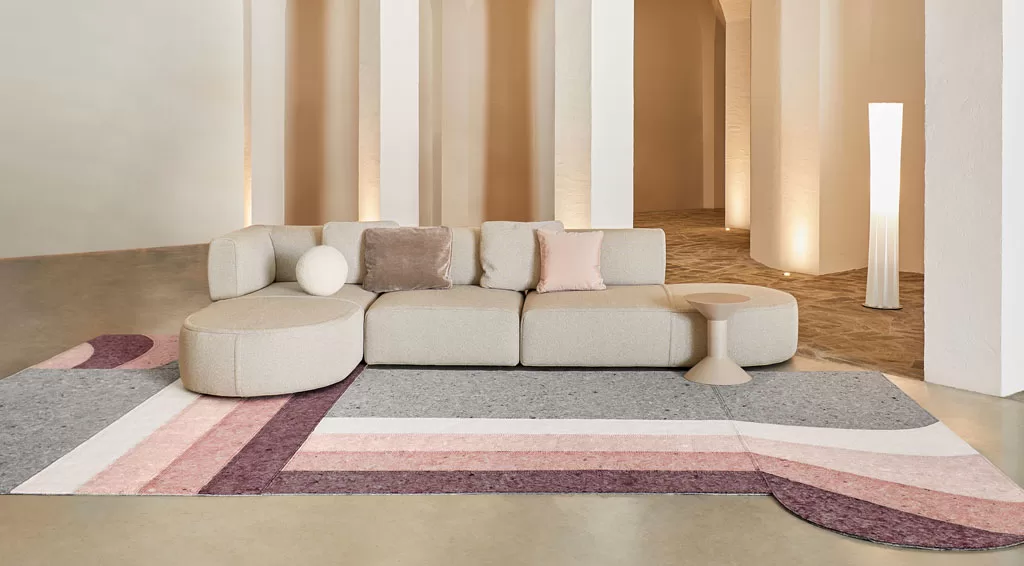

GAN Rugs and Contemporary Textile Design
GAN creates contemporary handmade rugs, textile accessories and modular living systems that unite innovative design with traditional craftsmanship. Part of the GANDIABLASCO Group, the Spanish brand collaborates with internationally recognized designers to transform ancestral textile techniques into expressive pieces for modern interiors and outdoor spaces.
Every GAN collection is crafted in India by skilled artisans using natural or recycled fibers. Hand-knotting, hand-tufting, hand-loom weaving, kilim, embroidery and felt techniques give each design its distinctive color, texture and character.
Scott + Cooner helps homeowners, architects and interior designers select GAN rugs, poufs, cushions, tapestries and modular textile furnishings for residential and commercial projects.
Contemporary Rugs Rooted in Craftsmanship
GAN approaches a rug as more than a decorative surface. Each piece represents a connection between contemporary design, material knowledge and generations of textile-making expertise.
The collections are produced slowly and piece by piece by artisans in India. Depending on the design, fibers may be knotted, woven, tufted, embroidered or shaped by hand. These processes introduce subtle variations that distinguish a handcrafted rug from a completely standardized industrial product.
GAN combines this traditional knowledge with original patterns, unexpected dimensions and modern color palettes. The result is a collection that feels culturally grounded while remaining relevant to contemporary architecture and interiors.
Part of the GANDIABLASCO Group
GAN belongs to the GANDIABLASCO Group, a Spanish design company with textile roots dating to 1941. This heritage provides an important foundation for the brand’s understanding of fibers, weaving and the role textiles play in defining a space.
GAN emerged as a contemporary expression of that textile tradition, bringing together artisanal production and collaborations with international designers. Its rugs range from restrained geometric compositions to richly textured, sculptural designs.
The broader collection now includes indoor and outdoor rugs, poufs, cushions, seating modules, mattresses and tapestries. These products allow textiles to influence not only the visual character of a room but also how it is used.
Handmade Rugs from India
All GAN collections are crafted in India, where highly skilled artisans preserve and reinterpret a wide range of rug-making traditions.
Handcrafted production requires time, concentration and material sensitivity. The maker must respond to changes in tension, fiber and pattern as the work progresses. This human involvement gives the finished rug a depth and individuality that cannot be produced through automation alone.
GAN works with techniques suited to different visual and tactile effects. A tightly knotted rug can accommodate intricate patterning, while a hand-loomed design emphasizes rhythm and surface. Tufting creates a soft, substantial pile, and embroidery introduces dimensional detail.
By sustaining this specialist knowledge, GAN connects contemporary interiors with a much longer history of textile craft.
Hand-Knotted GAN Rugs
Hand-knotting is one of the most detailed and labor-intensive methods of rug production. Each knot is tied individually around the warp threads, allowing the artisan to build a precise design gradually across the surface.
The technique can create intricate patterns, controlled color transitions and a dense, durable pile. The character of the finished rug depends on the fiber, knot density, pile height and complexity of the design.
Hand-knotted rugs are particularly appropriate for living rooms, bedrooms, libraries and other interiors where material depth and long-term use are priorities. Their substantial craftsmanship also gives them the presence of collectible textile art.
Hand-Tufted and Hand-Loomed Rugs
Hand-tufting uses a specialized handheld tool to insert yarn through a stretched foundation according to a prepared pattern. This method allows designers to explore bold graphics, contrasting pile heights and sculptural textures.
Hand-loom weaving produces a different type of surface. Threads are interlaced on a loom to create rugs that may range from compact and structured to soft and dimensional. Variations in yarn, weaving pattern and tension generate visual movement without requiring printed decoration.
These techniques make it possible for GAN to offer a broad selection of textures, colors and price points while preserving a meaningful element of hand production.
Kilim, Embroidery and Felt Techniques
GAN also works with flat-woven kilim, embroidery and felt. Each technique contributes a distinct relationship between pattern and texture.
Kilim rugs have a relatively flat profile and often emphasize graphic color relationships. Their reduced thickness makes them useful beneath dining furniture, in entryways or in areas where door clearance is a consideration.
Embroidered collections introduce visible handwork directly onto a woven ground. The stitched surface can create geometric patterns, dimensional details and color contrasts that reveal the maker’s process.
Felt offers another approach to structure and tactility. It can be cut, layered, knotted or assembled to create surfaces that feel both soft and architectural.
The Mangas Collection by Patricia Urquiola
Patricia Urquiola’s Mangas collection changed conventional expectations of what a rug could be. Its name refers to sleeves, reflected in patterns and textures inspired by hand-knitted garments.
Mangas combines varied stitches, colors and pile heights within unconventional shapes. Rather than appearing as a uniform flat field, each rug has a strongly dimensional surface that resembles an oversized piece of knitwear.
Organic outlines allow Mangas rugs to define space without relying on the traditional rectangle. The collection can introduce softness and movement to living rooms, bedrooms and hospitality settings while acting as a central design feature.
The idea later expanded into Mangas Space, which combines rugs with coordinating poufs and upholstered modules. These components turn the textile surface into a complete environment for sitting, gathering and relaxing.
Mangas Outdoor
Mangas Outdoor translates the volume, texture and flexibility of the original collection into materials developed for exterior use.
The collection includes rugs, poufs and modular seating elements that can be arranged to suit terraces, covered patios, poolside areas and other open-air environments. Recycled fibers and outdoor-appropriate construction support exterior performance while preserving the handcrafted appearance of the indoor designs.
Mangas Outdoor helps soften hard architectural surfaces and gives exterior spaces the warmth normally associated with an interior room. Its modular nature also allows configurations to change according to the activity or season.
Garden Layers by Patricia Urquiola
Garden Layers is Patricia Urquiola’s first outdoor collection for GAN. Inspired by Mughal architecture, gardens and customs, it combines contemporary design with references to traditional ways of resting and gathering close to the ground.
The collection begins with outdoor rugs and expands through mattresses, cushions, rolls, low beds and side tables. These elements can be layered and rearranged to create informal spaces for lounging, conversation and relaxation.
Patterns including checks, tartans and diagonals are designed to mix across coordinated palettes. The result can be subtle and tonal or more richly layered, depending on the selected combination.
Garden Layers exemplifies the GAN Spaces concept: the rug becomes the foundation for an entire environment rather than the final accessory added to it.
GAN Spaces
GAN Spaces are integrated collections in which rugs, seating modules and accessories work together to create a complete spatial composition.
This approach challenges the traditional distinction between floor covering and furniture. A rug establishes the visual and tactile foundation, while poufs, cushions, mattresses and upholstered modules extend that textile language vertically into the room.
GAN Spaces can be configured for residential living rooms, informal lounges, creative workplaces and hospitality interiors. Their open arrangements encourage flexible use rather than imposing one fixed seating position.
Because the components are designed as related families, clients can create a cohesive environment while choosing the size and complexity appropriate to the project.
Designer Collaborations
GAN develops its collections through collaborations with architects, artists and designers who bring different perspectives to textile craft.
The company’s collaborators include Patricia Urquiola, Kengo Kuma, Neri&Hu, Raw-Edges, Charlotte Lancelot, Nendo, Bodo Sperlein, José A. Gandía-Blasco Canales and Alejandra Gandía-Blasco Lloret.
Some designers focus on geometry and repetition, while others explore organic form, embroidery, architectural structure or cultural memory. GAN translates these varied concepts through the most appropriate combination of fiber and artisan technique.
This collaborative model creates a diverse catalog without losing the handmade identity that connects the collections.
Natural and Recycled Fibers
GAN rugs are produced using materials selected according to the design, texture and intended application. These include natural fibers such as wool, cotton and jute, as well as recycled fibers developed for indoor or outdoor performance.
Wool provides softness, warmth and resilience, making it a natural choice for living rooms and bedrooms. Cotton may be used alone or in combination with other fibers to create lighter textures and detailed weaving. Jute introduces a drier, more organic character.
Recycled PET is used in selected collections, particularly outdoor designs. It can provide a surprisingly soft textile surface while offering the performance needed for exterior environments.
Material specifications vary across the collection, so fiber content and maintenance requirements should be reviewed for each individual design.
GAN Outdoor Rugs
GAN outdoor rugs bring pattern, texture and color to terraces, patios and poolside settings. Collections including Garden Layers and Mangas Outdoor are designed to help exterior areas feel more comfortable and connected to the interior.
An outdoor rug can define a dining area, anchor lounge furniture or introduce softness beneath a covered seating group. It can also help organize a large terrace into distinct zones for gathering, dining and relaxation.
Exposure conditions vary considerably between projects. The location, climate, drainage and level of protection should be considered when selecting an outdoor rug and planning its ongoing care.
Poufs, Cushions and Tapestries
GAN’s collection extends beyond floor rugs to include poufs, cushions, modules and textile artwork.
Poufs add flexible seating and can introduce a coordinating texture or color without requiring a large furniture piece. Cushions provide another way to layer pattern and softness across sofas, benches and modular systems.
GAN tapestries bring textile craft onto the wall. They can function as artwork while adding visual warmth and acoustic softness to residential, hospitality and workplace interiors.
Using these products together makes it possible to develop a room through related textiles while maintaining variety in scale, form and function.
Choosing the Right GAN Rug
Selecting a GAN rug begins with the architecture and intended use of the room. The rug should relate to the furniture arrangement rather than simply filling available floor space.
In a living room, a larger rug can unify the primary seating group and make the room feel more generous. Beneath a dining table, the rug should extend far enough to accommodate chairs when they are pulled back. A bedroom rug may be positioned to provide softness around the bed or used as a smaller accent beside it.
Color and pattern should be considered alongside upholstery, artwork and surrounding materials. A bold GAN design can become the visual focus of a restrained room, while a quieter textured rug can add depth without competing with other elements.
Fiber, pile height and construction should also correspond to traffic, maintenance expectations and furniture placement.
Custom Rugs and Project Applications
GAN offers custom capabilities for projects requiring specific dimensions, colors or configurations. Customization can help a rug respond precisely to architectural conditions, furniture layouts and a project’s broader material palette.
For hospitality and commercial settings, the specification process should consider traffic, acoustic goals, installation conditions and maintenance. Residential projects may prioritize softness, color and the relationship between the rug and surrounding furniture.
Architects and interior designers can use GAN rugs as focal pieces or as foundations for complete textile environments.
Discover GAN Rugs at Scott + Cooner
Scott + Cooner offers GAN rugs and textile furnishings for clients seeking contemporary design, expressive color and authentic craftsmanship.
Our experienced team works with homeowners, architects and interior designers to select appropriate collections, dimensions, materials and colorways. We can also assist with outdoor rugs, GAN Spaces configurations and custom project requirements.
Explore handmade GAN rugs, Patricia Urquiola’s Mangas and Garden Layers collections, outdoor designs, poufs, cushions and tapestries with guidance from Scott + Cooner. Contact us for product information, samples, pricing and lead times.