
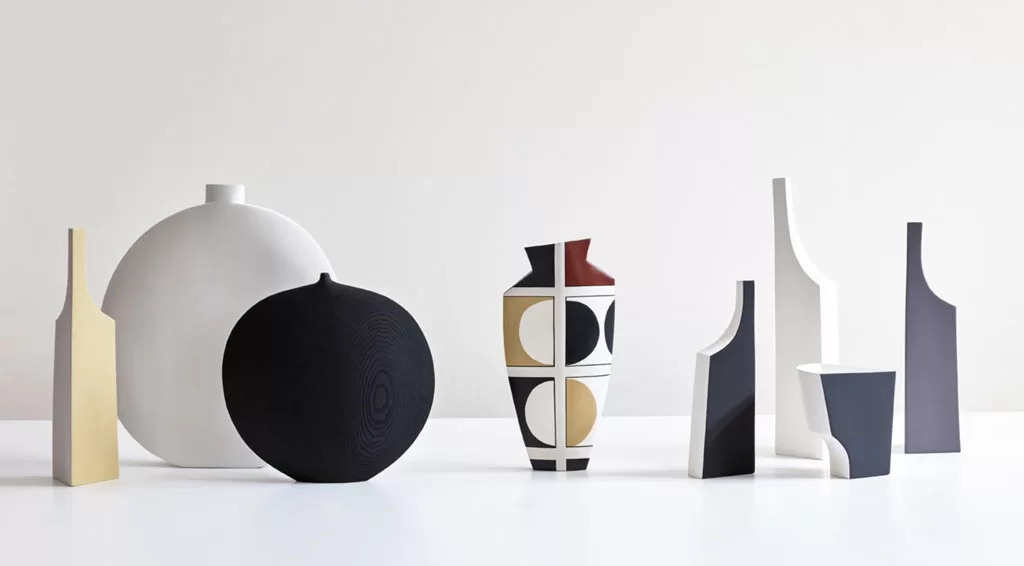

Kose Milano Handmade Italian Vases and Decorative Objects
Kose Milano creates handmade Italian vases and decorative objects defined by pure lines, elemental materials, and quietly expressive forms. Designed by Rosaria Rattin, the collection brings together clay, porcelain, wood, gauze, precious-metal finishes, and other carefully selected materials.
Every Kose object reflects an appreciation for irregularity, touch, and the evidence of the artisan’s hand. Restrained silhouettes allow surface, proportion, and material to become the focus, creating pieces that feel contemporary while remaining connected to ancient craft traditions.
Handmade in Italy
The Kose collection is produced entirely in Italy using specialized artisanal techniques. Each object passes through processes that may include forming, shaping, firing, glazing, polishing, painting, or applying metal leaf by hand.
This method of production gives every piece subtle individuality. Differences in tone, texture, surface, and finish should not be understood as imperfections; they are natural characteristics of an object made through human skill and material transformation.
Kose offers an alternative to standardized decorative production. Its objects appeal to people who value the emotional and tactile qualities of pieces made slowly and with intention.
Rediscovering Traditional Craft
Kose was created to rediscover the appeal of historic craftsmanship within a technological and increasingly uniform world. Its collections return attention to clay, wood, gauze, porcelain, and the knowledge required to shape them.
Traditional technique does not result in nostalgic design. Kose uses old methods to produce contemporary objects with clean profiles, unexpected scale, and architectural presence.
The dialogue between ancient process and modern form gives the collection its distinct identity. Each object feels timeless because it is not dependent upon excessive decoration or passing trends.
Designed by Rosaria Rattin
Designer Rosaria Rattin draws from experience in both fashion and interior design. Her work reflects fashion’s sensitivity to silhouette, texture, finish, and changing expressions of elegance, combined with an architectural understanding of space and proportion.
Rattin studied architecture in Venice before pursuing fashion in Paris and working within major fashion companies. Her return to object design led to the development of Kose as a personal and unconstrained creative expression.
The collection’s elongated profiles, layered finishes, and refined colors often resemble sculptural garments for the home. Each piece has a carefully considered presence without appearing overdesigned.
Pure and Essential Forms
Kose vases are distinguished by clear silhouettes and carefully controlled proportions. Tall bottle shapes, rounded vessels, crescent forms, monolithic profiles, and geometric compositions allow the material to speak without distraction.
Many designs are available in coordinated dimensions, making it possible to group related forms at different heights. The repetition creates rhythm, while variations in scale and finish prevent the arrangement from feeling rigid.
Used individually, a Kose vase becomes a quiet sculptural focal point. Displayed in a group, the objects can form an architectural composition across a console, dining table, shelf, or floor.
Handworked Clay
Clay is central to the Kose collection. Its earthy, tactile character supports the brand’s desire to reconnect contemporary interiors with natural material and human workmanship.
Shaping and firing transform the clay while preserving subtle evidence of the process. A matte surface emphasizes the vessel’s form and texture, while a glazed or polished finish interacts more actively with light.
The apparent simplicity of each object requires control. Slender necks, broad bodies, asymmetrical silhouettes, and large dimensions must be carefully formed and fired to preserve the intended proportions.
Matte and Satin Finishes
Matte finishes give Kose clay vases a soft, mineral-like presence. Their low reflectivity emphasizes silhouette, texture, and the natural quality of the material.
Satin finishes introduce a gentle sheen without creating the mirror-like appearance of a highly polished surface. This subtle reflection helps define curves and edges as light moves across the object.
Both finishes work well in restrained contemporary interiors. Matte clay can introduce quiet contrast against polished stone or glass, while satin surfaces coordinate naturally with silk, wood, brushed metal, and softly finished walls.
Glazed and Polished Surfaces
Glazed and polished Kose objects offer a more luminous interpretation of the same essential forms. Reflections accentuate curved profiles and give darker colors additional depth.
Black, white, bronze, copper, and related finishes allow the collection to complement a broad range of interiors. Dark reflective vessels bring drama and definition, while white objects emphasize purity and sculptural form.
Because light conditions affect these surfaces, placement near a window, lamp, or reflective architectural material can transform how the object appears throughout the day.
Gold, Platinum, and Metal-Leaf Details
Selected Kose vases are available with gold, platinum, copper, and hand-applied leaf finishes. These surfaces introduce light and visual richness without compromising the clarity of the underlying form.
Hand-applied metal leaf naturally varies across the surface, creating depth that differs from a mechanically uniform metallic coating. Seams, tonal shifts, and delicate irregularities reveal the process.
Metallic pieces can provide a focal point within a neutral room or connect with brass, bronze, polished nickel, and other finishes elsewhere in the interior.
The Bottiglie Collection
The Bottiglie collection, introduced in 1997, reduces the familiar bottle to a series of elegant, elongated forms. Different heights and diameters allow the vessels to be displayed separately or arranged as a graduated group.
Their narrow silhouettes make them suitable for consoles, shelving, mantels, niches, and other locations where depth may be limited. Taller versions also have enough presence to stand directly on the floor.
Available in finishes ranging from matte and satin clay to polished, gold, and platinum effects, the Bottiglie collection demonstrates how a single essential form can take on many different personalities.
The Luna Collection
The Luna collection uses broad circular forms inspired by the visual purity of the moon. Its generous scale gives the pieces an architectural presence, while the narrow profile maintains a sense of lightness when viewed from the side.
Luna objects are particularly effective against a wall, where their outline can be appreciated clearly. Displayed in different sizes, they create a layered composition of related circular forms.
Matte clay emphasizes their sculptural quality, while polished and metallic finishes turn the surface into a changing field of reflected light.
The Mezzaluna Collection
Mezzaluna translates the crescent form into an elongated sculptural vessel. Its broad width and shallow depth make it an effective centerpiece for consoles, dining tables, and architectural ledges.
The asymmetrical outline introduces movement while remaining visually restrained. Used alone, the vase becomes a strong horizontal accent. Paired with taller objects, it creates contrast in both scale and direction.
Multiple finish options allow Mezzaluna to appear earthy and understated or polished and decorative.
The Monolite Collection
Monolite explores compact, architectural forms with a sense of solidity and stillness. The collection’s restrained geometry recalls standing stones, abstract sculpture, and elemental architectural volumes.
Different proportions allow Monolite objects to be arranged as a family. Tall, narrow pieces can create vertical emphasis, while broader forms provide visual weight.
Matte finishes reinforce the stone-like character of the collection. Hand-applied gold or copper leaf creates a more luminous interpretation while preserving its monolithic simplicity.
Futurismo Collection
The Futurismo collection combines streamlined silhouettes with names drawn from planets and celestial bodies, including Marte, Venere, Mercurio, and Giove.
The individual forms vary in height and proportion but share a clear visual language. Displayed together, they create a rhythmic arrangement resembling an abstract planetary system.
Matte, satin, glazed, bicolor, gold, platinum, and hand-applied metal-leaf finishes offer extensive possibilities for creating a tonal or contrasting composition.
Cubismi and Geometric Form
The Cubismi collection explores angular profiles and geometric abstraction. Pieces such as Micene replace conventional rounded vase shapes with flattened, faceted, and architecturally defined forms.
These objects work especially well in interiors organized around strong lines, modern artwork, and geometric furniture. Their narrow depth can also suit mantels, shelving, and consoles.
A matte finish emphasizes the mass of the form, while metallic and polished options highlight each plane as it catches the light.
Porcelain, Wood, and Mixed Materials
Although clay forms the core of the Kose identity, the collection also extends into porcelain, wood, gauze, and decorative mixed-material objects. Each material introduces a different relationship with light, touch, and scale.
Porcelain offers delicacy, refinement, and a smoother visual character. Wood provides warmth and natural grain, while gauze creates transparency and an ethereal sense of volume.
These materials share the same emphasis on pure shape and hand production, allowing them to coexist with the clay collections in a coordinated interior.
Hand-Painted and Limited-Edition Objects
Selected Kose collections include hand-painted and limited-edition pieces. These objects allow pattern, color, and artistic gesture to interact with the brand’s familiar sculptural silhouettes.
Because the decoration is applied by hand, each example carries subtle variations. The object becomes closer to a unique artwork while retaining the form and material identity of Kose.
Limited editions are particularly effective as focal points in curated residences, hospitality interiors, executive spaces, and art-oriented commercial environments.
Decorative Vases as Sculpture
A Kose vase does not require flowers to feel complete. The clarity of its silhouette and the character of its surface allow it to function as a freestanding sculpture.
Tall vessels can animate an empty corner or frame an architectural opening. Smaller forms add rhythm to shelving and tabletops, while broad sculptural pieces can anchor a console or dining table.
Fresh or dried botanical arrangements may be used when appropriate for the specific vessel. Product care and water suitability should be confirmed before filling any decorative object.
Styling Kose Vases
Scale is one of the most important considerations when selecting a Kose object. A large room or long console may require a substantial vase or a grouped composition, while a smaller shelf benefits from more compact forms.
Groups are most successful when they combine related shapes with variations in height, width, and finish. An arrangement of three objects often creates a natural visual rhythm.
Leaving open space around each piece allows its silhouette to remain clear. Kose objects are expressive enough that they rarely need excessive surrounding decoration.
Kose in Residential Interiors
Kose vases bring handcrafted character to living rooms, dining areas, bedrooms, entryways, libraries, and home offices. Their restrained forms complement contemporary furniture while adding warmth and individuality.
Matte clay works naturally with wood, linen, plaster, and stone. Dark glazed vessels introduce contrast, while metallic finishes create a connection with lighting, hardware, and decorative metalwork.
The collection can be integrated into minimalist interiors or layered into more eclectic rooms alongside artwork, books, and collected objects.
Kose for Hospitality and Commercial Projects
Kose objects are well suited to hotels, restaurants, boutiques, offices, reception areas, and other design-focused commercial environments. Their sculptural character creates memorable visual moments without requiring permanent installation.
Repeated forms can establish continuity across guest rooms or public areas. A large vessel can identify a reception desk or lobby, while smaller groupings add detail to shelves and dining spaces.
For larger projects, designers can coordinate sizes and finishes to support the interior’s broader material and color concept.
Selecting the Right Finish
Finish can significantly change the character of a Kose design. Matte clay feels quiet, tactile, and organic. Satin surfaces create a soft and refined glow, while glossy finishes bring greater visual depth and contrast.
Gold, platinum, bronze, copper, and leaf finishes act as luminous accents. Bicolor treatments emphasize the proportions of the object and can connect multiple tones within the room.
Samples and current finish references should be reviewed when precise color coordination is important, as handcrafted surfaces and natural materials may vary.
Caring for Handmade Kose Objects
Kose objects should be handled carefully and supported from the base rather than lifted by narrow necks or projecting details. A soft, dry cloth is generally appropriate for routine dusting.
Abrasive materials and aggressive household cleaners may damage clay, glaze, metal leaf, or hand-painted surfaces. Care instructions for the specific material and finish should always be followed.
When moving a large vessel, confirm its weight and dimensions in advance. Using two people may help protect both the object and surrounding furniture.
Discover Kose Milano at Scott + Cooner
Explore Kose Milano at Scott + Cooner and discover handmade Italian vases and decorative objects shaped by pure design, natural materials, and traditional craft.
Our experienced team works with homeowners, architects, and interior designers to select Kose clay vases, porcelain objects, wood accessories, and sculptural decorative pieces for residential and commercial interiors. We can assist with collections, dimensions, finish options, placement, and coordinated groupings.
Contact Scott + Cooner or visit one of our showrooms to experience the subtle variation, material beauty, and quiet elegance of Kose Milano.