

Maruni Japanese Furniture, Master Woodcraft & Timeless Contemporary Design
Maruni creates contemporary Japanese furniture defined by extraordinary woodworking, quiet beauty, tactile comfort, and an approach to design intended to remain relevant for generations. Founded in Hiroshima, Japan, in 1928, Maruni Wood Industry has spent nearly a century refining the relationship between advanced manufacturing technology and the sensitivity of traditional woodcraft.
Today, the Maruni Collection brings this heritage together with internationally renowned designers including Naoto Fukasawa, Jasper Morrison, Cecilie Manz, and others. From the iconic HIROSHIMA chair and armchair to Roundish, Tako, MEGURO, Lightwood, T&O, Fugu, EN, SHOTO, Bruno, and other collections, Maruni creates chairs, armchairs, lounge seating, sofas, stools, tables, storage, and objects characterized by precision, warmth, and remarkable simplicity.
What Is Maruni Known for in Contemporary Japanese Furniture?
Maruni is known for beautifully crafted Japanese wood furniture that combines sophisticated manufacturing with the warmth and precision of hand-finished craftsmanship.
Its furniture rarely relies on dramatic gestures.
Instead, character emerges through proportion, comfort, wood grain, sculpted surfaces, refined joints, and the subtle transition from one form to another.
This quiet approach makes Maruni particularly relevant to contemporary interiors where materials, architecture, art, and furniture are intended to exist in balance.
Maruni Has Been Refining Japanese Wood Furniture Since 1928
Maruni’s history began in 1928 with an ambition to combine traditional craft techniques with modern furniture production.
This relationship between hand and machine remains fundamental to the company.
Advanced technology allows wood to be shaped with extraordinary consistency and precision, while experienced craftspeople complete the subtle processes that give the finished furniture its tactile character.
Maruni’s Philosophy Is Built Around Industrializing Craftsmanship
One of the most useful ideas for understanding Maruni is its pursuit of industrialized craftsmanship.
Craft and technology are not treated as opposites.
Instead, Maruni asks how machines can extend the possibilities of skilled woodworking and how human knowledge can refine what technology produces.
The result is furniture that achieves sophisticated three-dimensional forms while retaining the warmth associated with objects shaped and finished by hand.
How Does Maruni Combine Japanese Craftsmanship with Modern Technology?
Maruni combines advanced wood-processing technology with the judgment and sensitivity of skilled craftspeople.
Complex curves can be machined with remarkable precision, but the final quality depends on much more than geometry.
Edges must feel natural to the hand.
Transitions need to appear effortless.
Surfaces require careful finishing.
Joints need strength without unnecessary visual weight.
This combination allows Maruni furniture to feel precise without feeling mechanical.
Maruni Furniture Celebrates the Natural Beauty of Wood
Wood is more than a structural material within the Maruni collection.
Its grain, warmth, variation, tactile quality, and ability to age become part of the design.
Forms are frequently developed to make these qualities more visible.
Rather than covering the material with excessive ornament, Maruni allows carefully shaped wood to become the visual focus.
Maruni Creates Furniture Designed to Remain Relevant for Generations
Longevity is central to Maruni’s contemporary design philosophy.
The goal is not simply to make physically durable furniture.
A successful piece must also possess enough clarity and balance to remain aesthetically relevant as interiors and lifestyles change.
This makes restraint particularly important.
Furniture built around proportion, material, comfort, and function has a better opportunity to transcend short-lived trends.
The Maruni Collection Connects Japanese Craft with International Design
The Maruni Collection brings the company’s woodworking expertise into dialogue with internationally recognized designers.
Different designers contribute distinct perspectives, yet the finished collection remains remarkably coherent.
This is possible because Maruni’s manufacturing culture provides a common foundation: careful proportions, intelligent construction, comfort, material honesty, and exceptional attention to detail.
Naoto Fukasawa Has Played a Defining Role in Contemporary Maruni
Naoto Fukasawa has been central to the development of the contemporary Maruni Collection.
His approach to design emphasizes natural human behavior, intuitive use, simplicity, and forms that feel immediately familiar even when they are highly refined.
This philosophy aligns naturally with Maruni’s woodworking expertise.
The collaboration produced the HIROSHIMA series and helped establish a new international identity for the company.
HIROSHIMA Represents a Turning Point for Maruni
Introduced in 2008, the HIROSHIMA series marked an important new chapter for Maruni.
Developed with Naoto Fukasawa, the collection set out to create furniture with the strength, comfort, quality, and visual permanence required to remain relevant far into the future.
HIROSHIMA has since grown from a chair into a broad furniture family encompassing armchairs, lounge seating, stools, sofas, tables, shelving, and related pieces.
What Makes the Maruni HIROSHIMA Chair So Distinctive?
The HIROSHIMA chair appears remarkably simple, yet that simplicity depends upon sophisticated woodworking.
Its form flows continuously from the back into the frame, creating a sense of softness from solid wood.
The chair is designed to feel natural to the body and comfortable to the hand.
There is no unnecessary visual complexity.
Instead, proportion, curvature, craftsmanship, and material create the experience.
HIROSHIMA Armchair Turns Solid Wood into a Continuous Sculptural Form
The HIROSHIMA armchair demonstrates Maruni’s ability to shape wood into complex three-dimensional curves.
The back and arms flow into one another with remarkable continuity.
This sculpted form appears effortless, but achieving it requires precision, repeated refinement, skilled finishing, and a deep understanding of the material.
The result is both functional seating and an expression of advanced Japanese woodworking.
HIROSHIMA Furniture Is Designed Around Natural Human Behavior
Naoto Fukasawa’s work frequently begins with observation.
How does someone sit?
Where does a hand naturally rest?
How does the body move when rising from a chair?
These apparently ordinary actions influence dimensions, curves, transitions, and proportions.
The resulting furniture can feel intuitive because its design responds to behavior that users rarely need to think about consciously.
HIROSHIMA Dining Chairs Bring Quiet Craftsmanship to the Table
Around a dining table, repetition makes the character of a chair especially visible.
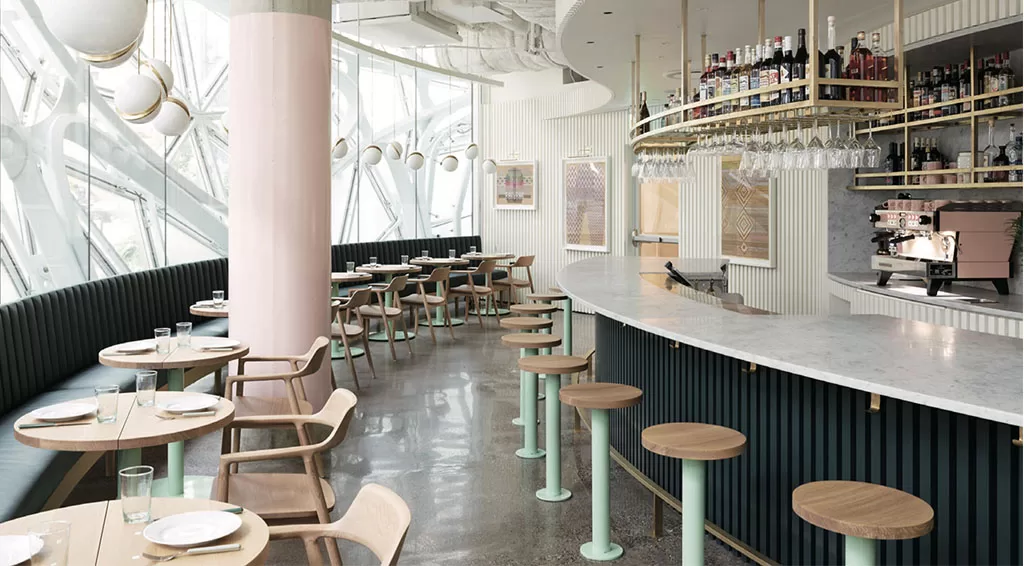
HIROSHIMA chairs create a calm rhythm through their refined wooden frames.
The curved backs provide warmth and tactile comfort, while the restrained silhouette allows the dining table, architecture, lighting, and surrounding materials to remain equally important.
HIROSHIMA Armchairs Are Available in Different Seating Expressions
The HIROSHIMA family includes wooden-seat and cushioned armchairs as well as different seat heights.
This allows designers to select the version best suited to the project while maintaining the recognizable HIROSHIMA language.
Different woods and finishes can further change the character from light and natural to darker and more architectural.
HIROSHIMA Lounge Chair Extends Maruni Craftsmanship into Relaxed Seating
The HIROSHIMA lounge chair translates the collection’s flowing wooden language into a lower, more relaxed form.
Paired with an ottoman, it creates a comfortable setting for reading, conversation, and quiet relaxation.
Its sculptural wood frame gives the chair enough presence to stand independently within a room without becoming visually excessive.
HIROSHIMA Sofas Bring Japanese Restraint to Upholstered Furniture
The HIROSHIMA sofa expands the collection beyond wood seating while preserving its underlying values.
A refined structural framework supports upholstered comfort.
The relationship between soft cushions and carefully shaped wood creates a balance between visual lightness and relaxation.
This makes the sofa particularly compatible with material-driven contemporary interiors.
HIROSHIMA Tables Create a Natural Relationship with the Seating Collection
Dining and occasional tables within the HIROSHIMA family allow designers to develop cohesive environments without making a room feel overly matched.
The restrained forms allow wood grain and proportion to remain central.
Square, rectangular, round, extension, side, and end table formats support different residential and contract applications.
HIROSHIMA Shelving Extends the Collection into Architectural Storage
Open shelving adds another dimension to the HIROSHIMA family.
The furniture can help organize books and objects while maintaining the collection’s quiet visual language.
Because the shelving remains open and relatively light, it can participate in the architecture without creating unnecessary visual mass.
Roundish Explores Soft Curves & Everyday Comfort
Designed by Naoto Fukasawa, Roundish uses gentle curves to create furniture that feels welcoming and immediately understandable.
Chair backs wrap softly around the body.
Sofas extend the same rounded vocabulary into upholstered seating.
The collection demonstrates how a simple silhouette can become distinctive through subtle control of proportion.
Roundish Chairs Bring Soft Geometry to Contemporary Dining
The Roundish chair is particularly useful when an interior calls for wood furniture with a softer visual character.
Its curved back creates comfort and an embracing silhouette.
Wooden-seat and cushioned versions provide different tactile experiences while maintaining the same underlying design language.
Roundish Sofas Extend the Collection’s Gentle Forms into the Living Room
Roundish sofas use soft upholstery and rounded proportions to create relaxed contemporary seating.
The designs work especially well in interiors where designers want comfort and warmth without the visual heaviness of a conventional upholstered sofa.
Tako Demonstrates Maruni’s Mastery of Three-Dimensional Woodworking
The Tako series by Naoto Fukasawa explores complex curved forms that appear almost fluid.
Its sculptural character highlights what can happen when sophisticated manufacturing and skilled finishing are used not to create visual excess, but to make difficult forms appear natural.
The result is distinctly contemporary while remaining grounded in the tactile qualities of wood.
MEGURO Brings a New Expression of Comfort to the Maruni Collection
MEGURO, designed by Naoto Fukasawa, extends Maruni’s language into seating with a refined contemporary presence.
The collection reflects the company’s ongoing exploration of how wooden structure and upholstered comfort can work together.
Its lounge seating is particularly suited to interiors that value visual calm and tactile material quality.
Lightwood by Jasper Morrison Explores the Beauty of Structural Lightness
Jasper Morrison’s Lightwood collection approaches wooden furniture through reduction.
The frame is slender and visually open, allowing the structure itself to become part of the chair’s beauty.
Carefully engineered joints provide strength while preserving a sense of lightness.
The result is furniture that occupies a room quietly.
Lightwood Demonstrates Jasper Morrison’s Super Normal Approach to Design
Jasper Morrison is known for furniture that avoids unnecessary novelty.
His work often feels familiar, useful, and natural from the beginning.
Lightwood reflects this philosophy.
Its proportions and construction are sophisticated, yet the chair does not call attention to the complexity required to achieve them.
That quiet intelligence makes it highly versatile.
Lightwood Chairs Offer Multiple Seating Materials & Expressions
The Lightwood family has developed beyond its original expression to include different seating materials and upholstered options.
Mesh can emphasize the visual lightness of the wooden structure.
Webbing creates another tactile quality.
Cushioned versions introduce softness and a broad range of textile and leather possibilities.
This versatility allows Lightwood to adapt to many interior concepts.
Lightwood Sofa Extends Jasper Morrison’s Refined Simplicity into Upholstered Seating
The Lightwood sofa brings the collection’s structural clarity into the living room.
Wood remains visible and important while upholstery provides comfort.
The result is particularly effective in contemporary interiors where designers want a sofa to feel warm and inviting without appearing visually heavy.
T&O Combines Jasper Morrison’s Simplicity with Maruni Woodworking
The T&O collection continues the dialogue between Jasper Morrison and Maruni.
Its furniture is straightforward in purpose yet carefully considered in proportion and construction.
The designs demonstrate how useful everyday furniture can become distinctive through precision rather than decoration.
T&O Seating Works Across Residential, Workplace & Hospitality Interiors
The restrained nature of T&O makes it particularly adaptable.
Chairs and related pieces can function in dining areas, kitchens, meeting spaces, restaurants, hospitality environments, and other contract settings.
The design does not dictate the atmosphere of the room, allowing architecture and surrounding materials to remain prominent.
Fugu Explores Soft, Sculptural Wood Forms
Fugu adds another expression of contemporary woodcraft to the Maruni Collection.
Its softened geometry and carefully resolved surfaces demonstrate how solid material can be shaped into furniture that feels almost organic.
The visual effect is sculptural without becoming decorative.
EN Brings Contemporary Japanese Design to Flexible Interiors
The EN series expands Maruni’s vocabulary with furniture designed for contemporary spaces.
Its restrained forms support residential and professional environments while remaining consistent with Maruni’s broader emphasis on comfort, function, and lasting design.
SHOTO Adds Cecilie Manz’s Scandinavian Sensibility to Maruni
SHOTO introduces the perspective of Danish designer Cecilie Manz into the Maruni Collection.
Her work shares important qualities with Japanese design culture: restraint, material awareness, functional clarity, and sensitivity to proportion.
The collaboration creates an especially natural dialogue between Scandinavian and Japanese approaches to contemporary furniture.
Maruni Creates a Dialogue Between Japanese & Scandinavian Design
Japanese and Scandinavian design traditions differ, but they often share an appreciation for natural materials, craftsmanship, functional clarity, and visual restraint.
Maruni’s collaborations allow these ideas to intersect.
The result is furniture that can feel equally natural in Japanese-inspired, Scandinavian, minimalist, contemporary, and highly architectural interiors.
Bruno Brings Upholstered Comfort into the Maruni Collection
The Bruno series adds another dimension to Maruni’s seating vocabulary.
Upholstered forms provide comfort while remaining disciplined in proportion.
This balance allows the furniture to participate in sophisticated residential and hospitality environments without sacrificing the quiet character associated with Maruni.
Maruni Chairs Are Central to the Company’s Design Identity
The chair may be the clearest expression of Maruni’s expertise.
A chair requires precise relationships between structure, ergonomics, weight, strength, tactile comfort, and appearance.
Small dimensional changes can dramatically affect how it feels.
Maruni’s woodworking knowledge allows these details to be resolved with exceptional care.
Maruni Dining Chairs Combine Comfort, Craft & Visual Lightness
Dining chairs need to perform repeatedly and comfortably without overwhelming the table.
Maruni’s chairs are particularly successful because they combine tactile wood surfaces with relatively restrained silhouettes.
This makes them useful for intimate residential dining rooms, large dining spaces, restaurants, conference rooms, and hospitality projects.
Maruni Lounge Chairs Bring Sculptural Woodcraft into Relaxed Interiors
Lounge seating provides greater freedom to explore comfort and sculptural form.
Maruni uses this opportunity to create furniture that invites close interaction.
Curved arms, shaped backs, exposed wood, and carefully integrated upholstery allow lounge chairs to become both functional seating and significant design objects.
Maruni Sofas Balance Upholstered Comfort with Refined Wooden Structure
Maruni’s sofas often allow the wooden framework to remain visually important.
Rather than concealing construction beneath upholstery, the design can create a deliberate relationship between hard and soft materials.
This keeps even comfortable seating visually light and reinforces Maruni’s identity as a woodworking company.
Maruni Tables Celebrate Wood Through Proportion & Surface
A large table provides an ideal opportunity to appreciate the beauty of wood.
Maruni’s restrained designs allow grain, color, edge profiles, and construction to remain visible.
Dining tables can anchor a room without requiring elaborate decoration.
Occasional tables provide smaller material moments throughout living spaces.
Maruni Stools Extend Precision Woodworking to Kitchens, Bars & Hospitality Spaces
Stools require careful consideration of height, foot support, balance, and durability.
Maruni applies the same design discipline found in its chairs to these more compact forms.
The result is seating suited to kitchen counters, bars, restaurants, hospitality projects, and collaborative environments.
Maruni Storage & Shelving Bring Quiet Order to Contemporary Interiors
Storage furniture can easily become visually heavy.
Maruni’s approach emphasizes proportion and material clarity.
Open shelving in particular allows books, objects, and art to become part of the composition while the furniture provides a calm structural framework.
Maruni Objects Bring Japanese Craftsmanship to Smaller Scales
The company’s design language also extends to objects and accessories.
At a smaller scale, the precision of shaping and finishing becomes especially noticeable.
These pieces provide an accessible way to introduce Maruni’s approach to woodcraft into an interior.
Maruni Offers a Sophisticated Palette of Woods & Finishes
Wood species and finish selections significantly affect the personality of Maruni furniture.
Lighter finishes can emphasize softness and natural grain.
Darker finishes create stronger architectural contrast.
Different species introduce variation in color, texture, and visual density.
This gives interior designers meaningful control while preserving the integrity of the original design.
Maruni Furniture Reveals Its Quality Through Touch
Photography can communicate form, but some of Maruni’s most important qualities are tactile.
The way a wooden armrest meets the hand, the smooth transition between surfaces, the radius of an edge, and the finish of the grain all contribute to the experience.
This is furniture that rewards physical interaction.
Maruni Furniture Is Designed to Age Gracefully
Wood changes subtly with time and use.
For Maruni, this is not necessarily a flaw to be prevented.
A well-designed wooden chair can acquire greater character as it becomes part of everyday life.
This relationship between durability, material, and time is fundamental to furniture intended to remain relevant for generations.
Maruni’s Quiet Design Language Complements Art & Architecture
Because Maruni furniture does not depend upon excessive ornament, it can coexist particularly well with significant architecture and art.
The furniture provides warmth and human scale without competing for attention.
This makes it a compelling choice for carefully curated residential interiors, galleries, executive spaces, hospitality projects, and other design-focused environments.
Maruni Works Beautifully in Warm Minimalist Interiors
Minimalism can feel cold when it relies only on visual reduction.
Maruni introduces another possibility.
Wood grain, curved surfaces, subtle texture, and physical comfort add warmth while the forms remain disciplined.
The result is a more tactile and livable interpretation of minimalism.
Maruni Furniture Complements Natural Material Palettes
Stone, plaster, concrete, linen, wool, leather, metal, and wood can all form natural companions to Maruni furniture.
Because the designs are restrained, they allow the differences between these materials to become more visible.
This makes Maruni especially useful in interiors built around material quality rather than decoration.
Maruni Furniture Works Across Residential & Contract Interiors
The same qualities that make Maruni appropriate for a sophisticated home also translate effectively to professional spaces.
Comfort, durability, visual calm, and material integrity are valuable in restaurants, hospitality environments, workplaces, executive spaces, conference rooms, and cultural projects.
Maruni Is an Exceptional Resource for Architects & Interior Designers
Architects and designers frequently need furniture that supports the larger interior concept rather than dominating it.
Maruni provides a particularly useful vocabulary.
Its chairs establish rhythm.
Tables provide material anchors.
Lounge seating introduces comfort.
Wood adds warmth.
The collection is recognizable without requiring every room to look the same.
Why Is Maruni Furniture a Strong Choice for Timeless Contemporary Interiors?
Maruni combines qualities that are increasingly valuable in sophisticated interiors: authentic material, exceptional craftsmanship, international design, physical comfort, quiet visual presence, and longevity.
Its furniture can participate in a room for many years without making that room feel attached to one passing trend.
This makes Maruni particularly compelling for clients who value objects that become better understood through daily use.
Maruni’s 2025 Collection Continues to Expand Its International Design Language
Recent additions demonstrate how Maruni continues to evolve without abandoning its core identity.
MEGURO lounge seating by Naoto Fukasawa, SHOTO pieces by Cecilie Manz, new T&O designs by Jasper Morrison, additions to HIROSHIMA, and Lightwood upholstered seating broaden the collection while remaining connected through craftsmanship and restraint.
This continuity is one of Maruni’s greatest strengths.
Maruni Furniture Creates Cohesion Without Making an Interior Feel Overly Matched
A sophisticated interior often benefits from relationships rather than repetition.
Different Maruni collections can share similar material values while maintaining distinct forms.
A HIROSHIMA chair can coexist with a Lightwood piece or another Maruni collection without creating the impression of a furniture suite.
This allows interiors to feel collected and individual.
Where Can You Experience Maruni Furniture at Scott + Cooner?
Scott + Cooner represents Maruni through all three of our showrooms: San Francisco, Dallas, and Austin.
Architects, interior designers, and design-conscious clients can work with our showroom teams to explore Maruni chairs, armchairs, lounge seating, sofas, stools, tables, shelving, and objects, along with the woods, finishes, upholstery, and specifications available for individual designs.
For a collection in which material, proportion, finish, and tactile quality are so important, experiencing the furniture and working with knowledgeable specification support can be particularly valuable.
Where Can You Find Maruni Furniture in San Francisco?
Scott + Cooner San Francisco represents Maruni for architects, interior designers, and clients throughout San Francisco and the greater Bay Area.
Maruni’s combination of Japanese craftsmanship, natural wood, quiet contemporary design, and international design collaboration fits naturally within Northern California’s architecture and design culture.
The furniture can complement modern Bay Area residences, urban interiors, hospitality projects, art-focused homes, and spaces shaped by natural materials and landscape.
Scott + Cooner San Francisco Brings Maruni Japanese Furniture to the Bay Area
Bay Area interiors often favor thoughtful material relationships rather than excessive decoration.
Maruni works particularly well in this context.
A HIROSHIMA dining chair can introduce sculptural woodcraft without overwhelming a room. Lightwood can bring visual openness to a dining or work environment. Maruni lounge seating can add warmth and comfort to highly architectural interiors.
Scott + Cooner San Francisco provides a local resource for exploring these possibilities.
San Francisco Interior Designers Can Specify Maruni Through Scott + Cooner
Maruni furniture may appear simple, but specifying it involves important decisions about model, dimensions, wood species, finish, upholstery, and relationship to surrounding furniture.
Scott + Cooner San Francisco can help architects and interior designers navigate these choices and develop Maruni selections that respond to the architecture, material palette, and functional needs of a Bay Area project.
Where Can You Find Maruni Furniture in Dallas?
Scott + Cooner Dallas represents Maruni for architects, interior designers, and design-conscious clients throughout Dallas and North Texas.
Maruni offers a distinctive alternative for Dallas interiors where craftsmanship, natural materials, contemporary design, and understated luxury are important.
The collection can work especially well in residences that combine significant architecture, art, custom millwork, stone, plaster, metal, and carefully selected contemporary furniture.
Scott + Cooner Dallas Connects North Texas with Maruni’s Japanese Woodcraft
Maruni’s furniture demonstrates that luxury does not require visual excess.
The sophistication is found in the quality of wood, the precision of a curve, the comfort of a chair, and the way a joint is resolved.
Scott + Cooner Dallas gives North Texas clients and design professionals access to this quieter expression of contemporary luxury.
Maruni Furniture Is Well Suited to Sophisticated Dallas Interiors
Generous Dallas residences can provide an exceptional setting for Maruni.
Dining chairs can create a refined rhythm around large tables.
Lounge chairs can establish intimate seating moments within expansive living rooms.
Wood furniture can introduce warmth against stone, glass, metal, and other architectural materials.
The result can feel sophisticated while remaining comfortable and approachable.
Dallas Interior Designers Can Specify Maruni Through Scott + Cooner
Scott + Cooner Dallas can assist design professionals with Maruni product selection, finish options, upholstery, dimensions, technical information, and project coordination.
Whether a project requires a set of iconic HIROSHIMA chairs or a broader furniture specification, the Dallas showroom provides a local resource for integrating Maruni into sophisticated residential and contract interiors.
Where Can You Find Maruni Furniture in Austin?
Scott + Cooner Austin represents Maruni for architects, interior designers, and clients throughout Austin and Central Texas.
Austin’s combination of contemporary architecture, natural materials, craftsmanship, landscape, and relaxed living creates a particularly compatible setting for Maruni.
The brand’s understated Japanese furniture can add warmth and tactile quality without competing with the architecture.
Scott + Cooner Austin Brings Maruni Japanese Design to Central Texas
Maruni’s relationship between craftsmanship and technology resonates strongly with Austin’s contemporary design culture.
Furniture is highly refined but rarely formal.
Natural wood provides warmth.
Comfort supports everyday life.
Quiet forms allow art, architecture, and landscape to remain central.
Scott + Cooner Austin connects Central Texas designers and clients with this distinctive Japanese furniture tradition.
Maruni Furniture Complements Contemporary Austin Architecture
Many Austin homes use limestone, wood, plaster, concrete, steel, glass, and other natural or architectural materials.
Maruni furniture can participate in these palettes without creating visual conflict.
HIROSHIMA’s sculpted wood adds softness to rectilinear architecture, while Lightwood’s slender construction works particularly well in spaces where visual openness is important.
Austin Interior Designers Can Specify Maruni Through Scott + Cooner
Scott + Cooner Austin can help design professionals explore Maruni’s collections, wood species, finishes, upholstery options, dimensions, and technical information.
This support is particularly useful when chairs, tables, sofas, lounge seating, and other pieces need to coordinate with custom architecture and a larger material concept.
Scott + Cooner Represents Maruni in San Francisco, Dallas & Austin
Scott + Cooner’s representation of Maruni across San Francisco, Dallas, and Austin gives architects, interior designers, and design-conscious clients in Northern California and Texas access to one of Japan’s most accomplished contemporary furniture makers.
In San Francisco, Maruni’s natural materials and quiet forms complement the Bay Area’s sophisticated relationship between architecture, art, craft, and landscape.
In Dallas, the collection provides an understated counterpoint to generous architecture, important art, and richly layered residential interiors.
In Austin, Maruni’s warmth, craftsmanship, and relaxed refinement work naturally with contemporary architecture and material-driven interiors.
Across all three showrooms, Scott + Cooner can help clients discover how Maruni’s Japanese woodworking tradition can become part of a highly individual project.
Discover Maruni Japanese Furniture, HIROSHIMA Chairs & Contemporary Wood Design at Scott + Cooner
Scott + Cooner represents Maruni in San Francisco, Dallas, and Austin as part of our curated collection of exceptional contemporary furniture and international design.
Since 1995, Scott + Cooner has worked with architects, interior designers, and design-conscious clients seeking extraordinary modern furniture, lighting, kitchens, closets, rugs, accessories, textiles, and architectural products for sophisticated residential and contract interiors.
Our teams can help you explore the Maruni HIROSHIMA collection by Naoto Fukasawa, Roundish, Tako, MEGURO, Jasper Morrison’s Lightwood and T&O collections, SHOTO by Cecilie Manz, and other Maruni furniture including dining chairs, armchairs, lounge chairs, sofas, stools, tables, occasional tables, shelving, storage, and objects.
For Northern California projects, Scott + Cooner San Francisco provides a local resource for Maruni furniture throughout San Francisco and the greater Bay Area.
For North Texas projects, Scott + Cooner Dallas provides a local resource for Maruni furniture in Dallas and the surrounding region.
For Central Texas projects, Scott + Cooner Austin provides a local resource for Maruni furniture in Austin and the surrounding region.
Whether you are selecting a set of HIROSHIMA chairs, furnishing a contemporary residence, developing a hospitality or contract project, or searching for beautifully crafted Japanese furniture that can remain relevant for generations, Scott + Cooner can help you discover Maruni’s distinctive combination of woodcraft, technology, comfort, simplicity, and timeless contemporary design.