
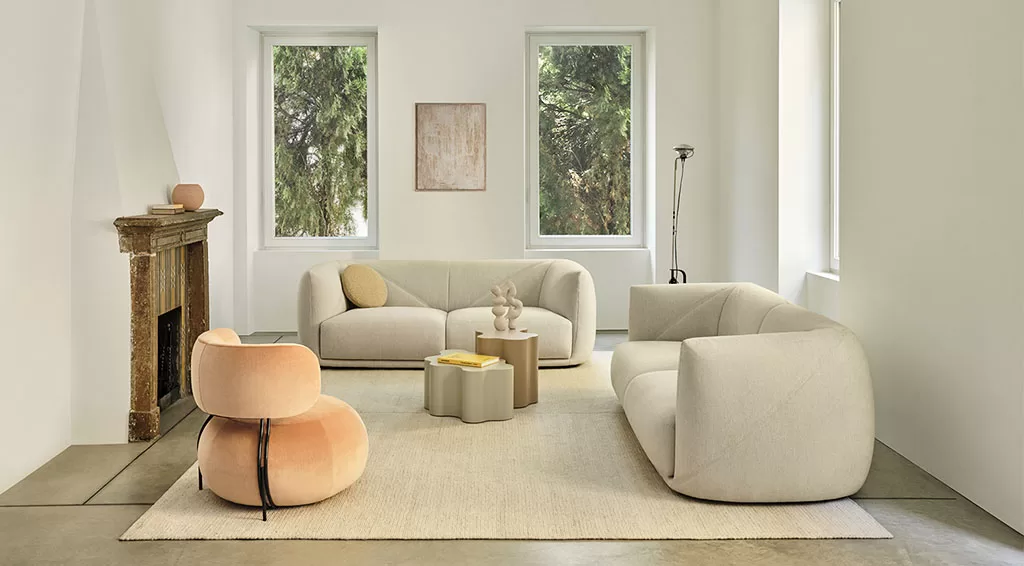

Saba Italia Contemporary Italian Furniture, Modular Sofas & Expressive Modern Design
Saba Italia creates contemporary Italian furniture distinguished by expressive forms, exceptional upholstery, modular flexibility, sophisticated textiles, and an unmistakable sense of personality. From modular sofas and sculptural armchairs to dining chairs, tables, beds, poufs, benches, carpets, and outdoor furniture, Saba designs for interiors that are sophisticated without feeling rigid.
At the heart of Saba is an idea that furniture should respond not only to the body, but also to emotion, imagination, and the changing ways people live. Curved forms, tactile fabrics, unexpected colors, movable elements, and adaptable configurations give the collection an unusually human character. The result is contemporary Italian furniture that feels refined yet relaxed, architectural yet inviting, and capable of evolving with the people and spaces around it.
What Is Saba Italia Known for in Contemporary Furniture?
Saba Italia is known for contemporary Italian furniture that combines modularity, comfort, expressive color, sophisticated textiles, and fluid organic forms.
The company’s sofas are particularly important to its identity. Collections such as Pixel demonstrate how individual seating elements can be recombined to create different configurations as spaces and lifestyles change.
Beyond sofas, Saba creates armchairs, small sofas, chairs, stools, tables, beds, sofa beds, poufs, benches, carpets, accessories, and outdoor furniture for residential, hospitality, and contract environments.
How Does Saba Italia Design Furniture for the Way People Really Live?
Saba approaches furniture as something that should adapt to people rather than forcing people to adapt to it.
A sofa may need to change configuration. A living room may become more informal when friends arrive. A chair should provide comfort while maintaining visual lightness. A bedroom should feel personal rather than prescribed.
This flexibility is one of the defining characteristics of Saba’s contemporary design language.
Saba Calls Its Design Philosophy Emotional Ergonomics
Saba describes its research through the idea of “emotional ergonomics.”
The concept extends conventional ergonomics beyond physical comfort. Furniture should support the body, but it should also evoke feelings, memories, imagination, and personal connections.
This approach helps explain why Saba furniture frequently combines technically sophisticated construction with playful forms, expressive textiles, and unexpected details.
Saba Furniture Combines Practical Function with Poetic Expression
Function is essential, but Saba rarely allows function to become the entire story.
A sofa can be modular while remaining visually expressive.
A chair can be ergonomic while having a distinctive silhouette.
A table can perform a practical role while becoming a sculptural presence within the room.
This balance between rational design and emotional character gives Saba furniture its distinctive personality.
Curved Forms Define Saba’s Contemporary Design Language
Saba describes round forms through ideas of connection and hospitality.
Curves appear throughout the collection in sofas, armchairs, tables, poufs, and complementary furniture.
These forms can soften the geometry of architecture while encouraging more conversational furniture arrangements.
In contemporary interiors dominated by straight walls, glass, stone, and other hard surfaces, Saba’s organic shapes introduce an important sense of movement and warmth.
Saba Sofas Bring Flexibility to Contemporary Living
The sofa is central to Saba’s collection.
Rather than treating it as a static piece positioned against a wall, Saba frequently approaches seating as a flexible system that can organize space in multiple ways.
Modular elements, movable components, generous cushions, and fully considered backs allow sofas to work particularly well in open-plan architecture.
Pixel Is One of Saba’s Most Recognizable Modular Sofas
Designed by Sergio Bicego, Pixel is one of the collections most closely associated with Saba’s approach to modularity.
Individual elements can be combined freely through a proprietary connecting system, allowing the sofa to be composed, separated, and recomposed in different ways.
This flexibility makes Pixel especially relevant to contemporary interiors where rooms and lifestyles evolve over time.
How Does the Saba Pixel Modular Sofa Work?
Pixel is composed of individual seating elements that can be connected in different configurations.
Backrests and armrests can be detached from the base, allowing the overall composition to be redesigned rather than remaining permanently fixed.
This means the sofa can adapt as the room changes, as furniture is rearranged, or as the owner’s needs evolve.
The concept turns modularity into an active part of everyday living rather than simply a specification option.
Pixel Makes Personalization Part of the Design
Saba’s textile expertise gives Pixel another dimension of flexibility.
Different upholstery choices can make the same sofa feel restrained, colorful, graphic, or richly textured.
The possibility of using contrasting or patchwork upholstery reinforces the idea that the sofa can become an expression of individual personality rather than a standardized object.
Pixel Balances Compact Proportions with Generous Comfort
Modular furniture does not necessarily need to be oversized.
Pixel’s carefully designed backrests and armrests help control the overall footprint while preserving comfort.
This makes the collection relevant to both generous open-plan residences and more compact urban interiors.
Pixel Demonstrates Saba’s Approach to Sustainable Longevity
One of the most valuable characteristics of modular furniture is its ability to change.
A sofa that can be recomposed rather than replaced has the potential to remain useful through different homes, rooms, and stages of life.
Saba connects this adaptability with the idea of timelessness and longer-lasting relationships between people and products.
Pixel Light Extends the Idea of Flexible Space
Pixel Light develops the Pixel concept with a visually lighter character.
The system was created around the idea that contemporary spaces are becoming increasingly fluid.
Its design preserves the recognizable personality of Pixel while extending its flexibility to environments where furniture needs to move naturally between different architectural conditions.
Saba New York Has Become a Distinctive Furniture Family
The New York collection demonstrates Saba’s ability to create furniture with a recognizable identity across multiple categories.
Sofas, chairs, armchairs, dining seating, stools, beds, and related pieces allow the design language to move through different areas of a home or hospitality environment.
The collection balances graphic structure with soft upholstery and inviting comfort.
New York Suite Creates an Elegant Contemporary Sofa
New York Suite brings a more generous upholstered expression to the New York family.
Its combination of structure, cushions, and tailored detailing allows the sofa to feel refined without becoming formal.
This makes it appropriate for sophisticated living rooms where comfort remains a priority.
New York Chairs Bring Saba’s Personality to the Dining Room
Dining chairs need to work visually in repetition while remaining comfortable through extended meals.
Saba’s New York dining seating brings the collection’s characteristic relationship between structure and softness to the table.
Upholstery and color can then connect the chairs to the broader interior palette.
My Taos Reflects Saba’s Longstanding Expertise in Upholstered Seating
My Taos is another important expression of Saba’s approach to contemporary sofas.
Generous cushions and relaxed proportions create a more informal way of sitting.
The design works especially well in residential interiors where the living room is intended to be used rather than simply observed.
Ananta Explores the Sofa as an Adaptable Landscape
Ananta reflects Saba’s interest in furniture that can respond to changing spatial requirements.
Modular seating can help establish different zones within a large living area while maintaining openness.
Rather than relying on walls to define every function, furniture itself can help organize the architecture.
Avant-Après Explores Movement & Transformation
Avant-Après demonstrates another dimension of flexibility.
Contemporary furniture increasingly needs to support multiple activities and orientations.
A seating system capable of changing its relationship to the room can respond to conversation, views, media, architecture, and different ways of relaxing.
Limes Brings Informal Comfort to the Saba Sofa Collection
Limes reflects the softer, more relaxed side of Saba’s design vocabulary.
Generous upholstery creates a welcoming character while carefully controlled proportions maintain a sophisticated appearance.
This balance is especially important in contemporary homes where luxury is increasingly associated with comfort and experience rather than formality.
Saba’s Contemporary Sofas Can Organize Open-Plan Architecture
Open-plan interiors create opportunities but also challenges.
Without walls, furniture must often define where one activity ends and another begins.
A modular sofa can establish the living area, create circulation paths, frame views, and separate seating from dining without visually closing the room.
Saba’s experience with flexible seating makes its collections particularly effective in these environments.
Saba Armchairs Combine Sculpture & Comfort
An armchair occupies a unique position between furniture and object.
Because it can be viewed from multiple directions, its silhouette becomes especially important.
Saba’s armchair collection explores curves, upholstery, structure, color, and proportion to create seating that can function as both a comfortable destination and a sculptural element.
Anam Brings Federico Peri’s Design Perspective to Saba
The Anam collection by Federico Peri expands Saba’s contemporary vocabulary across seating and complementary furniture.
The collection reflects the company’s continuing interest in working with designers who bring distinctive perspectives while remaining connected to Saba’s emphasis on comfort, materials, and emotional character.
New York Curve Emphasizes Saba’s Love of Organic Form
New York Curve takes the recognizable New York vocabulary in a more fluid direction.
Its curved form reinforces the idea that seating can encourage connection rather than simply align users in a straight row.
Placed within an architectural interior, curved furniture can soften circulation and create more intimate conversation areas.
Pan Flute Brings Rhythm & Softness to Upholstered Furniture
The Pan Flute collection by Paolo Grasselli explores repeated upholstered forms and a distinctive sense of rhythm.
Its expressive character demonstrates how Saba uses upholstery as more than a covering.
Padding, stitching, volume, and textile become essential elements of the furniture’s architecture.
Oltremare Brings Fashion, Art & Storytelling into Furniture
Saba’s collaborations sometimes move beyond conventional furniture design.
Oltremare, created with Antonio Marras, demonstrates the company’s interest in narrative, textile culture, and expressive interiors.
These pieces can introduce a more personal and artistic dimension into contemporary rooms.
Saba Furniture Makes Textiles Central to Interior Design
Textiles are fundamental to the Saba identity.
Fabric is not simply applied after the furniture has been designed.
Color, texture, weave, pattern, and tactile quality influence the entire character of a sofa, chair, bed, or pouf.
This textile-driven approach gives architects and interior designers considerable freedom to tailor Saba furniture to the personality of a project.
How Do Saba Fabrics Change the Character of a Room?
A single furniture design can communicate very different moods depending on its upholstery.
Soft neutrals can create a calm architectural environment.
Textured fabrics add depth without introducing strong color.
Saturated upholstery can turn a sofa or chair into a focal point.
Contrasting textiles can make modular elements feel more playful and individual.
Saba’s extensive relationship with fabric makes these decisions an integral part of specifying the furniture.
Saba Uses Color as a Design Material
Color is one of the most immediate ways Saba differentiates itself from more austere modern furniture brands.
The company uses color to create emotion, emphasize form, and give individual furniture pieces personality.
This does not mean every Saba interior needs to be colorful. The same collections can be specified in quiet neutrals when the architecture or art should dominate.
The strength lies in the range of possibilities.
Saba Furniture Can Create Warm Minimalist Interiors
Minimal interiors sometimes risk feeling visually cold.
Saba’s soft upholstery, curves, textiles, and generous proportions can introduce warmth while preserving architectural clarity.
A neutral Pixel sofa, sculptural armchair, restrained table, and textured carpet can create a sophisticated room without excessive decoration.
Saba Can Also Create Highly Expressive Interiors
At the opposite end of the spectrum, Saba responds beautifully to interiors built around color and personality.
Contrasting fabrics, rounded furniture, graphic carpets, and sculptural pieces can create rooms that feel collected rather than prescribed.
This versatility makes the collection valuable to interior designers working across very different aesthetic directions.
Saba Small Sofas Offer Flexibility for More Intimate Spaces
Not every room requires a large sectional.
Saba’s small sofas provide upholstered comfort at a more compact scale.
Collections such as Geo, Kepi, Philo, and New York dining seating can create intimate conversation areas, bedrooms, studies, dressing rooms, hospitality spaces, or secondary seating zones.
Geo Brings Soft Sculptural Form to Compact Seating
The Geo family by Paolo Grasselli includes compact upholstered seating and complementary poufs.
Its rounded silhouette gives the furniture a strong visual identity without requiring a large footprint.
This makes Geo particularly useful when designers want to introduce a sculptural form into a smaller area.
Poufs & Benches Make Saba Interiors More Flexible
Poufs and benches can perform multiple roles within a room.
They provide additional seating when guests arrive, extend a sofa composition, create a place to sit in a bedroom or dressing area, or establish a more informal conversation zone.
Their mobility reinforces Saba’s broader philosophy of furniture that adapts to everyday life.
Saba Dining Chairs Bring Comfort to the Table
Dining chairs must combine visual rhythm with long-term comfort.
Saba’s collection includes upholstered chairs and stools that bring the company’s soft, expressive character into dining spaces.
The result is dining furniture that can feel sophisticated while remaining welcoming enough for long meals and conversation.
Opera Adds a New Expression to Saba Dining Seating
The Opera chair by 967arch reflects Saba’s continuing expansion of its dining collection.
Its contemporary form allows designers to introduce the brand’s personality around dining tables without relying solely on upholstered lounge furniture.
Petite Fleur Offers a Softer Dining Silhouette
Petite Fleur by Sergio Bicego brings an elegant, compact character to dining environments.
Its scale and upholstery make it suitable for both residential dining rooms and sophisticated hospitality spaces.
Repeated around a table, the chairs can create a visually coherent rhythm without feeling visually heavy.
Saba Tables Add Sculptural Form to Living & Dining Spaces
Saba’s tables range from dining tables and consoles to coffee and side tables.
These pieces often explore rounded geometry, sculptural bases, and material relationships that complement the softer forms of the upholstered collection.
Tables provide an opportunity to introduce harder surfaces and architectural definition within textile-rich interiors.
Teatro Magico Creates a Sculptural Center for the Room
The Teatro Magico collection by 967arch includes dining tables, consoles, and low tables.
Its expressive forms can establish strong visual centers within a room.
Paired with softer Saba seating, the collection creates a deliberate dialogue between upholstered volume and more architectural furniture.
Anam Extends from Seating into Tables, Consoles & Storage
The Anam family includes tables, consoles, and bookcases in addition to seating.
This allows designers to establish relationships between different furniture categories without making the room feel like a conventional matching suite.
Shared design ideas can create continuity while individual pieces retain their own identities.
Low Tables Complete Saba Living Environments
A contemporary living room benefits from multiple table heights and scales.
Coffee tables establish central surfaces, while smaller occasional tables can sit beside sofas or chairs.
Saba’s low-table collection allows designers to build more nuanced compositions around modular seating.
Saba Beds Bring Upholstered Comfort into the Bedroom
Saba extends its expertise in upholstery into beds and sofa beds.
Soft headboards, textile options, generous padding, and refined proportions create bedrooms that feel connected to the same design language as the living areas.
The collection includes beds from the Pixel, New York, Pan Flute, Metis, Wabi, and Avant-Après families.
Pixel Beds Extend an Iconic Saba Collection into the Bedroom
Pixel Box and Pixel Air reinterpret the Pixel identity for sleeping environments.
Upholstery and proportion create a softer architectural presence while allowing designers to coordinate the bedroom concept with furniture elsewhere in the residence.
New York Beds Bring Tailored Softness to Contemporary Bedrooms
New York Air and New York Box extend another recognizable Saba family into the bedroom.
The designs combine upholstered comfort with the collection’s distinctive personality, creating beds appropriate to sophisticated contemporary interiors.
Pan Flute Creates an Expressive Upholstered Bed
Pan Flute translates its rhythmic upholstered language into the bedroom.
The headboard can become a significant visual feature within the space while maintaining the softness expected from an upholstered bed.
This makes it particularly effective in rooms where furniture is intended to contribute strongly to the overall interior concept.
Saba Sofa Beds Combine Flexibility with Contemporary Design
Guest accommodations often require furniture to perform more than one role.
Saba’s sofa beds provide solutions for rooms that need to transition between living and sleeping.
Rather than treating convertible furniture as purely utilitarian, the company applies the same attention to comfort and appearance found elsewhere in its collection.
Bed & Breakfast Transforms from Sofa to Bed
Bed & Breakfast, designed by Giuseppe Viganò, converts from a sofa into a bed through a folding and extending mechanism.
The design demonstrates Saba’s continuing interest in furniture that changes according to the user’s needs.
Convertible pieces are especially valuable in guest rooms, apartments, studies, and multifunctional spaces.
Saba Carpets Add Texture & Spatial Definition
Carpets help establish relationships between furniture pieces.
Placed beneath a sofa and lounge chairs, a carpet can define the living zone within an open-plan room.
Texture and pattern also provide another opportunity to balance architectural surfaces such as wood, stone, plaster, glass, and concrete.
Textile Accessories Help Complete the Saba Interior
Saba’s approach extends beyond individual furniture pieces.
Carpets and textile accessories allow designers to build a richer material environment around sofas, chairs, tables, and beds.
These layers help transform a collection of furniture into a complete interior.
Saba Furniture Is Designed for Residential Interiors
Saba’s emphasis on comfort, flexibility, and personalization makes the collection especially relevant to residential design.
Living rooms can adapt through modular sofas.
Bedrooms gain softness through upholstered beds.
Dining spaces become more comfortable through upholstered chairs.
Smaller furniture adds layers that allow the home to evolve with daily life.
Saba Furniture Also Works in Hospitality & Contract Environments
Saba’s project portfolio spans residential, workspace, and hospitality environments.
Hotels, lounges, restaurants, reception spaces, and other contract settings benefit from furniture that combines strong visual identity with comfort.
The ability to specify upholstery and configurations also allows designers to tailor furniture to the character of a particular project.
Saba Furniture Can Make Hospitality Spaces Feel More Residential
Hospitality interiors increasingly aim to feel welcoming rather than institutional.
Soft seating, tactile fabrics, organic forms, carpets, and smaller-scale furniture can create a more residential atmosphere.
Saba’s design language is particularly effective in lounges, boutique hotels, guestrooms, restaurants, and social spaces where emotional comfort matters.
Saba Works with an International Group of Designers
The collection reflects collaborations with designers including Sergio Bicego, Paolo Grasselli, Giuseppe Viganò, Nicola Pavan, Federico Peri, Studiopepe, Cristina Celestino, Alain Gilles, Zanellato/Bortotto, MUT Design, 967arch, Antonio Marras, and others.
This diversity gives Saba’s catalogue a broad range of personalities while the company’s emphasis on upholstery, curves, color, and flexibility creates continuity across the collection.
Sergio Bicego Has Created Many Signature Saba Designs
Sergio Bicego is closely associated with numerous important Saba collections.
Pixel, New York, My Taos, Limes, Ananta, and other designs demonstrate different interpretations of upholstered furniture and flexible living.
His work has helped shape the recognizable softness and adaptability associated with the brand.
Saba Collaborations Keep the Collection Evolving
New designers introduce different ideas about form, materials, color, and contemporary living.
Rather than freezing the brand around a single visual formula, Saba uses collaboration to keep expanding its vocabulary.
This approach allows new collections to feel current while remaining connected to the company’s underlying design philosophy.
Saba Furniture Encourages Individuality
One of Saba’s greatest strengths is that its furniture does not need to look the same from project to project.
A Pixel sofa in a monochromatic architectural fabric can feel restrained and minimal.
The same system in contrasting colors and textures can feel playful and expressive.
This ability to personalize gives architects and interior designers significant creative freedom.
Why Choose Saba Italia for a Contemporary Interior?
Saba Italia is an excellent choice for clients who want modern furniture to feel sophisticated without becoming impersonal.
Its combination of modularity, comfort, curved forms, textiles, color, and Italian design creates interiors that invite people to use them.
The breadth of the collection also allows designers to address living rooms, dining rooms, bedrooms, guest spaces, hospitality environments, and outdoor areas through a related design vocabulary.
How Do You Select the Right Saba Italia Furniture for a Project?
Begin with how the room needs to function.
For an open-plan living room, a modular sofa such as Pixel may help organize the architecture.
For a smaller conversation area, a compact sofa or pair of sculptural armchairs may be more appropriate.
Dining spaces require comfortable seating and a table proportioned to circulation.
Bedrooms can use upholstered beds to introduce softness and textile continuity.
Once the functional pieces are established, fabric, color, texture, and complementary furniture can be selected to give the project its individual character.
Saba Is a Strong Resource for Architects & Interior Designers
Saba’s flexibility makes the collection especially valuable to design professionals.
Modular sofas can respond to unusual floor plans.
Extensive upholstery choices allow furniture to participate in a larger material palette.
Dining furniture, beds, tables, poufs, carpets, and outdoor pieces allow the specification to extend through multiple areas of a project.
Where Can You Experience Saba Italia at Scott + Cooner?
Scott + Cooner represents Saba Italia through all three of our showrooms: San Francisco, Dallas, and Austin.
Architects, interior designers, and design-conscious clients can work with our showroom teams to explore Saba modular sofas, armchairs, small sofas, dining chairs, tables, beds, sofa beds, poufs, benches, carpets, outdoor furniture, and textile options.
Our teams can assist with product selection, dimensions, configurations, upholstery, fabrics, colors, finishes, and technical information for residential, hospitality, and contract projects.
Where Can You Find Saba Italia Furniture in San Francisco?
Scott + Cooner San Francisco represents Saba Italia for architects, interior designers, and design-conscious clients throughout San Francisco and the greater Bay Area.
Saba’s combination of flexible modular furniture, organic forms, sophisticated textiles, and relaxed comfort aligns naturally with Northern California interiors that emphasize architecture, art, landscape, and contemporary living.
From urban residences to larger Bay Area homes, Saba offers numerous ways to introduce comfort and personality without sacrificing architectural clarity.
Scott + Cooner San Francisco Brings Saba Italian Design to the Bay Area
Northern California architecture often favors open plans, natural materials, expansive glass, and strong connections between rooms.
Saba’s modular seating can help organize these environments while preserving visual openness.
Curved furniture and tactile upholstery can soften stone, concrete, plaster, glass, and wood, making contemporary interiors feel more inviting.
Saba Modular Sofas Work Beautifully in Bay Area Homes
A modular sofa can adapt to very different architectural conditions.
In a city residence, a compact Pixel composition can maximize seating while preserving circulation.
In a larger home, additional elements can create a generous conversation area or divide an open-plan room into distinct zones.
This adaptability is especially useful for designers working across the wide range of residential architecture found throughout the Bay Area.
Saba Furniture Adds Color & Texture to San Francisco Interiors
The Bay Area’s strong relationship with contemporary art and design creates opportunities for expressive furniture.
Saba fabrics can introduce subtle texture or saturated color depending on the project.
The furniture can remain a quiet foundation for art or become a deliberate visual statement within the room.
San Francisco Designers Can Specify Saba Italia Through Scott + Cooner
Scott + Cooner San Francisco can assist architects and interior designers with Saba furniture, dimensions, modular configurations, fabrics, upholstery, color palettes, finishes, and technical information.
Our San Francisco team provides a local Saba Italia resource for sophisticated residential, hospitality, and contract projects throughout Northern California.
Where Can You Find Saba Italia Furniture in Dallas?
Scott + Cooner Dallas represents Saba Italia for architects, interior designers, and design-conscious clients throughout Dallas and North Texas.
Generous contemporary homes provide exceptional opportunities for Saba’s modular sofas, sculptural lounge seating, dining furniture, beds, tables, carpets, and complementary pieces.
The collection brings Italian design and expressive softness to interiors that may otherwise be defined by large architectural volumes and hard materials.
Scott + Cooner Dallas Brings Saba Contemporary Italian Furniture to North Texas
Dallas interiors often require furniture with enough scale to establish intimacy within generous rooms.
Saba’s modular systems can create substantial seating environments while preserving a relaxed residential character.
Lounge chairs, poufs, tables, and carpets can then add smaller layers that make the room feel more personal.
Saba Sofas Create Flexible Dallas Living Spaces
Large living areas rarely need only one furniture orientation.
A modular sofa can help establish conversation zones, respond to architectural views, and create relationships between living, dining, and entertaining areas.
Saba’s emphasis on reconfigurable furniture makes the collection particularly relevant to these spaces.
Saba Furniture Brings Softness to Dallas Contemporary Architecture
Stone, plaster, glass, metal, and large architectural surfaces benefit from the contrast of upholstery.
Curved sofas, sculptural armchairs, textured fabrics, and carpets introduce softness without diminishing the strength of the architecture.
Saba allows designers to control this balance through form, color, and material.
Saba Dining Furniture Supports Sophisticated Dallas Entertaining
Dining spaces often serve as important social centers in Dallas homes.
Saba tables and upholstered dining chairs can create settings that feel polished while remaining comfortable enough for long meals and gatherings.
Color and upholstery choices allow the dining area to connect visually with adjacent living spaces.
Dallas Designers Can Specify Saba Italia Through Scott + Cooner
Scott + Cooner Dallas can assist architects and interior designers with Saba furniture for residential, hospitality, and contract projects throughout North Texas.
Our team can help evaluate modular configurations, furniture dimensions, upholstery, fabrics, colors, tables, beds, seating, carpets, and other specification details.
Where Can You Find Saba Italia Furniture in Austin?
Scott + Cooner Austin represents Saba Italia for architects, interior designers, and design-conscious clients throughout Austin and Central Texas.
Saba’s relaxed comfort, organic forms, modularity, expressive textiles, and contemporary Italian character align naturally with Austin interiors that emphasize material authenticity and informal luxury.
The collection works particularly well in homes where open architecture and indoor-outdoor relationships encourage flexible ways of living.
Scott + Cooner Austin Connects Central Texas with Saba Italian Design
Austin architecture often combines limestone, plaster, concrete, steel, glass, wood, and natural landscape.
Saba’s upholstery and rounded forms introduce a softer layer against these materials.
The furniture can feel contemporary without becoming severe, making it particularly compatible with Central Texas’s relaxed approach to sophisticated design.
Saba Furniture Fits Austin’s Relaxed Approach to Modern Luxury
Luxury does not always need to feel formal.
Saba’s generous cushions, tactile fabrics, curved silhouettes, and flexible furniture arrangements encourage people to settle into a space.
This creates interiors that remain visually sophisticated while supporting the informal social character associated with many Austin homes.
Saba Modular Sofas Work with Austin’s Open-Plan Architecture
Open living spaces often connect kitchens, dining areas, living rooms, terraces, and landscape.
A modular sofa can help establish the living zone without interrupting those connections.
Saba’s flexible seating systems allow designers to respond to circulation, views, and architecture while maintaining generous comfort.
Saba Textiles Add Personality to Central Texas Interiors
Textile choices can reinforce the natural tones of limestone and wood or provide deliberate contrast through stronger color.
Texture can add visual richness even when the palette remains neutral.
Saba’s emphasis on upholstery gives designers considerable freedom to tailor furniture to the individual character of an Austin project.
Austin Designers Can Specify Saba Italia Through Scott + Cooner
Scott + Cooner Austin can assist architects and interior designers with Saba furniture for residential, hospitality, and contract projects throughout Central Texas.
Our team can help with modular sofas, armchairs, dining furniture, beds, tables, poufs, carpets, outdoor pieces, fabrics, dimensions, configurations, and technical information.
Scott + Cooner Represents Saba Italia in San Francisco, Dallas & Austin
Scott + Cooner’s representation of Saba Italia across San Francisco, Dallas, and Austin gives architects, interior designers, and design-conscious clients access to contemporary Italian furniture through experienced local showroom teams.
In San Francisco, Saba’s modularity, textiles, and organic forms complement the Bay Area’s relationship between architecture, art, landscape, and modern living.
In Dallas, generous modular seating and expressive upholstery provide sophisticated solutions for larger residences, entertaining spaces, and hospitality environments.
In Austin, relaxed comfort, natural forms, and flexible furniture align naturally with contemporary Central Texas architecture and informal luxury.
Across all three markets, Scott + Cooner can help clients develop Saba specifications appropriate to the architecture, scale, functional requirements, textile palette, and individual personality of each project.
Discover Saba Italia Contemporary Furniture at Scott + Cooner
Scott + Cooner represents Saba Italia in San Francisco, Dallas, and Austin as part of our curated collection of exceptional contemporary furniture and international design.
Since 1995, Scott + Cooner has worked with architects, interior designers, and design-conscious clients seeking extraordinary modern furniture, lighting, kitchens, closets, rugs, accessories, textiles, and architectural products for sophisticated residential and contract interiors.
Our teams can help you explore Saba modular sofas, small sofas, armchairs, dining chairs, stools, tables, beds, sofa beds, poufs, benches, carpets, outdoor furniture, and textile options, including collections and designs such as Pixel, New York, My Taos, Limes, Ananta, Avant-Après, Geo, Pan Flute, Oltremare, Metis, Teatro Magico, Anam, and other Saba designs.
For Northern California projects, Scott + Cooner San Francisco provides a local Saba Italia resource for San Francisco and the greater Bay Area.
For North Texas projects, Scott + Cooner Dallas provides a local Saba Italia resource for Dallas and surrounding communities.
For Central Texas projects, Scott + Cooner Austin provides a local Saba Italia resource for Austin and the surrounding region.
Whether you are creating a modular living room, selecting a sculptural lounge chair, furnishing a contemporary dining room, designing an upholstered bedroom, developing a hospitality environment, or building a complete furniture and textile palette for a sophisticated residence, Scott + Cooner can help you explore Saba Italia’s distinctive combination of contemporary Italian design, modularity, expressive color, exceptional textiles, organic form, comfort, and emotional character.