
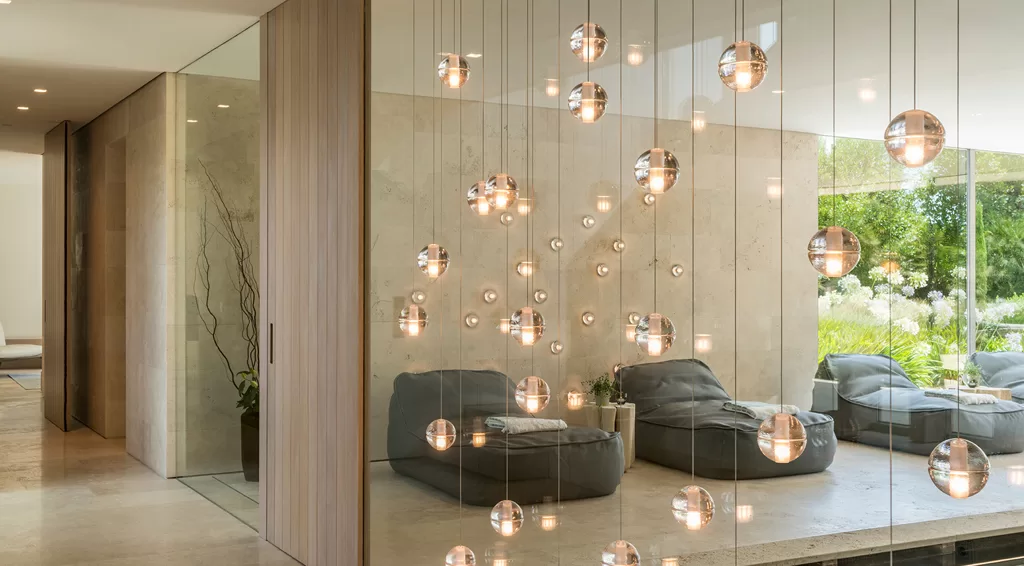

Bocci Sculptural Glass Lighting, Contemporary Chandeliers & Experimental Design
Bocci creates sculptural contemporary lighting through an extraordinary combination of material experimentation, glassmaking, engineering, craftsmanship, and architectural thinking. Founded in Vancouver in 2005 under the creative direction of Omer Arbel, Bocci operates as a multidisciplinary design studio, research laboratory, and manufacturing facility where ideas are developed through experimentation with materials and unconventional fabrication processes.
Rather than beginning with a predetermined shape, Bocci often allows process to influence form. Glass, metal, ceramic, porcelain, air, heat, gravity, and fabrication techniques become active participants in the design. The resulting pendants, chandeliers, wall and ceiling lights, table lights, portable lamps, floor lights, and large-scale installations occupy a compelling territory between functional illumination, sculpture, craft, and architecture.
What Is Bocci Known for in Contemporary Lighting?
Bocci is known for sculptural lighting created through process-driven experimentation.
Its distinctive glass pendants can be suspended individually or composed into installations ranging from intimate clusters to dramatic multi-story chandeliers.
Rather than creating conventional decorative lighting, Bocci explores how materials behave when subjected to unusual processes.
This gives individual pieces a character that is difficult to reproduce through conventional manufacturing.
Bocci Was Founded in Vancouver in 2005
Bocci was founded in 2005 under the creative direction of Omer Arbel in partnership with entrepreneur Randy Bishop.
The company’s first lamp, 14, was produced in a modified barn in rural British Columbia.
From these experimental beginnings, Bocci developed into an internationally recognized design studio with an extensive portfolio of sculptural lighting.
Bocci Is a Design Studio, Research Lab & Factory
An important part of Bocci’s identity is the integration of research, design, engineering, and fabrication.
Products are developed and manufactured within the company’s Vancouver factory.
This close relationship between experimentation and production allows discoveries made during fabrication to influence the final design rather than requiring every detail to be predetermined.
How Does Bocci Create Its Sculptural Glass Lighting?
Bocci frequently begins with an open-ended material process rather than a fixed formal objective.
Glass may be poured, blown, stretched, compressed, combined with other materials, or formed using unconventional molds and vessels.
Heat, air, gravity, chemistry, and the craftsperson’s actions introduce variations.
The process establishes a set of conditions, but individual results remain unique.
This is why Bocci lighting can feel simultaneously controlled and spontaneous.
Every Bocci Light Has an Individual Character
Bocci celebrates variation rather than attempting to eliminate it.
Because many components are handcrafted through processes that naturally produce differences, individual pendants are not expected to be perfectly identical.
Subtle variations in shape, texture, transparency, color, and internal structure become part of the finished work.
The result is lighting with the character of an individually made object rather than a completely standardized industrial product.
Bocci Treats Light as Material
Illumination is not simply added to a finished object.
Light interacts with glass, texture, color, air pockets, internal cavities, metal, and surrounding architecture.
A pendant may appear relatively quiet when unlit and become dramatically different once illuminated.
This transformation gives Bocci installations a distinct daytime and nighttime presence.
Bocci Lighting Exists Between Functional Illumination & Sculpture
Bocci describes its lighting as ambient rather than task-oriented.
That distinction is important.
The fixtures are intended to create atmosphere, visual depth, and sculptural presence rather than replace all functional illumination in a room.
In sophisticated interiors, Bocci can therefore become one layer within a larger architectural lighting strategy.
Bocci’s Numbered Series Reflect an Experimental Design Process
Bocci’s collections are identified by numbers rather than conventional product names.
The approach reinforces the idea of an evolving research practice.
Each series investigates a particular material, fabrication process, or relationship between object and light.
The collection continues to expand as new experiments develop into viable designs.
Bocci 14 Established the Company’s Approach to Cast Glass Lighting
14 was Bocci’s first lighting series and established many of the ideas that continue to define the company.
Glass is poured into hemispherical molds and joined around a cylindrical void containing the light source.
The result is a small cast-glass object with a visually rich relationship between solid material, internal light, bubbles, imperfections, and surface texture.
Bocci 14 Pendants Become More Powerful Through Repetition
A single 14 pendant can provide a subtle point of light.
In larger compositions, repetition transforms these individual objects into an illuminated field.
Random suspensions can create a cloud-like effect, while more controlled arrangements establish rhythm and geometry.
This ability to scale from one pendant to an architectural installation is fundamental to Bocci.
Bocci 28 Explores Air, Heat & Blown Glass
The 28 series is created through a specialized glassblowing process involving the manipulation of temperature and airflow.
Clear, milk, and colored glass interact within the pendant, producing internal forms that appear almost suspended inside the outer glass volume.
The process creates remarkable depth and makes each pendant visually complex despite its relatively compact scale.
Bocci 28 Chandeliers Combine Color with Sculptural Glass
28 provides designers with opportunities to introduce color without treating color as a superficial finish.
Because color is integrated into the glassmaking process, it becomes part of the physical depth of the object.
Multiple pendants can create compositions that range from subtle tonal arrangements to highly expressive installations.
Bocci 38 Expands the Relationship Between Glass & Interior Space
The 38 series explores larger blown-glass forms and internal cavities.
These voids transform the glass object into a miniature spatial environment.
When grouped in suspended compositions, the pendants create an installation with considerable architectural presence.
Bocci 38V Explores a Distinct Variation of the 38 Language
38V extends the research of the 38 series into another material and formal expression.
Like many Bocci families, it demonstrates how one experimental process can lead to related investigations rather than a single isolated product.
This ongoing evolution is central to Bocci’s research-based design culture.
Bocci 57 Reveals Hidden Internal Structure Through Light
57 pendants are hand-blown using different colors and transparencies of glass.
Internal air pockets can remain visually subtle when the fixture is off and become dramatically more apparent when illuminated.
The effect reinforces Bocci’s interest in transformation: the object changes character as light moves through its internal structure.
Every Bocci 57 Pendant Is Unique
The handmade nature of 57 produces natural differences between individual pendants.
Rather than attempting to make every glass object identical, Bocci considers these variations an important part of the design.
In a multi-pendant chandelier, differences between pieces create richness and complexity.
Bocci 73 Uses Fabric as a Forming Tool for Molten Glass
The 73 series results from blowing molten glass into a folded, heat-resistant ceramic fabric vessel.
The fabric restricts and shapes the glass as it expands.
This unconventional process creates billowing, irregular forms that preserve evidence of how they were made.
When illuminated, the surface and volume become especially expressive.
Bocci 73 Demonstrates the Beauty of Process-Driven Design
A conventional design process might begin with a drawing of a precise finished shape.
73 reverses that logic.
The designer establishes a material process and allows the interaction between glass and fabric to influence the final object.
The beauty comes partly from accepting the unpredictability inherent in fabrication.
Bocci 74 Explores Sculptural Cable Compositions
Bocci’s sculptural cable systems allow pendants to move beyond the assumption that every light must hang vertically beneath its canopy.
Cables can become visible compositional elements.
This makes it possible to draw light through space, respond to architecture, and create installations with a more dynamic relationship to walls, ceilings, stairs, and voids.
Bocci 76 Adds Another Expression of Handcrafted Glass
The 76 series continues Bocci’s investigation of glass, light, and process.
Its distinctive forms can be used individually or multiplied into larger compositions.
As with other Bocci families, the power of the design changes substantially depending on scale and installation.
Bocci 84 Combines Glass & Copper Mesh
84 explores the fusion of white glass, copper mesh, and clear glass.
When illuminated, the copper contributes a warm pinkish quality to the pendant.
The material is not merely decorative.
It participates in the optical effect of the object and demonstrates Bocci’s interest in combining glass with unexpected materials.
Bocci 84 Turns Material Fusion into Atmospheric Light
The relationship between copper and glass gives 84 a distinctive warmth.
Multiple pendants can produce an atmospheric installation particularly suited to dining spaces, living rooms, hospitality interiors, staircases, and other environments where the quality of ambient light is as important as the fixture itself.
Bocci 87 Continues the Studio’s Exploration of Glassmaking
87 represents another chapter in Bocci’s ongoing material research.
The series demonstrates how changing a fabrication process can produce an entirely different visual language even when glass remains the primary medium.
This emphasis on process keeps Bocci’s numbered families distinct rather than stylistic variations of one product.
Bocci 93 Adds a New Layer to the Experimental Lighting Collection
93 extends Bocci’s exploration of handcrafted lighting through another process-led expression.
Like the studio’s other numbered series, it can be experienced as a single object or multiplied into larger compositions.
This scalability allows the same design language to move from intimate residential spaces to major architectural installations.
Bocci 100 Creates Rich, Sculptural Glass Volumes
100 explores glass as a complex three-dimensional material.
The resulting forms have substantial visual depth and a distinctly organic presence.
Light reveals the internal qualities of the glass, allowing each pendant to function as a small illuminated sculpture.
Bocci 118 Expands the Contemporary Lighting Vocabulary
118 continues Bocci’s process-driven approach while providing another distinct pendant language for contemporary interiors.
Its availability across different hardware formats demonstrates the flexibility of Bocci’s broader lighting system.
The same family can be interpreted in intimate applications or developed into larger architectural compositions.
Bocci 141 Continues the Studio’s Culture of Material Experimentation
141 represents the continuing evolution of Bocci’s lighting research.
Its presence alongside established series such as 14, 28, 57, 73, 84, and 100 demonstrates that the Bocci catalogue is not a static collection.
It is an ongoing record of experimentation.
Bocci Chandeliers Can Be Composed Rather Than Simply Selected
One of the most important differences between Bocci and conventional decorative lighting is the degree of compositional freedom available.
A chandelier does not always exist as one predetermined object.
Designers can work with pendant quantity, suspension length, canopy configuration, density, scale, color, and spatial arrangement to create an installation appropriate to the architecture.
Bocci’s Suspension System Enables Flexible Lighting Compositions
Bocci’s signature suspension system is designed to work across multiple lighting series.
This cross-compatibility gives designers significant creative freedom.
Pendant compositions can be reconfigured and reinterpreted, allowing the installation to evolve rather than remaining permanently tied to one arrangement.
Random Bocci Suspensions Create Organic Fields of Light
Random suspension arrangements allow pendants to occupy space with an apparently spontaneous rhythm.
These compositions work especially well in rooms where a rigid geometric chandelier might feel too formal.
Differences in drop length can create depth while allowing light to extend vertically through the architecture.
Geometric Bocci Chandeliers Create Order & Repetition
For interiors that call for greater structure, geometric arrangements provide another approach.
Repeated pendants can establish controlled rhythm above dining tables, kitchen islands, reception areas, or architectural volumes.
The contrast between handmade glass and precise geometry can be especially compelling.
Bocci Cluster Chandeliers Create Dense Sculptural Compositions
Cluster configurations bring pendants closer together, creating a more concentrated illuminated object.
These installations can provide significant visual presence without requiring the expansive footprint of a widely dispersed chandelier.
They are particularly effective where a strong sculptural focal point is desired.
Bocci Cluster Columns Emphasize Vertical Architecture
Tall stairwells, atriums, double-height rooms, and multi-story spaces create opportunities for lighting to occupy vertical space.
Cluster-column compositions can extend downward through these volumes, turning the chandelier into an architectural element that connects multiple levels.
Bocci Sculptural Cable Installations Draw Light Through Space
Sculptural cables free the pendant from a purely vertical relationship with the canopy.
The cable itself becomes part of the design.
This allows lighting to respond to complex ceilings, sloped architecture, off-center junction boxes, staircases, and large open spaces in unusually expressive ways.
Bocci Armatures Create Structured Architectural Lighting
Armature systems provide a more rigid framework for arranging pendants.
These configurations create a different visual character from random or cable-based suspensions.
They can be particularly useful when the installation needs to establish a strong relationship with surrounding architecture.
Bocci Stem Systems Create Linear & Vertical Lighting Structures
Stem hardware allows selected Bocci pendants to be organized into more structured compositions.
Floor, column, suspended, and ceiling-mounted formats expand the ways individual glass pieces can inhabit space.
This gives designers alternatives to conventional cable suspension.
Bocci Tree Installations Transform Lighting into a Spatial Sculpture
Tree configurations use branching structures to distribute light through space.
The resulting installation has a more organic architectural character.
Rather than reading simply as a chandelier, it can become a freestanding or suspended illuminated sculpture.
Bocci Wall & Ceiling Lights Bring Sculptural Glass Directly to Architecture
Bocci pendants are not limited to suspended chandeliers.
Selected series can be surface mounted to walls and ceilings.
This allows individual glass forms to become points of illumination across architectural surfaces and can create dramatic repeated compositions in corridors, entries, bedrooms, hospitality environments, and feature walls.
Selected Bocci Surface Lights Can Be Used Outdoors
Certain Bocci wall and ceiling configurations are available with IP65 ratings for outdoor use.
This expands the possibilities beyond interior applications.
Exterior walls, covered spaces, and architectural surfaces can incorporate the same sculptural language used indoors.
Bocci Table Lights Bring Experimental Glass to an Intimate Scale
Table-light hardware allows selected Bocci pendants to function independently on desks, consoles, nightstands, shelves, and occasional tables.
An integrated dimming system provides control over the atmosphere, while the pendant retains the material character of the larger suspension collections.
Bocci Portable Lighting Adds Flexibility to the Collection
Portable designs extend Bocci beyond permanently installed architectural lighting.
They can move between spaces and create intimate pools of ambient light without requiring a fixed electrical location.
This flexibility is particularly useful in layered residential and hospitality environments.
Bocci Floor Lighting Creates Illuminated Sculpture at Human Scale
Floor and stem configurations bring Bocci glass closer to the body and surrounding furniture.
Rather than occupying only the ceiling plane, light can become part of the furniture landscape.
This creates opportunities to combine sculptural illumination with sofas, lounge chairs, tables, and architectural elements.
Bocci Lighting Is Especially Powerful in Staircases & Double-Height Spaces
Large vertical spaces provide some of the most dramatic settings for Bocci.
Multiple pendants can descend through a stairwell or atrium, allowing the installation to be experienced from different floors and viewing angles.
During the day, the glass creates a suspended sculptural composition.
At night, illumination transforms the entire volume.
Bocci Chandeliers Can Be Designed Around Dining Tables
Dining spaces provide another natural setting for Bocci lighting.
A compact cluster can create intimacy above a smaller table, while a long composition can follow the length of a large dining surface.
Pendant height, density, color, and arrangement allow the lighting to respond precisely to the furniture and architecture.
Bocci Lighting Can Transform Kitchen Islands
Kitchen islands increasingly function as social and architectural centers of the home.
Bocci pendants can create a more expressive alternative to conventional linear pendant lighting.
A carefully composed installation adds visual depth while maintaining an open relationship with surrounding cabinetry and architecture.
Bocci Works Beautifully in Contemporary Living Rooms
In living spaces, Bocci can function as both atmosphere and sculpture.
An installation may float above a seating group, occupy an unused vertical corner, descend beside a staircase, or create a focal point visible from multiple rooms.
Because the light is ambient, it can complement rather than replace other layers of architectural illumination.
Bocci Lighting Is Particularly Effective in Minimal Architecture
Restrained architecture provides a powerful setting for Bocci’s material complexity.
Concrete, plaster, stone, glass, wood, and metal surfaces can create a quiet backdrop against which handcrafted pendants become more visible.
The contrast between architectural precision and organic variation is especially compelling.
Bocci Lighting Complements Art-Focused Interiors
Bocci’s installations can coexist naturally with significant contemporary art.
The lighting has enough sculptural identity to contribute to the room while remaining fundamentally functional.
In carefully curated interiors, a Bocci installation can create another layer of visual interest without imitating the artwork around it.
Bocci Is a Valuable Lighting Resource for Architects & Interior Designers
Bocci’s range of suspension systems, hardware, scales, materials, and installation types gives design professionals unusual flexibility.
A project can begin with a single pendant or develop into a highly customized architectural composition.
This makes Bocci relevant to residential, hospitality, workplace, retail, cultural, and other design-focused environments.
Why Is Bocci Lighting a Strong Choice for Architects & Interior Designers?
Bocci gives designers the ability to treat lighting as part of the architecture rather than as an object selected after the room is complete.
Pendant quantity, location, height, structure, and composition can respond directly to the spatial concept.
The handcrafted nature of the glass adds material richness, while the engineered hardware provides a framework for creating installations at very different scales.
Bocci Lighting Works Across Residential & Contract Projects
The collection can move from intimate residential applications to major hospitality and commercial installations.
Single pendants, wall lights, table lamps, clusters, large suspensions, armatures, stem systems, and other formats allow the lighting to respond to different functional and architectural requirements.
This scalability is one of Bocci’s greatest strengths.
Bocci Creates Lighting That Changes with the Architecture
A successful Bocci installation is rarely experienced from only one viewpoint.
Glass changes as daylight moves through it.
Reflections shift as someone walks around the fixture.
A chandelier viewed from below may appear entirely different from the same installation seen from an upper floor.
This changing relationship gives Bocci lighting an unusually dynamic presence.
Where Can You Experience Bocci Lighting at Scott + Cooner?
Scott + Cooner represents Bocci through all three of our showrooms: San Francisco, Dallas, and Austin.
Architects, interior designers, and design-conscious clients can work with our showroom teams to explore Bocci pendant lighting, chandeliers, wall and ceiling lights, table lamps, portable lighting, floor lights, and large-scale architectural installations.
Our teams can also assist with series selection, pendant quantities, suspension types, canopy and hardware options, composition, scale, technical information, and project coordination.
Where Can You Find Bocci Lighting in San Francisco?
Scott + Cooner San Francisco represents Bocci for architects, interior designers, and clients throughout San Francisco and the greater Bay Area.
Bocci’s combination of experimental design, handcrafted glass, engineering, and architectural installation fits naturally within Northern California’s design culture.
From contemporary residences and art-focused interiors to hospitality and commercial projects, Bocci can create lighting that responds directly to the architecture.
Scott + Cooner San Francisco Brings Bocci Sculptural Lighting to the Bay Area
Bay Area interiors often combine significant architecture, natural materials, art, technology, and highly individual design.
Bocci offers a compelling lighting vocabulary for these environments.
A small cluster can create intimacy in an urban residence, while a large suspension can transform a staircase or double-height space into an illuminated sculpture.
Scott + Cooner San Francisco provides a local resource for developing these applications.
Bocci Lighting Is Well Suited to San Francisco Architecture
San Francisco and Bay Area projects can include everything from historic residences to highly contemporary architecture.
Bocci’s flexibility allows the lighting to respond to both.
A single handcrafted pendant can provide a subtle contemporary intervention, while a large custom composition can establish a dramatic focal point in new architecture.
San Francisco Interior Designers Can Specify Bocci Through Scott + Cooner
Scott + Cooner San Francisco can help design professionals navigate Bocci’s extensive range of series, hardware, suspension types, quantities, and installation possibilities.
This support is especially valuable when a chandelier must respond to complex ceiling conditions, staircases, large vertical volumes, or highly specific architectural dimensions.
Where Can You Find Bocci Lighting in Dallas?
Scott + Cooner Dallas represents Bocci for architects, interior designers, and design-conscious clients throughout Dallas and North Texas.
The generous scale of many Dallas residences and commercial interiors creates exceptional opportunities for Bocci’s larger lighting compositions.
Double-height spaces, dramatic entries, staircases, dining rooms, art collections, and expansive living environments can all provide architectural settings for sculptural glass lighting.
Scott + Cooner Dallas Brings Bocci Contemporary Chandeliers to North Texas
Bocci provides an alternative to the conventional decorative chandelier.
Instead of selecting one predetermined fixture, designers can develop compositions that respond to the scale and geometry of the room.
This is particularly compelling in Dallas interiors where ceiling height and architectural volume allow lighting to become a major spatial element.
Scott + Cooner Dallas provides local expertise for exploring these possibilities.
Bocci Lighting Can Create Dramatic Installations in Dallas Residences
Large contemporary residences often contain spaces that require lighting with enough scale to engage the architecture.
A multi-pendant Bocci installation can occupy a stairwell, descend through a double-height entry, float above a dining table, or establish a sculptural center within an expansive living room.
The result can feel dramatic without relying on conventional ornament.
Dallas Interior Designers Can Specify Bocci Through Scott + Cooner
Scott + Cooner Dallas can assist architects and interior designers with Bocci series selection, pendant counts, suspension options, canopy configurations, dimensions, technical requirements, and project coordination.
Whether the project calls for one sculptural light or a major custom composition, our Dallas team provides a local resource for Bocci lighting in North Texas.
Where Can You Find Bocci Lighting in Austin?
Scott + Cooner Austin represents Bocci for architects, interior designers, and clients throughout Austin and Central Texas.
Austin’s combination of contemporary architecture, creative culture, art, technology, and material experimentation makes it an especially compatible environment for Bocci.
The brand’s lighting can add sculptural complexity to interiors while maintaining a strong relationship with architecture.
Scott + Cooner Austin Connects Central Texas with Bocci Experimental Lighting
Austin homes frequently feature open plans, double-height spaces, expansive glazing, natural materials, and connections to landscape.
Bocci installations can respond to these architectural conditions with unusual flexibility.
Suspended glass can occupy vertical space without creating visual heaviness, while ambient illumination adds warmth to stone, concrete, wood, plaster, glass, and metal.
Bocci Lighting Complements Contemporary Austin Architecture
The organic variation of handcrafted glass creates an effective contrast with precise contemporary architecture.
A Bocci installation can soften rectilinear spaces while maintaining a distinctly modern character.
This makes the lighting particularly relevant to Austin residences where strong architecture and relaxed living need to coexist.
Austin Interior Designers Can Specify Bocci Through Scott + Cooner
Scott + Cooner Austin can help architects and interior designers develop Bocci lighting specifications for residential and contract projects throughout Central Texas.
Our team can assist with series, quantity, scale, suspension, hardware, configuration, and technical information while considering how the installation will interact with the architecture.
Scott + Cooner Represents Bocci in San Francisco, Dallas & Austin
Scott + Cooner’s representation of Bocci across San Francisco, Dallas, and Austin gives architects, interior designers, and design-conscious clients access to the Canadian lighting studio through experienced local showroom teams.
In San Francisco, Bocci’s experimental glass and architectural approach complement the Bay Area’s sophisticated relationship between art, design, technology, and architecture.
In Dallas, large residential and commercial spaces provide opportunities for dramatic multi-pendant chandeliers and vertical installations.
In Austin, Bocci’s process-driven creativity and material experimentation fit naturally with contemporary architecture and a culture of individual design.
Across all three markets, Scott + Cooner can help clients develop Bocci lighting from a single sculptural pendant to a major architectural installation.
Discover Bocci Sculptural Glass Lighting & Contemporary Chandeliers at Scott + Cooner
Scott + Cooner represents Bocci in San Francisco, Dallas, and Austin as part of our curated collection of exceptional contemporary lighting and international design.
Since 1995, Scott + Cooner has worked with architects, interior designers, and design-conscious clients seeking extraordinary modern furniture, lighting, kitchens, closets, rugs, accessories, textiles, and architectural products for sophisticated residential and contract interiors.
Our teams can help you explore Bocci 14, 28, 38 and 38V, 57, 73 and 73V, 74, 76, 84 and 84V, 87, 93, 100, 118, 141, and other Bocci lighting series, along with random suspensions, geometric arrangements, clusters, sculptural cables, armatures, stem systems, wall and ceiling lights, table lights, portable lighting, floor configurations, and outdoor applications.
For Northern California projects, Scott + Cooner San Francisco provides a local Bocci resource for San Francisco and the greater Bay Area.
For North Texas projects, Scott + Cooner Dallas provides a local Bocci resource for Dallas and surrounding communities.
For Central Texas projects, Scott + Cooner Austin provides a local Bocci resource for Austin and the surrounding region.
Whether you are selecting a single handcrafted glass pendant, designing a contemporary chandelier over a dining table, creating an installation for a staircase or double-height space, or developing a major lighting composition for a residential or contract project, Scott + Cooner can help you explore Bocci’s distinctive combination of experimental design, craftsmanship, engineering, material research, and sculptural light.