

Roll & Hill Contemporary American Lighting, Sculptural Chandeliers & Made-to-Order Design
Roll & Hill creates contemporary American lighting that brings together independent design, skilled manufacturing, expressive materials, and a distinctly modern point of view. Founded in 2010 by designer and craftsman Jason Miller, the company has developed an influential collection of chandeliers, pendants, sconces, ceiling lights, table lamps, floor lamps, and custom lighting distinguished by sculptural form and exceptional attention to how each object is made.
Rather than separating design from production, Roll & Hill brings the two together. The company collaborates with independent designers while maintaining close control over manufacturing, allowing ideas to move from concept to finished object with remarkable continuity. Lighting is produced on demand and finished by hand, giving Roll & Hill the flexibility and craftsmanship required for sophisticated residential, hospitality, workplace, retail, and contract interiors.
What Is Roll & Hill Known for in Contemporary Lighting?
Roll & Hill is known for contemporary American designer lighting, sculptural chandeliers, made-to-order production, expressive materials, and collaborations with influential independent designers.
Its collection includes lighting by Jason Miller, Lindsey Adelman, Bec Brittain, David Weeks, Philippe Malouin, Jonah Takagi, Paul Loebach, Ladies & Gentlemen Studio, Lukas Peet, Bower Studios, Post Company, McKenzie & Keim, and other designers.
What connects this diverse work is a commitment to original ideas, strong materials, skilled production, and lighting intended to endure beyond short-lived trends.
Roll & Hill Was Founded by Designer Jason Miller in 2010
Jason Miller founded Roll & Hill around an ambitious idea: create a company capable of bridging independent design and manufacturing.
As both a designer and craftsman, Miller understood the challenges of carrying an original idea from the studio into production without losing the qualities that made the design interesting in the first place.
Roll & Hill was conceived as the space between those worlds—a manufacturer guided by design and a design company deeply informed by making.
How Does Roll & Hill Combine Design and Manufacturing?
Roll & Hill works closely with designers while maintaining in-house production capabilities.
This allows decisions about proportion, materials, finishes, engineering, assembly, and detailing to remain connected to the original design concept.
Rather than handing an idea from one disconnected organization to another, design and manufacturing inform each other throughout development.
The result is lighting with both creative individuality and manufacturing discipline.
Made-to-Order Production Gives Roll & Hill a Distinctive Character
Roll & Hill does not approach its collection primarily through mass production.
Much of its work is produced on demand.
This allows the company to maintain close attention to individual fixtures while offering the flexibility particularly valuable to architects and interior designers specifying sophisticated projects.
Made-to-order production also supports a different relationship between manufacturer and object: each fixture is something being made for a particular project rather than simply removed from a vast anonymous inventory.
Hand-Finished Lighting Brings Craft into Contemporary Interiors
Contemporary design and craftsmanship are not opposites.
Precision can coexist with evidence of the hand.
Roll & Hill uses modern production capabilities while maintaining processes in which skilled makers assemble, finish, and inspect individual pieces.
This balance gives the lighting the accuracy required for contemporary architecture while retaining the material richness associated with carefully made objects.
Roll & Hill Represents a Distinctly American Approach to Design
European lighting companies have shaped much of twentieth-century design history, but Roll & Hill has helped establish a distinctive contemporary American voice.
The collection is diverse rather than stylistically uniform.
Industrial references can coexist with delicate glass.
Historic forms can be reinterpreted through modern geometry.
Familiar typologies can be transformed through unexpected materials or scale.
The common thread is not one visual formula but an attitude toward design and making.
Roll & Hill Works with Independent Designers
Collaboration is fundamental to Roll & Hill.
Rather than asking every designer to conform to one recognizable house style, the company gives different creative voices room to develop.
This produces a collection with unusual breadth.
Some fixtures are geometric and restrained.
Others are organic.
Some reference industrial lighting.
Others draw from nature, jewelry, architecture, history, or traditional decorative forms.
Together they create a richer definition of contemporary American lighting.
Modo Is an Icon of Contemporary Roll & Hill Lighting
Jason Miller’s Modo collection is one of the designs most closely associated with Roll & Hill.
Its branching structure and exposed globes create a composition that feels simultaneously industrial, architectural, and decorative.
The design can have substantial presence without depending on conventional chandelier ornament.
This makes Modo especially effective in interiors where lighting needs to provide a strong focal point.
How Does a Roll & Hill Modo Chandelier Transform a Room?
Modo works through repetition, geometry, and scale.
Individual globes create points of light, while the branching framework organizes them into a larger sculptural composition.
In a dining room, Modo can define the table.
In an entry, it can establish a dramatic first impression.
In a stairwell or double-height room, a larger configuration can occupy vertical space with architectural clarity.
The fixture therefore functions as both illumination and spatial structure.
Modo Works across Modern & Transitional Interiors
Although Modo has a clearly contemporary identity, its underlying geometry allows it to work in interiors beyond strict modernism.
Against minimal architecture, it can reinforce structural clarity.
Within a more traditional room, the fixture can create a deliberate contemporary contrast.
This ability to cross stylistic boundaries is one reason strong modern lighting often has greater longevity than trend-driven decorative fixtures.
Agnes Brings Organic Geometry to the Chandelier
Lindsey Adelman’s Agnes collection provides a different interpretation of the contemporary chandelier.
Branching elements create a composition that can feel botanical, skeletal, or abstract depending on configuration and finish.
Multiple sizes and arrangements allow Agnes to respond to spaces ranging from intimate dining rooms to substantial architectural interiors.
How Does the Roll & Hill Agnes Chandelier Work?
Agnes is constructed as a branching family of illuminated elements that can expand into different chandelier configurations.
The repeated structure creates rhythm while individual light sources maintain visual delicacy.
Smaller versions can define dining and seating areas.
Larger Agnes chandeliers can occupy substantial volumes such as stair halls, entries, restaurants, hotel spaces, and double-height residential interiors.
The design’s strength comes from its ability to become larger without losing its underlying visual logic.
Astral Agnes Expands the Possibilities of the Collection
Astral Agnes develops the branching language of Agnes into even more expansive compositions.
This makes the collection particularly valuable when architects and designers need a fixture capable of responding to significant ceiling heights or large interior volumes.
Instead of simply increasing the size of one object, the composition can grow through repeated relationships.
Roll & Hill Chandeliers Can Function as Architecture
Large-scale lighting has the ability to organize space.
A chandelier can establish the center of a room.
It can visually lower a high ceiling.
It can connect multiple levels of an atrium.
It can create a boundary above a dining table without enclosing the area physically.
Roll & Hill’s sculptural chandeliers are particularly effective when lighting needs to perform this architectural role.
How Do You Choose the Right Roll & Hill Chandelier?
Begin with the room rather than the fixture.
Consider ceiling height, room dimensions, furniture placement, sightlines, and the primary activity beneath the light.
A dining chandelier should relate directly to the table.
A stairwell fixture needs to be understood from multiple floors.
An entry chandelier may need enough scale to balance the architecture.
A hospitality fixture may need to establish identity from a considerable distance.
Once these relationships are understood, size, configuration, material, and finish can be selected more intelligently.
Roll & Hill Pendants Range from Minimal to Expressive
Pendant lighting allows designers to introduce focused illumination without necessarily creating the visual scale of a chandelier.
A single pendant can establish an intimate point of light.
Repeated pendants can create rhythm.
A cluster can become a larger sculptural composition.
Roll & Hill offers pendant designs that range from understated to highly expressive, allowing the category to address many different architectural conditions.
Pendant Lighting Can Define Dining Areas & Kitchen Islands
Dining tables and kitchen islands create natural locations for suspended lighting.
The fixture can reinforce the geometry of the surface below while establishing a more intimate zone within an open-plan room.
Scale is critical.
A pendant that is too small can feel disconnected from the furniture.
One that is too large may interfere with views.
The best choice establishes a relationship between architecture, furniture, and light.
Roll & Hill Sconces Bring Sculpture to the Wall
Wall lighting can be both practical and expressive.
A sconce can illuminate circulation.
Frame a mirror.
Create bedside light.
Establish rhythm in a corridor.
Or become a sculptural object within a living room or hospitality interior.
Roll & Hill’s range includes wall lights in different materials, forms, and scales, giving designers alternatives to conventional decorative sconces.
How Do Sconces Improve a Layered Lighting Plan?
Sconces introduce light at a different height from ceiling fixtures.
This changes the visual experience of the room.
Wall light can make an environment feel more intimate, reveal material texture, reduce dependence on overhead illumination, and create a stronger sense of depth.
When combined with chandeliers, pendants, table lamps, and architectural lighting, sconces become an important part of a layered lighting composition.
Ceiling & Surface-Mount Lighting Can Still Have Character
Low ceilings or restricted architectural conditions do not require anonymous lighting.
A surface-mounted fixture can provide useful illumination while contributing material, form, and detail to the room.
Roll & Hill’s approach allows these practical fixture types to participate in the overall design language rather than disappearing into a purely technical role.
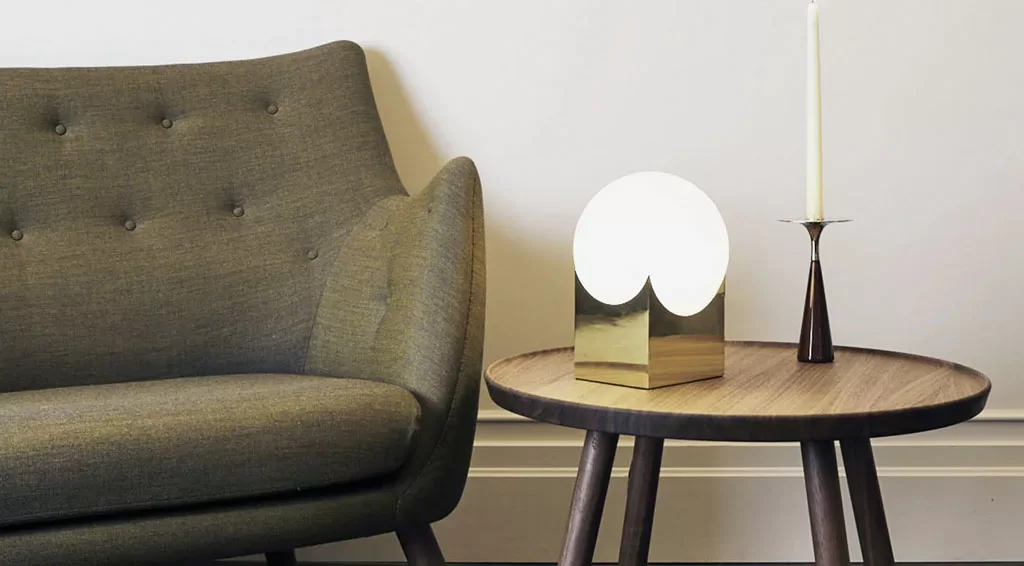
Table Lamps Bring Roll & Hill Design to Human Scale
Table lamps are experienced at close range.
Their materials, controls, proportions, and quality of light therefore become particularly important.
Placed on a desk, bedside table, console, or occasional table, a well-designed lamp can create a more intimate layer of illumination while contributing an object with its own visual identity.
Floor Lamps Create Flexible Islands of Light
Floor lamps can define seating groups, support reading, illuminate corners, and reduce reliance on fixed overhead lighting.
Because they can move with furniture, they also provide flexibility that architectural lighting cannot always offer.
Within open-plan interiors, a floor lamp can help establish a distinct activity zone without requiring any physical enclosure.
Roll & Hill Explores Brass as Both Structure & Finish
Brass appears throughout the history of decorative lighting because it combines visual warmth with extraordinary versatility.
It can feel polished and precise or darker and more architectural.
It can reference historic decorative arts while appearing entirely contemporary.
Roll & Hill designers use brass not merely as surface decoration but frequently as an important structural and expressive material.
Bronze Creates Depth & Architectural Weight
Bronze and darker metal finishes can give contemporary lighting a stronger visual presence.
Against pale plaster, stone, or wood, a dark fixture creates a defined silhouette.
Within moody interiors, bronze can become quieter and more integrated.
Finish selection therefore changes not only the fixture but its relationship with the entire room.
Glass Brings Lightness to Sculptural Fixtures
Glass allows the light source itself to become part of the visual composition.
Clear glass can reveal internal components.
Opal glass softens illumination.
Handmade glass can introduce subtle variation.
Repeated glass elements can create rhythm without the visual weight of opaque shades.
Roll & Hill uses glass across many collections to balance structural metalwork with luminous transparency.
Wood Brings Warmth to Contemporary Lighting
Wood introduces a material quality very different from metal or glass.
Grain, color, and natural variation can soften precise geometry.
This is particularly effective in interiors where lighting needs to connect with cabinetry, furniture, flooring, or other natural materials.
Roll & Hill’s broader material vocabulary allows contemporary lighting to feel tactile rather than purely technological.
Ceramic Gives Lighting a Handmade Presence
Ceramic can introduce irregularity, texture, and warmth into contemporary lighting.
Its surface responds beautifully to illumination, particularly when subtle variation is allowed to remain visible.
Roll & Hill’s newer explorations of ceramic demonstrate how traditional material processes can participate in highly contemporary fixtures.
Veil Explores the Translucency of Porcelain
The Veil collection by Christopher Merchant grew from the designer’s ceramic practice and an exploration of translucent porcelain.
Its slipcast, unglazed components allow natural variation in the ceramic to remain visible.
The result is lighting that feels both architectural and unmistakably handmade.
Veil illustrates the continuing expansion of Roll & Hill’s material language.
Humboldt Explores Material & Repetition
The Humboldt family demonstrates Roll & Hill’s continuing interest in modular forms, material variation, and contemporary craftsmanship.
Different configurations allow the design to move between pendant and wall applications while materials help change the emotional character of the fixture.
This makes the family useful for designers seeking continuity across different lighting conditions.
The Roll & Hill Collection Marks a New Chapter
In addition to collaborations with independent designers, Roll & Hill has developed work under its own name with creative direction from Jason Miller.
These products build on the company’s accumulated knowledge of design, engineering, materials, and manufacturing.
Rather than replacing the collaborative model, the Roll & Hill collection expands it.
Contemporary Lighting Can Feel Familiar without Being Nostalgic
One of Roll & Hill’s strengths is its ability to create objects that can feel recognizable without simply reproducing historical designs.
A globe.
A chandelier arm.
A traditional shade.
A lantern.
A familiar material.
These references can provide emotional accessibility, while changes in proportion, structure, technology, and detail make the object unmistakably contemporary.
Roll & Hill Lighting Is Designed to Endure
Longevity in design is not simply a question of physical durability.
An object must also retain visual relevance.
Fixtures built around strong proportions, thoughtful materials, and original ideas have a better chance of remaining meaningful as interiors evolve.
Roll & Hill’s emphasis on making objects intended to last supports this longer view of contemporary design.
On-Demand Production Offers an Alternative to Mass Manufacturing
Conventional manufacturing often depends on producing large quantities before individual demand is known.
Roll & Hill’s on-demand model takes a different approach.
Producing in response to orders allows the company to maintain a closer relationship between production and actual projects while supporting the detailed manufacturing processes required by sophisticated fixtures.
How Is Roll & Hill Lighting Made?
Roll & Hill describes its process as combining design and making under one model.
Fixtures are produced on demand, assembled and finished with significant handwork, and developed with close attention to materials and construction.
The objective is not to make handmade objects that reject modern manufacturing, nor industrial products that erase craftsmanship.
Instead, the two approaches support each other.
Made in Michigan Gives Roll & Hill a Distinct Manufacturing Identity
Roll & Hill’s production is based in Michigan, reinforcing its identity as a contemporary American design manufacturer.
This connection between creative direction, material experimentation, engineering, and domestic manufacturing is an important part of the company’s current story.
For architects and designers, it also provides a useful distinction within an international decorative lighting market.
Custom Lighting Can Respond to Significant Architectural Spaces
Not every project can be resolved with a standard fixture.
Large stairwells, hotel lobbies, restaurants, residences, and public spaces may require changes in scale, configuration, suspension, finish, or composition.
Roll & Hill’s manufacturing model and experience with complex sculptural lighting make the company particularly relevant to projects requiring a more tailored approach.
How Does Custom Roll & Hill Lighting Work in an Interior?
Custom lighting begins with the architectural condition.
Ceiling height.
Room dimensions.
Furniture layout.
Viewing angles.
Desired illumination.
Structural requirements.
The design can then be evaluated according to scale, configuration, finish, and installation.
The goal is not customization for its own sake, but a fixture that feels properly resolved for the space.
Roll & Hill Is a Resource for Architects
Architects frequently need decorative lighting to do more than look attractive in isolation.
The fixture needs to relate to ceiling planes, structural grids, sightlines, circulation, material palettes, and spatial hierarchy.
Roll & Hill’s architectural forms and configurable collections make the brand particularly useful when decorative lighting needs to participate actively in the design of the building.
Roll & Hill Is a Resource for Interior Designers
Interior designers can use lighting to establish mood, hierarchy, contrast, and personality.
A sculptural chandelier can become the primary object in a dining room.
A restrained sconce can quietly support a corridor.
A table lamp can create intimacy.
Repeated pendants can establish rhythm.
The breadth of Roll & Hill allows these different lighting layers to retain a shared emphasis on materials and contemporary craft.
Roll & Hill Lighting Works Beautifully with Art Collections
In art-focused interiors, decorative lighting needs to occupy a careful position.
It should have enough integrity to coexist with important artwork without overwhelming the collection.
Roll & Hill’s strongest fixtures can function as design objects while allowing architectural lighting to perform the more technical task of illuminating paintings, sculpture, and other works.
Roll & Hill Lighting Complements Contemporary Architecture
Concrete, stone, plaster, glass, steel, and wood create powerful architectural backgrounds for Roll & Hill lighting.
Metal structures can reinforce architectural geometry.
Glass can introduce luminous transparency.
Wood and ceramic can soften harder surfaces.
Sculptural fixtures can create focal points within otherwise restrained spaces.
Roll & Hill Also Works in Historic & Transitional Interiors
Contemporary lighting can create an effective dialogue with older architecture.
A modern chandelier beneath a historic ceiling can emphasize both periods.
A sculptural sconce can bring clarity to traditional millwork.
Minimal pendants can prevent a renovated interior from becoming overly nostalgic.
Contrast, when carefully controlled, often creates more interesting rooms than stylistic imitation.
Roll & Hill Lighting Can Define an Entry
An entry fixture establishes expectations for the rest of the interior.
In a generous foyer, lighting needs enough presence to relate to the architecture.
Vertical compositions can work with tall spaces.
Wider chandeliers can establish a strong center.
Material and finish can introduce themes repeated elsewhere in the residence.
Roll & Hill Lighting Can Transform a Dining Room
Dining rooms are ideal environments for sculptural lighting because the table provides a natural visual anchor.
The fixture can establish intimacy, introduce material contrast, and give the room identity even when the table is not in use.
Roll & Hill chandeliers and pendants provide options ranging from restrained compositions to dramatic sculptural statements.
Roll & Hill Works in Double-Height Spaces
Double-height interiors create opportunities and challenges for decorative lighting.
The fixture must be understood from multiple viewpoints and often requires significantly greater scale than a standard room.
Multi-light chandeliers and vertically developed compositions can occupy this volume while connecting the different levels visually.
Roll & Hill Lighting Creates Character in Bedrooms
Bedroom lighting benefits from multiple scales.
A central fixture can provide identity.
Sconces or pendants can replace conventional bedside lamps.
Table and floor lamps create softer evening illumination.
Roll & Hill’s diverse typologies allow a bedroom to develop a cohesive lighting concept without relying on one source.
Roll & Hill Is Ideal for Hospitality Interiors
Hotels, restaurants, clubs, and other hospitality spaces depend heavily on atmosphere.
Guests often experience lighting before they consciously notice furniture or materials.
A memorable chandelier can establish identity.
Sconces can create intimacy.
Repeated pendants can organize a restaurant.
Custom lighting can respond to a lobby or other large-scale architectural condition.
Roll & Hill Lighting Creates Memorable Restaurants
Restaurant lighting needs to support food, faces, circulation, and atmosphere simultaneously.
Decorative fixtures can help distinguish the bar, dining room, private dining areas, and entry.
Repeated fixtures can establish rhythm, while larger sculptural pieces create visual landmarks.
Roll & Hill’s expressive collection is particularly useful when lighting needs to contribute strongly to a restaurant’s identity.
Roll & Hill Supports Boutique Hotel Design
Boutique hotels often use lighting to create a recognizable character across guestrooms and public spaces.
A family of sconces can establish continuity in corridors.
Distinctive pendants can identify guest rooms.
Statement chandeliers can anchor reception and lounge areas.
This combination of repetition and individuality aligns well with Roll & Hill’s collection.
Roll & Hill Works in Creative Workplace Interiors
Contemporary workplaces increasingly incorporate hospitality-inspired lounges, cafés, meeting rooms, and social environments.
Decorative lighting can help these spaces feel more welcoming and less institutional.
Roll & Hill provides fixtures with enough personality to establish identity while remaining appropriate for sophisticated professional interiors.
How Do You Build a Layered Lighting Plan with Roll & Hill?
Begin with the architectural lighting needed for general illumination, task performance, circulation, and artwork.
Then identify locations where visible decorative lighting can strengthen the space.
A Roll & Hill chandelier might establish the dining area.
Sconces can add light at eye level.
A table or floor lamp can create intimacy around seating.
The strongest interiors allow these different layers to work together rather than expecting one fixture to perform every function.
Decorative Lighting Should Relate to Furniture
Lighting and furniture should be considered together.
The width of a dining table affects chandelier scale.
The position of a sectional influences floor-lamp placement.
Bed height affects sconces.
Console dimensions influence table lamps.
Thinking about these relationships early produces interiors in which lighting feels integrated rather than added after furniture planning is complete.
Lighting Scale Is Essential in Luxury Interiors
A beautiful fixture at the wrong scale can weaken a room.
Large architecture generally requires enough visual presence to balance the surrounding volume.
Smaller rooms benefit from fixtures that provide character without overwhelming the space.
Roll & Hill’s collections often include multiple configurations, making scale an active part of the specification process.
Finish Can Dramatically Change a Roll & Hill Fixture
Metal finish affects the perceived character of lighting.
Brass can introduce warmth.
Darker finishes can create graphic definition.
Polished surfaces interact with surrounding light.
More subdued finishes can integrate quietly into the architecture.
The same underlying fixture can therefore behave very differently depending on the finish selected.
Why Choose Roll & Hill for Contemporary Designer Lighting?
Roll & Hill offers an unusual combination of independent design, American manufacturing, craftsmanship, material exploration, and made-to-order production.
Its lighting can be bold without becoming arbitrary.
Crafted without feeling nostalgic.
Contemporary without depending excessively on trends.
And expressive enough to give important interiors a distinctive identity.
For architects, interior designers, collectors, hospitality professionals, and design-conscious clients, this balance makes Roll & Hill an exceptional contemporary lighting resource.
Where Can You Experience Roll & Hill at Scott + Cooner?
Scott + Cooner represents Roll & Hill through our Dallas and Austin showrooms, connecting architects, interior designers, hospitality professionals, and design-conscious clients in Texas with one of America’s most distinctive contemporary lighting manufacturers.
Our teams can help clients explore Roll & Hill chandeliers, pendants, sconces, ceiling fixtures, table lamps, floor lamps, Modo, Agnes, Astral Agnes, contemporary collections, materials, finishes, configurations, and custom lighting possibilities for residential and contract projects.
Where Can You Find Roll & Hill Lighting in Dallas?
Scott + Cooner Dallas represents Roll & Hill for architects, interior designers, hospitality professionals, collectors, and design-conscious clients throughout Dallas and North Texas.
The brand is particularly well suited to sophisticated Dallas interiors where decorative lighting needs enough scale and personality to participate meaningfully in the architecture.
From sculptural chandeliers for substantial residences to distinctive lighting for restaurants, hotels, workplaces, and contract environments, Roll & Hill offers designers a broad range of contemporary American lighting.
Roll & Hill Chandeliers Work Beautifully in Generous Dallas Interiors
Large Dallas residences frequently contain expansive living spaces, substantial dining rooms, double-height entries, galleries, and stair halls.
These environments require lighting with appropriate scale.
A significant Roll & Hill chandelier can occupy architectural volume while establishing a clear visual center.
Multi-light collections such as Modo and Agnes are particularly useful when a fixture needs to respond to a larger space.
Roll & Hill Lighting Complements Dallas Art Collections
Dallas interiors often bring contemporary art, collectible furniture, and architecture together.
Roll & Hill fits naturally within these environments because its lighting can have object-like presence without becoming visually unrelated to the rest of the room.
Materials such as brass, glass, wood, bronze, and ceramic can establish nuanced relationships with art and furniture.
Roll & Hill Lighting Creates Dramatic Dallas Dining Rooms
A dining room provides an ideal setting for expressive decorative lighting.
The table creates a natural center, allowing a chandelier or pendant composition to establish scale and atmosphere.
Roll & Hill’s collection offers options for interiors ranging from restrained modern dining rooms to highly expressive entertaining spaces.
Roll & Hill Supports Dallas Hospitality & Contract Design
Dallas and North Texas include significant restaurant, hotel, club, workplace, multifamily, and commercial design markets.
Lighting is often central to the identity of these projects.
Roll & Hill can provide statement chandeliers, repeated pendants, sconces, and custom solutions capable of contributing to both atmosphere and architecture.
Dallas Architects & Interior Designers Can Specify Roll & Hill Through Scott + Cooner
Scott + Cooner Dallas can assist architects, interior designers, hospitality professionals, and clients with Roll & Hill for residential and contract projects throughout Dallas and North Texas.
Our team can help evaluate fixture scale, chandelier configurations, pendants, sconces, materials, finishes, suspension heights, custom possibilities, and relationships with furniture and architecture.
Where Can You Find Roll & Hill Lighting in Austin?
Scott + Cooner Austin represents Roll & Hill for architects, interior designers, hospitality professionals, collectors, and design-conscious clients throughout Austin and Central Texas.
Roll & Hill’s combination of independent design, American manufacturing, natural materials, hand finishing, and contemporary form connects naturally with Austin’s creative culture and sophisticated architectural community.
The collection can bring warmth and individuality to modern residences, Hill Country homes, restaurants, hotels, creative workplaces, and other design-driven environments.
Roll & Hill Complements Austin & Hill Country Architecture
Central Texas architecture frequently combines limestone, concrete, plaster, steel, glass, and natural wood.
Roll & Hill lighting can create a particularly strong relationship with these materials.
Brass introduces warmth against limestone.
Glass creates luminous contrast with heavier surfaces.
Wood and ceramic connect with natural material palettes.
Dark metalwork can reinforce architectural steel.
The fixture becomes part of the material composition rather than simply a source of light.
Roll & Hill Brings Craft to Austin Contemporary Interiors
Austin design often values the intersection of modern architecture and handcrafted material.
Roll & Hill occupies a similar territory.
The lighting can be geometrically precise while retaining evidence of making through materials, finishes, glass, wood, ceramic, and assembly.
This balance makes the collection particularly relevant to Central Texas interiors that seek warmth without sacrificing modern clarity.
Roll & Hill Lighting Is Ideal for Austin Dining & Entertaining Spaces
Open-plan Austin homes often connect kitchens, dining rooms, living areas, terraces, and landscape.
Decorative lighting can help define these zones without introducing walls.
A chandelier establishes the dining table.
Pendants organize a kitchen island.
Sconces add intimacy.
Table and floor lamps soften lounge areas.
Roll & Hill gives designers multiple tools for establishing these layers.
Roll & Hill Supports Austin Hospitality & Creative Projects
Austin’s restaurants, boutique hotels, clubs, creative workplaces, technology environments, and mixed-use projects frequently use design as part of their identity.
Distinctive lighting can make these spaces more memorable.
Roll & Hill’s combination of recognizable collections and less familiar designs gives project teams opportunities to create environments with genuine character.
Austin Architects & Interior Designers Can Specify Roll & Hill Through Scott + Cooner
Scott + Cooner Austin can assist architects, interior designers, hospitality professionals, and clients with Roll & Hill for residential, hospitality, workplace, restaurant, and contract projects throughout Austin and Central Texas.
Our team can help explore chandeliers, pendants, sconces, ceiling fixtures, table lamps, floor lamps, materials, finishes, configurations, custom lighting, and the appropriate scale for each architectural environment.
Scott + Cooner Represents Roll & Hill in Dallas & Austin
Scott + Cooner’s representation of Roll & Hill in Dallas and Austin gives architects, interior designers, hospitality professionals, collectors, and design-conscious clients access to exceptional contemporary American lighting through experienced local showroom teams.
In Dallas, Roll & Hill can provide the scale and visual presence needed for substantial residences, art-focused interiors, sophisticated dining rooms, hospitality environments, and contract projects.
In Austin, the company’s combination of modern design, American manufacturing, craftsmanship, and expressive natural materials aligns naturally with contemporary residences, Hill Country architecture, restaurants, boutique hospitality, and creative workplaces.
Across both markets, Scott + Cooner can help clients explore Roll & Hill according to architecture, furniture layout, scale, configuration, finish, material, suspension, atmosphere, and project requirements.
Discover Roll & Hill Contemporary American Lighting at Scott + Cooner
Scott + Cooner represents Roll & Hill in Dallas and Austin as part of our curated collection of exceptional contemporary lighting, furniture, and international design.
Since 1995, Scott + Cooner has worked with architects, interior designers, hospitality professionals, collectors, and design-conscious clients seeking extraordinary modern furniture, lighting, kitchens, closets, rugs, accessories, textiles, outdoor furniture, and architectural products for sophisticated residential and contract interiors.
Our Dallas and Austin teams can help you explore Roll & Hill chandeliers, pendants, sconces, ceiling lights, table lamps, floor lamps, Modo lighting by Jason Miller, Agnes lighting by Lindsey Adelman, sculptural statement lighting, materials, finishes, configurations, and custom possibilities.
Whether you are selecting a Roll & Hill Modo chandelier for a Dallas residence, specifying Agnes for a dramatic architectural space, creating distinctive lighting for an Austin or Hill Country home, or developing a custom lighting concept for a restaurant, hotel, workplace, or significant contract interior, Scott + Cooner can help you explore Roll & Hill’s distinctive combination of contemporary American design, independent creative talent, made-to-order manufacturing, skilled craftsmanship, and sculptural lighting.